

Spot six planets on their night-time parade this week
Mars, Jupiter, Saturn, Venus, Uranus and Neptune will be visible in the sky at the same time, with tonight’s new moon offering good viewing conditions.
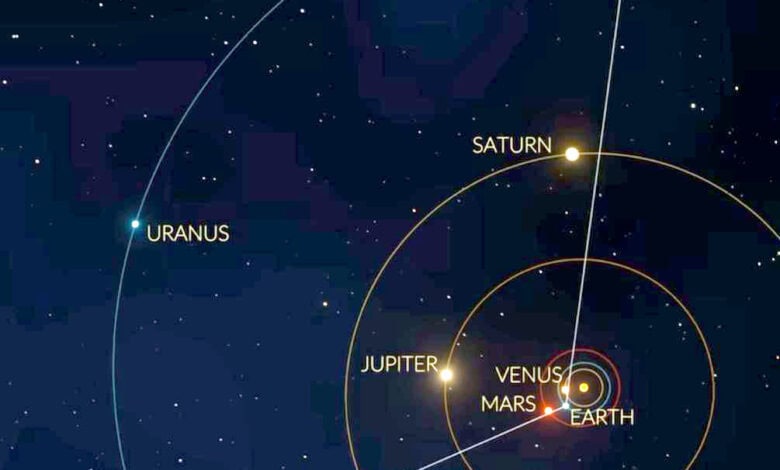
If there are no clouds in the night sky this week, the new moon should provide great viewing conditions for the ‘planetary parade’.
Mars, Jupiter, Venus and Saturn will all be visible with the naked eye, while Uranus and Neptune can be spotted with a telescope. The new moon tonight (Wednesday, January 29) will be the best night to spot the planets going forward, but they will still be visible for a few weeks.
The planetary parade, also known as planetary alignment, refers to the phenomenon of multiple planets being visible in the night sky at the same time.
According to the Astronomical Society of Southern Africa, Durban Centre’s Piet Strauss, the parade might not be as rare and extreme as some reports suggest, but is still well worth looking for.
The previous six planet parade happened last year, but will not happen again in the same iteration until 2040.
“To explain what will be seen, we need to understand the orbits of our planets around the sun. The eight planets (including Earth) follow elliptical orbits,” he said.
“These orbits are generally in a plane termed the ‘ecliptic’. This is not a flat plane as the orbits of the planets are all tilted in their orbits. Mars, Jupiter, Uranus, Neptune, Venus and Saturn will align in the evening sky but not in a straight line.”
How to spot each planet:
1. Mars:
• A bright reddish object visible all night.
• Look towards the eastern horizon after sunset.
2. Jupiter:
• The largest and brightest planet in the alignment.
• Look high in the sky; it’s easy to spot even in urban areas.
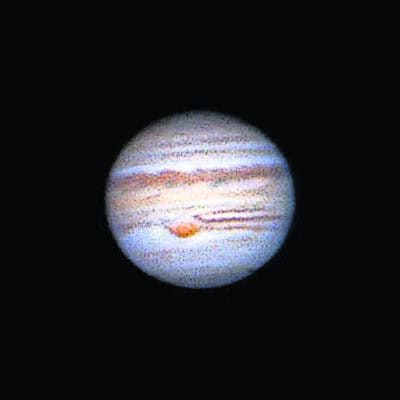
Photo: Amith Rajpal.
3. Venus:
• Known as the ‘Evening Star’, Venus will be exceptionally bright near the western horizon just after sunset.
4. Saturn:
• Appears as a bright golden-yellow point of light.
• It will be visible in the west after sunset but sets earlier than other planets.
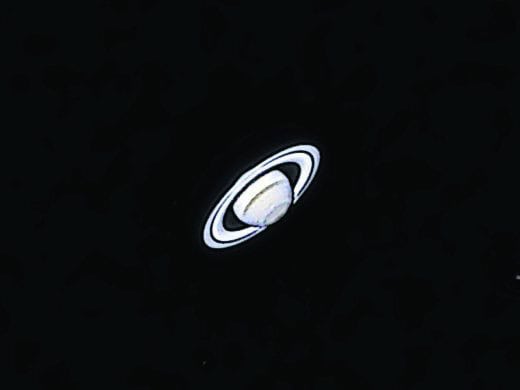
Photo: John Gill.
5. Uranus:
• A dim, bluish-green dot in the sky.
• Will be visible with binoculars or a telescope – spot it near Jupiter.
6. Neptune:
• The faintest of the planets, appearing as a tiny bluish speck.
• Requires a telescope and dark skies to see.
Tips for observing:
Start searching just after sunset to catch Venus and Saturn before they set. Mars, Jupiter, Uranus, and Neptune will be visible for much longer.
You will get best results if you find a dark area away from city lights, while binoculars or a telescope will enhance the experience.
If you would like a guided display, you can join the Astronomical Society on Friday, January 31 at 7pm. They will host a viewing event at The Observatory at St Henry’s Marist College in Glenwood. RSVP to observatory@astronomydurban.co.za
Enjoy the celestial display this January!
Stay in the loop with The North Coast Courier on Facebook, X, Instagram & YouTube for the latest news.
Mobile users can join our WhatsApp Broadcast Service here or if you’re on desktop, scan the QR code below.

Stay in the loop with The North Coast Courier on Facebook, X, Instagram & YouTube for the latest news.
Mobile users can join our WhatsApp Broadcast Service here, or if you’re on desktop, scan the QR code below.