

Ballito a key migration corridor for endangered manta rays, study reveals
Groundbreaking research highlights the North Coast's role in manta ray conservation.
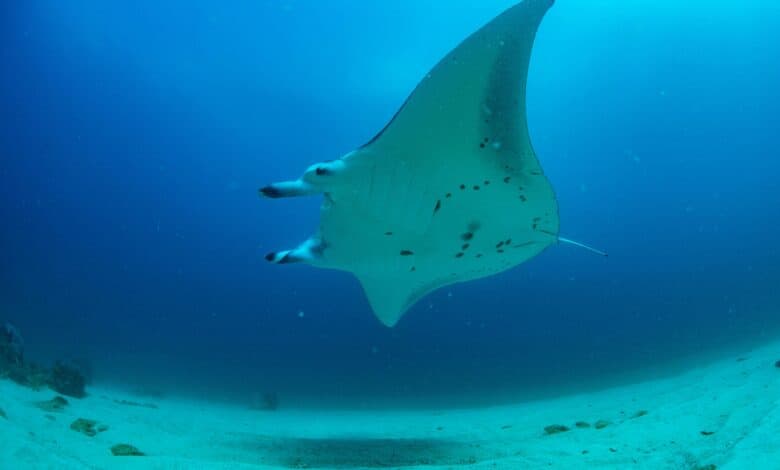
The North Coast is an important migration corridor for the endangered giant oceanic manta ray, with Ballito being an important sighting point.
Marine researchers are calling for the establishment of Marine Protected Areas (MPAs) along the east coast to ensure the conservation of these creatures.
A research project led by Dr Michelle Carpenter of the University of Cape Town analysed citizen science data and photo-identification records dating back to 2003.
This groundbreaking research – published in Springer Nature academic journal last month – has highlighted KwaZulu-Natal and the Eastern Cape’s role in the migratory and feeding patterns of reef manta rays (Mobula alfredi) and giant oceanic manta rays (Mobula birostris).
Collaborating with the Marine Megafauna Foundation, Carpenter also teamed up with researchers from the Oceanographic Research Institute, SAIAB, Nelson Mandela University, and SharkLife Conservation Group in the study, which was largely funded by the Rufford Foundation.
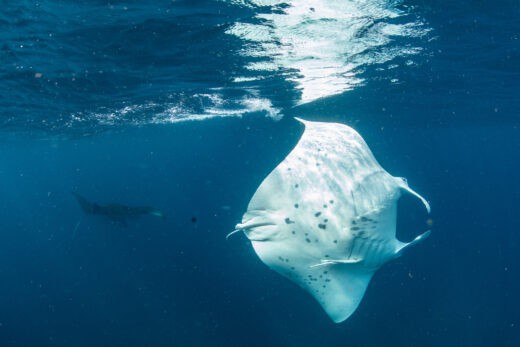
The study made key discoveries in tracking the animal’s movement patterns between different coastal regions, mapping essential habitats for both species and revealing previously unknown population characteristics unique to South African waters.
These manta rays travel along the Mozambique and south east African coastline, visiting South African waters in search of zooplankton-rich feeding zones.
“These movements are potentially driven by the availability of zooplankton abundances, which are transient along the coastline and with seasonal patterns,” said Dr Carpenter.
The study recorded 83 sightings of oceanic manta rays over the past decade, with 67 occurring between Ballito and Aliwal Shoal. Of these, at least 25 were off Ballito, with feeding groups of up to 7-10 individual oceanic manta rays.
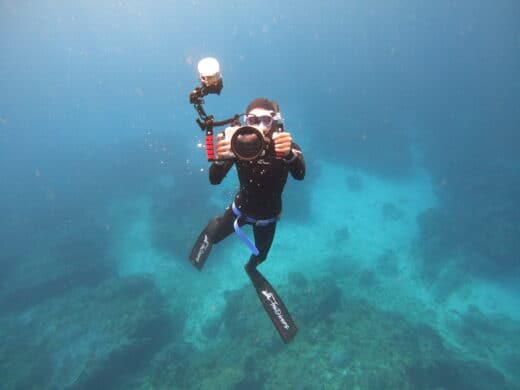
Photo: Carla Deane.
“The observation of oceanic manta rays feeding in the area seems to be sporadic and might primarily function as a passage along their migration corridor,” said Carpenter.
One of the significant findings was the documentation of melanistic (all-black) oceanic mantas rays. These rays are black on both the top and underside, a rare genetic trait that has been observed in only a handful of global manta ray populations. One individual, identified as SA0031B, was first sighted in Aliwal Shoal in 2020 and later reseen off Ballito in 2021, suggesting movement between these two areas which are about 100km apart.
Listed as a threatened species on the International Union for Conservation of Nature Red List, manta rays face increasing risks from trawling, tuna purse seine nets, gill nets in Mozambique, shark nets in South Africa and seismic testing by oil companies.
“Effective marine sanctuaries will provide hope for their future,” said Carpenter.
Stay in the loop with The North Coast Courier on Facebook, X, Instagram & YouTube for the latest news.
Mobile users can join our WhatsApp Broadcast Service here or if you’re on desktop, scan the QR code below.

Stay in the loop with The North Coast Courier on Facebook, X, Instagram & YouTube for the latest news.
Mobile users can join our WhatsApp Broadcast Service here, or if you’re on desktop, scan the QR code below.