

Simbithi study reveals health crisis in urban monkeys caused by human food
Experts warn against feeding monkeys as human food is doing more harm than good.
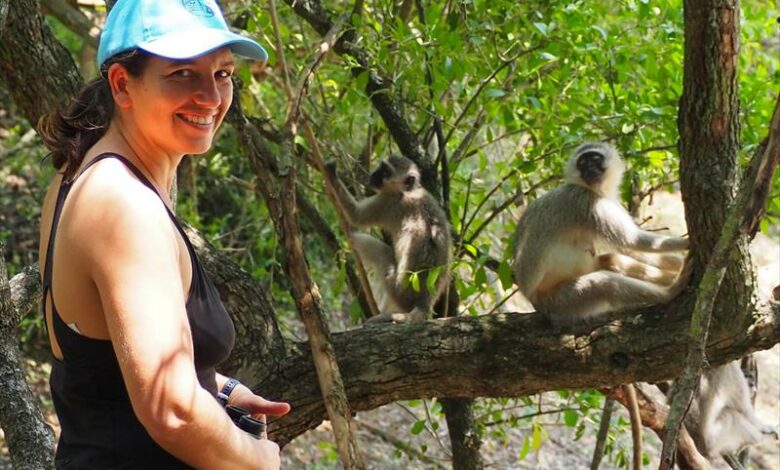
Residents are being urged to stop feeding vervet monkeys, as it poses serious risks to both humans and the primates themselves.
Dr Stéphanie Mercier, a biologist with 15 years’ experience, has issued a strong warning following extensive research conducted through the Urban Vervet Project (UVP), which has uncovered several concerning findings.
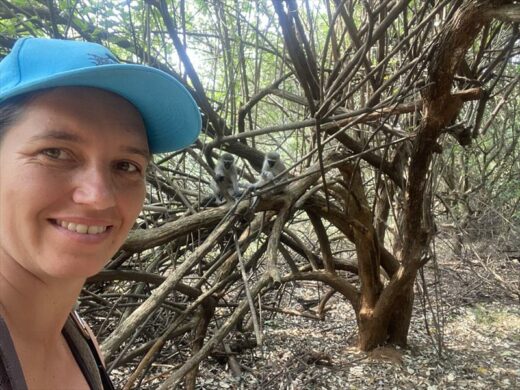
Mercier, who co-founded UVP, has spent the past three years studying vervet monkeys in Simbithi Eco-Estate using a range of scientific methods, including natural observations, field experiments and biological analyses.
ALSO READ: Rising monkey shootings put spotlight on animal cruelty in Ballito
Processed human food, high in sugar and additives, is contributing to serious health issues.
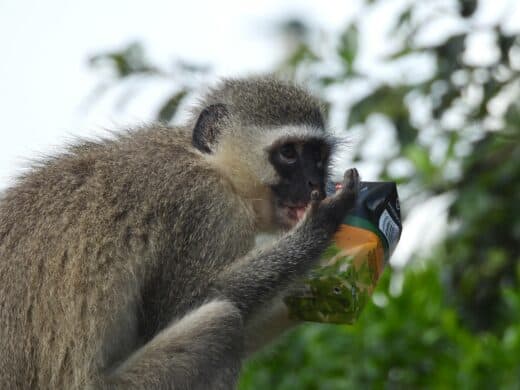
“Our food is terrible for them; we are finding tumours and cancers in urban monkeys,” said Mercier.
“Evidence also suggests that processed food is causing larger babies in the womb, leading to an increase in fatal birthing complications. There is no scientific data on monkeys in the wild with cancer.”
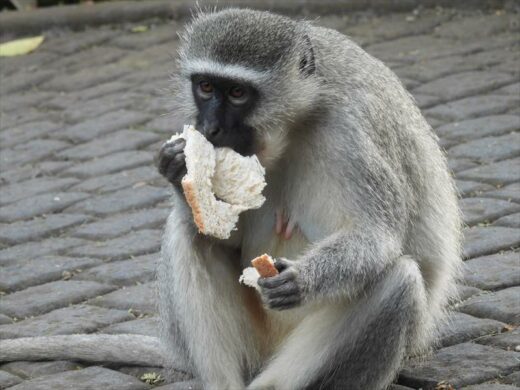
Even foods that seem healthy, such as fruit, vegetables and nuts, are not part of their natural diet.
“Wild fruits consumed by vervets are significantly more acidic and lower in sugar,” said Mercier, who also works with the iNkawu Vervet Project, collecting data on vervet monkeys in the Mawana Game Reserve near Vryheid.
Contrary to popular belief, monkeys in urban areas are not starving. Research shows their populations have remained stable for years.
“There is enough food for monkeys in Ballito all year round. If there is a drought or loss of food in the wild, monkeys die of starvation,” she said.
Vervets are highly adaptable scavengers, often exploiting human food sources in residential and agricultural areas. Mercier urged residents to keep doors and windows closed if food is visible, store food and birdfeeders out of sight and use monkey-proof bin clips to reduce scavenging.
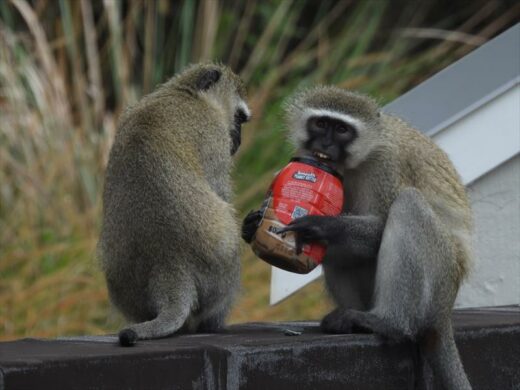
“Monkeys are opportunistic feeders, so cover or secure food, but don’t feed them because it increases aggression within their troop and towards humans.”
She added that people should remain calm and avoid shouting or making aggressive gestures. Instead, spray water to disperse monkeys. Consistency and respectful behaviour, she stressed, can significantly reduce conflict.
“Whether we like it or not, vervet monkeys will always be here. We can’t change them, but we can all change our own behaviour,” said Mercier.
Stay in the loop with The North Coast Courier on Facebook, X, Instagram & YouTube for the latest news.
Mobile users can join our WhatsApp Broadcast Service here, or if you’re on desktop, scan the QR code below.

Stay in the loop with The North Coast Courier on Facebook, X, Instagram & YouTube for the latest news.
Mobile users can join our WhatsApp Broadcast Service here, or if you’re on desktop, scan the QR code below.