

Four decades of local news with The North Coast Courier
A legacy of community reporting, business growth and changing times along the North Coast since 1985.
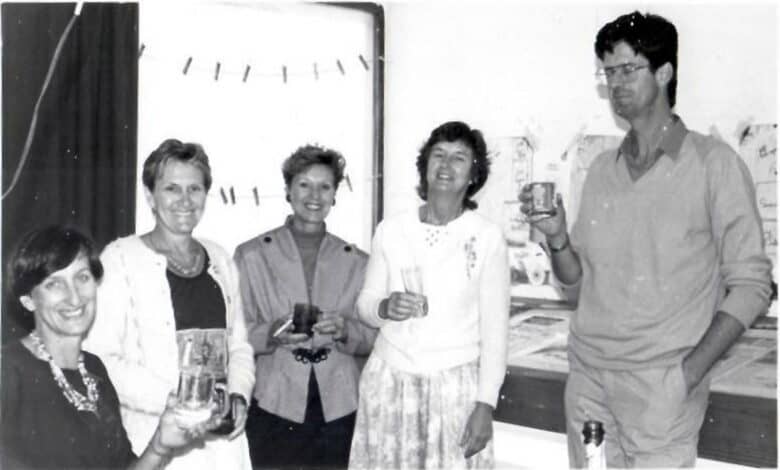
Today The North Coast Courier celebrates 40 years of continuous publishing on the North Coast.
This is the 1 771st issue that Wordsmiths Publishers has written, produced and distributed the length and breadth of the lower North Coast, from Umdloti to Mandeni.
Since our first issue on November 15, 1985, we have recorded every aspect of the community’s life on a weekly basis, our highs and lows, our joys and sorrows, our gains and losses.
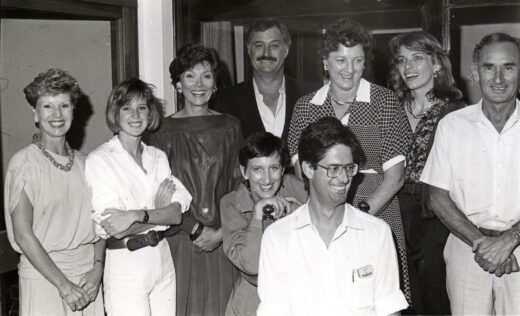
The saying “Booming Ballito” has become a byword. Since 1985 Ballito has grown from a quiet semi-rural and holiday village of about 15 000 permanent residents to a rapidly expanding regional hub and tourist destination with an estimated population of 40 000 residents for Ballito/Salt Rock alone.
And we have grown alongside it. From 7 500 copies every fortnight in 1985 to 35000 copies weekly these 40 years later, the Courier has kept pace with the blossoming population. In all these years our mission has been to serve the interests of readers and advertisers equally, to keep the Courier relevant, useful and above all, reliable. In this article I would like to look back on the highlights of the past four decades.
1980s
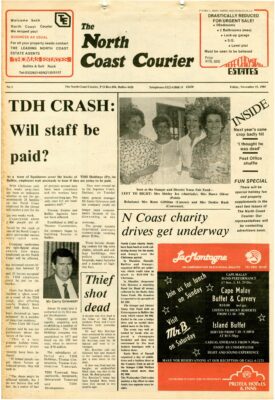
November 15, 1985 was the day Rose and I published 7 500 copies of an 8-page newspaper. That same week Thomas Construction, the largest company in Ballito, went bankrupt. We thought “Oh boy, what are we going to do?” But thanks to the dogged selling of Rose and our first staff member, Gaye Kennedy, the advertising began rolling in.
On our front page was a photo of the founders of the Christmas Fair Fund, the charity fair that has consistently grown bigger and better every year – perhaps an omen for our own future?
Those years were a huge learning curve, from learning newspaper economics to the nitty-gritty of weekly production. Before the days of computerised layout software, the paper was put together with articles written on typewriters, developing film and printing photographs in a darkroom, making photographic “halftones” with a giant overhead camera, producing “galleys” of type on strips of paper produced on a phototypesetter and stuck onto page formes by hand with wax, ready for the plate-making equipment used by the printers.
We then drove to ‘Maritzburg to deliver the pages to our then printers, the Natal Witness. Sometimes Rose would go in the Beetle and return with our five-month-old baby daughter Lesley in a cot beside her and 7 500 copies crammed on the back seat. Today Lesley is the editor of the Courier. Ink runs in her blood!
In 1988 we splashed out on two very basic desktop computers and an A3 printer that we paid off on the never-never for years, but made the production process a little easier. Today’s fully digital workflow, from photographs to advertising design and page layout is a far cry from those early days. The first issues were printed in black and white, with full colour pages only being introduced in 1998.
The economy of the North Coast was predominantly driven by agriculture then. For instance, in the years of a good cane crop we could expect a pick-up in advertising from car and tractor dealers and the local co-ops. In bad years the economy slumped!
An interesting development in 1986 was the launch of uThongathi school, the first private and multi-racial high school of the area. This became Crawford North Coast in 1997.
1987 was the year of the horrific floods. The whole coast south of the Tugela River suffered widespread loss of farms, roads and bridges with the Tugela, Umvoti and Umdloti bridges being washed away. Fortuitously the old iron bridges built many years ago survived, otherwise the area would have been completely cut off.
1990s
In 1995 President Nelson Mandela made Groutville on the North Coast one of his first ports of call since taking office after the first democratic elections in 1994. Amongst other things, he came to Groutville to pay homage to the home of African National Congress leader, Chief Albert Luthuli.
The fledgling Courier boasted a lively Letters to the Editor page, being a ready outlet for readers’ frustrations with the local authority and anything else. A recurring topic was black fly ash from cane burning, which spoiled washing lines and swimming pools in town. As befitted an agricultural community where the townspeople were considered interlopers, there was little sympathy from farmers!
Regular columns were popular: Bridge by Yvonne Hulett, Hallelujah by Vic Hartog, Fish Eagle by Jack de Oude and Nature by Gerry Robinson were the main ones.
My “Two Bits” column was born after the Courier criticised the heavy trucks avoiding the N2 toll and breaking up the surface of the M4. One of the haulage companies wrote an indignant letter calling me a “twobit editor” for daring to criticise them – so I wore the insult with pride!
1996 was an auspicious year. The launch of Zimbali estate and golf course marked the start of a distinct upturn in the local property market. This on the heels of the establishment of Umhlanga Ridge and Gateway shopping centre by landowners Tongaat Hulett. Zimbali’s success paved the way for the era of successful estate living such as Simbithi, Brettenwood etc.
2000s
Ballito began to move into a higher gear. Townsend Farm on the south side of Ballito was transformed into Seaward Estate and the Business Park.
In 2003 the Rencken brothers built the Lifestyle Centre, officially marking the move of the business and retail district from the village on the seafront to the top of the hill. With its
own shopping centre, Ballito was on the map!
While producing the Courier week after week was hard work, we also liked to have fun. April Fool’s Day was a big event every year. There were many spoof stories – the jetski marina in Salmon Bay, Robert Mugabe’s house in Clarke Bay etc.
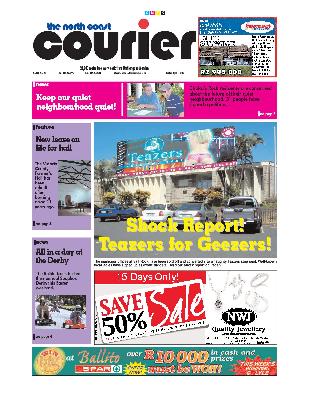
One of our best was the tale that the former Umhlali Beach town board offices in Salt Rock were to be converted into a Teazers topless bar for senior citizens. “Teazers for Geezers” was the headline. We named the organisers as Umhlali accountant Neal Roberts, the late clothing manufacturer Vaughan McDonnell and his councillor wife, Ann. Strippers were Sareen Roberts and Jessica Rawdon and the dancers the amateur dramatic society dancers, aka the Leggy Lovelies. It was a hoot!
In 2006 we launched the first Get It magazine, a glossy community publication featuring social photos and interviews with local personalities. The concept has since been much emulated (but never matched!) by competitors. Three days in March 2007 saw the highest tides and most violent seas in living memory. Seafront property at Umdloti and sections of South Beach Rd were washed away, as well as properties at Salmon Bay and Willard Beach, Ballito, Salt Rock, Zinkwazi and Tugela Mouth.
In 2009 another significant event: the Mr Price Pro surf contest abandoned Durban in favour of Ballito’s top-class surf. The now-named Ballito Pro is the longest running professional surf contest in the world and draws big crowds and business to this area every July.
2010s
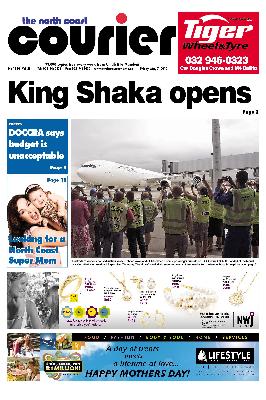
This decade marks the really big event – the move of Durban airport to Tongaat in 2010. King Shaka airport and tradeport really put the North Coast on the map. The initial horrors of jetliner noise quickly died away as residents realised the benefits of being within a few minutes of an international airport.
Opportunities for warehousing, added tourism and residential development are steadily growing and transforming the region. The airport had been touted since the 60s and was a such a mythical beast that I vowed to eat my hat the day the first plane landed. So on May 1, 2010, I was made to eat a hat made of phyllo pastry!
While there had long been calls for a government high school in the area, there was no response from government. The second privately owned high school, Ashton International Ballito, opened in 2010. This was followed by the third, Curro Salt Rock, in 2014 and Reddam House in 2019. Still no sign of a government high school.
The bulk tanker Phoenix was wrecked on Sheffield beach in July 2011 after being driven ashore by gale force winds. The wreck was a major crowd-puller.
2017 saw the opening of the Ballito Junction shopping centre – 80 000 square metres of retail space brought most of the national brands that the area had been short of. Trips to Gateway centre in Umhlanga were no longer really necessary.
2020s
2020 was the Year from Hell. The scourge of Covid-19 tore our lives apart, flatlined the economy and put many out of business. While the Internet had been slowly gaining ground, Covid caused online communications and social media to explode on the world. If you didn’t know how to make a Zoom call before, then you certainly did in 2020.
Google, Facebook and WhatsApp began seriously eating the traditional media world’s lunch, causing the worldwide decline of newspaper revenue in particular. The pressure has been felt at the Courier as elsewhere. The good news is local newspapers continue to survive as essential parts of smaller communities.
The region suffered an enormous blow in October when the Tongaat Hulett sugar company collapsed financially. Founded in 1892 and a major agri-processing company focused on sugar and property development, it entered business rescue following a major accounting scandal.
Which brings us to 2025. The Dolphin Coast is now recognised as the fastest growing area in the country. As many as 190 families are estimated to be putting down roots here every month, with buyers primarily aged 36-49 seeking family-friendly estates. Projections for 2025 anticipate continued expansion due to infrastructure upgrades (e.g., N2 interchanges, new schools like Seaton House in 2027) and lifestyle appeal, supporting 1 414 annual property transactions worth R1.4-billion (March 2024-February 2025 data).
While this growth and investment is welcome, an unfortunate side-effect is enormous strain on roads, electricity and other infrastructure.
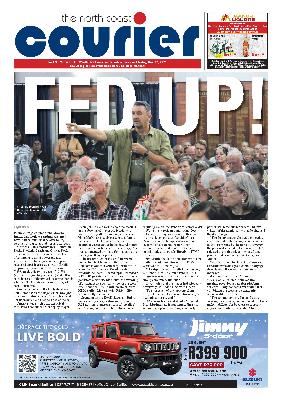
In April of this year, fed up ratepayers demanded action against a non-functional municipal executive following three months of almost continuous power failures caused by outdated and ill-maintained electricity infrastructure. The mayor was fired and the community expects much from the new administration.
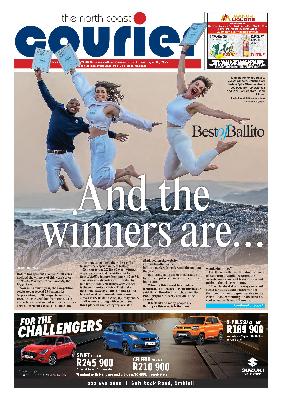
On the upside, our annual Best of Ballito competition has been received with great enthusiasm – so much so that many more of our fellow newspapers in the Caxton Group are championing Best Of competitions in their towns.
Next year the Dolphin Coast will see the opening of Club Med Tinley Manor, probably the largest single resort development in South Africa ever. The 400-room resort is being built on former cane land 20 km north of Ballito at a cost of R2.1-billion. It is anticipated that this will open up new opportunity for local tourism and business.
Ballito has rapidly become the premier holiday destination of KwaZulu-Natal and one of the top growth spots in the country. In peak season well over 100 000 visitors flock to Ballito to enjoy our world-class beaches and outdoor life, restaurants and shopping centres – not to forget friendly locals, top class service and brilliant weather.
Although Rose and I are enjoying our retirement in Sheffield Beach, we have handed the reins of the Courier over to our very able son-in-law, Pieter, and our daughter, Lesley, to take the company forward.
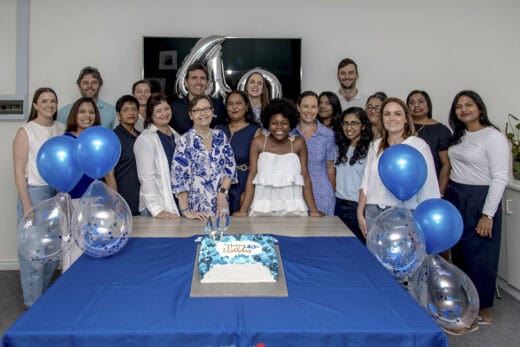
The Wordsmiths family thanks all our loyal advertisers and readers for their enthusiastic support over the past 40 years. We also thank the many people who have worked alongside us to make the Courier as successful as it is. We look forward to celebrating a half century of serving this community in 2035 and we sincerely wish all of you will be there to celebrate with us.
Stay in the loop with The North Coast Courier on Facebook, X, Instagram & YouTube for the latest news.
Mobile users can join our WhatsApp Broadcast Service here or if you’re on desktop, scan the QR code below.

Stay in the loop with The North Coast Courier on Facebook, X, Instagram & YouTube for the latest news.
Mobile users can join our WhatsApp Broadcast Service here, or if you’re on desktop, scan the QR code below.