

Opening the Salt Rock history books: From sugarcane to a suburb in demand
Once a smattering of beach cottages, the suburb is now one of the most affluent in the country.
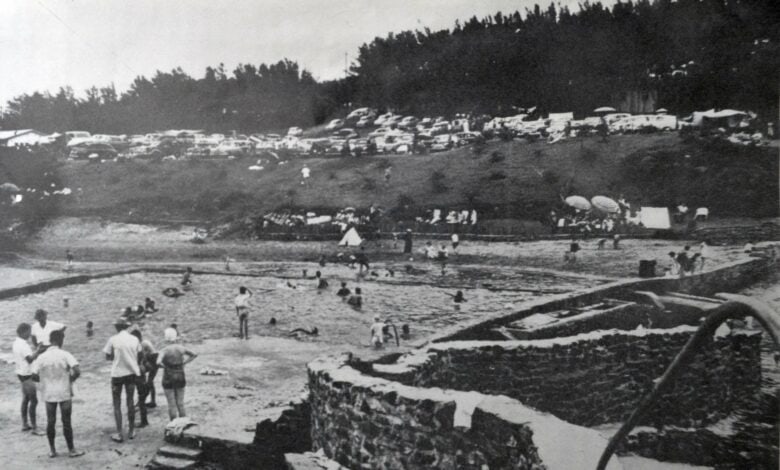
Salt Rock has transformed from sugarcane fields to a sleepy seaside town, to a suburb skyrocketing in popularity and household income in just 100 years.
When the first settlers developed the land around Umhlali – the magistracy and main town of the area from the 1850s to 1870s – farming was the primary goal. Once those early farming families were established at the turn of the century, however, rudimentary holiday homes sprang up along the coast in Umdloti, Ballito and Salt Rock.
While Umdloti had started to formalise as early as 1910, Salt Rock remained little more than a smattering of cottages until the early 1930s, when sugar farmer Basil Hulett began to shape the seaside village. Basil was the grandson of Liege Hulett, one of the early sugar and tea pioneers in Kearsney, near KwaDukuza, and was among the biggest farmers in the province at the time.
According to Jack Nash, who wrote the book Ballito: The story of a township 1953–1963, Basil was harvesting thousands of tonnes of sugarcane annually, using the profits to underpin development.
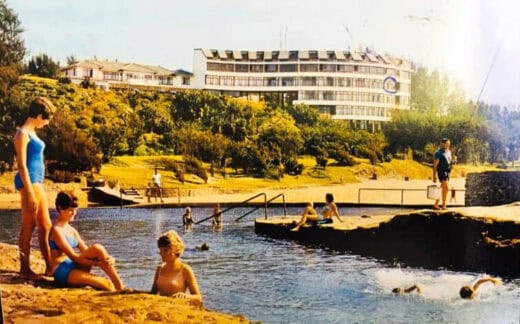
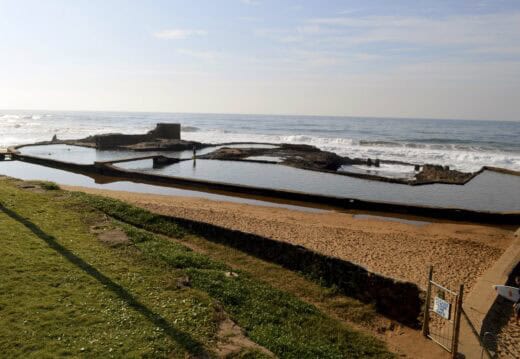
Early projects in the area included a nine-hole golf course at Salt Rock Country Club, the Salt Rock Hotel – completed in 1933 – and the famous Salt Rock tidal pool, which the hotel overlooks.
Basil became so invested in the hotel project that he could no longer run the entirety of his farming operation and sold the major portion, retaining the beachfront area for future development.
In 1934, he subdivided 75 beachfront plots and sold them at £75 each (around £7 000 or R155 000 in the modern day, according to an online inflation calculator).

Soon the town began to grow. The Salt Rock Caravan Park, which was initially parking for the tidal pool, became a hugely popular destination, and the area became known nationally for its beautiful beaches, great weather and excellent fishing. A fishing tower built at the time still stands at the tidal pool.
Ballito in the south was formalised in the 1950s and there is now essentially unbroken development from the Tongaat River to the Sheffield estates under construction in the north.
Salt Rock’s property boom
The growth of the North Coast has contributed to Salt Rock’s status as one of the most affluent suburbs in the country following the creation of popular estates and the trend of semigration from other provinces.
According to the North Coast Property Market Report by Rainmaker Marketing in May last year, the average monthly income range in the area (including Sheffield) has increased by 645% since
2011. It has risen from between R12 500 and R25 500 to between R115 000 and R145 000.
Over 70% of homes in Salt Rock and Sheffield are now classified as wealthy or super-wealthy and, in the year leading up to the report, the area accounted for 47% of all property sales in the region – up from 552 in 2023/24 to 665 in 2024/25.
While the size of Salt Rock has mushroomed over the past century, the reason people are drawn to the area remains the same – the inimitable coastal charm of the North Coast.
Stay in the loop with The North Coast Courier on Facebook, X, Instagram & YouTube for the latest news.
Mobile users can join our WhatsApp Broadcast Service here, or if you’re on desktop, scan the QR code below.