
Dangers of ready-readers
NORTHCLIFF – Optometrist Harry Tambourlas warns against purchasing ready-readers.
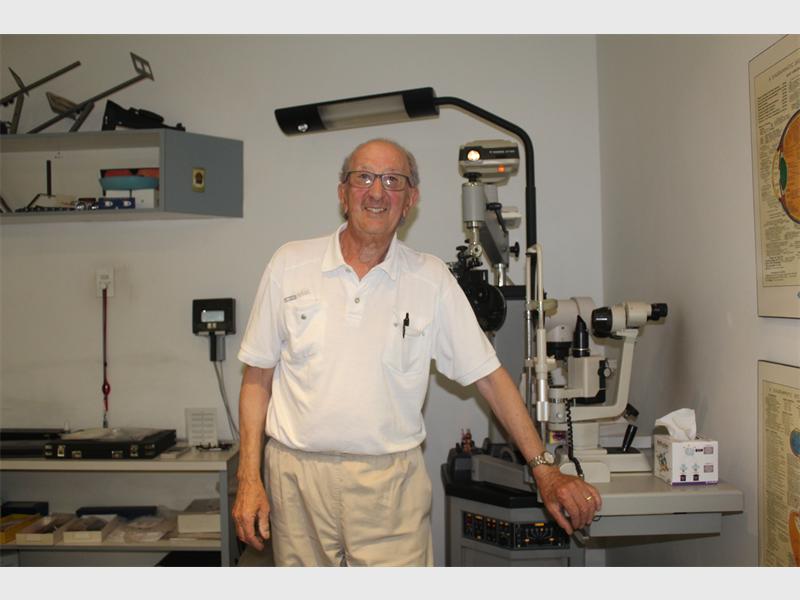
Optometrist, Harry Tambourlas has been in the profession for the past 50 years and has a practice in Northcliff.
From his many years of experience, he warned that buying ready-readers from over the counter isn’t always a good idea – especially if you haven’t been for an eye test.
“A vision examination is a way to determine how well you see with both eyes and to eliminate any possibility of developing an eye disease. Over-the-counter spectacles are normally for people over the age of 40 and are too strong for people who fall in a younger age group,” explained Tambourlas.
He added that one of the misconceptions associated with over-the-counter glasses is that people purchase them based on their own assumption and not based on an optometrist’s assessment, who can then send them to an eye specialist if there is a hidden problem.
“An eye examination helps you personalise your glasses and addresses your specific eye problem. For people who don’t like glasses, they have the option of using eye contacts. I only recommend this when they are required to wear a thick lens, which may not be appealing to them,” said Tambourlas.
He offers reasons why over-the-counter spectacles are not substitutes for regular eye examinations:
- Glaucoma is a highly complex and seemingly harmless condition that can be diagnosed through an eye examination
- An eye examination can reveal a significant difference in prescription between one eye and the other
- A person may have moderate to high astigmatism (distorted vision), and resorting to reading glasses will not correct your distorted vision when you can rather get sharper clarity with proper spectacle correction
- Ready-readers are not correctly centered for every person’s eyes. They may cause headaches, eye strain, dizziness and possibly double vision.
Tambourlas explained that although ready-readers are not expensive, they may come with hidden risks. He advises that they should be used for emergencies or backup. “My advice would be to visit your optometrist or ophthalmologist annually, especially if you’re over the age of 40,” concluded Tambourlas.