Climate change workshop kick-starts at UJ #ujactiondialogue
AUCKLAND PARK – Energy consumption is concentrated in cities due to the number of people and economic activities, the City said at the climate change workshop happening today, 10 October.
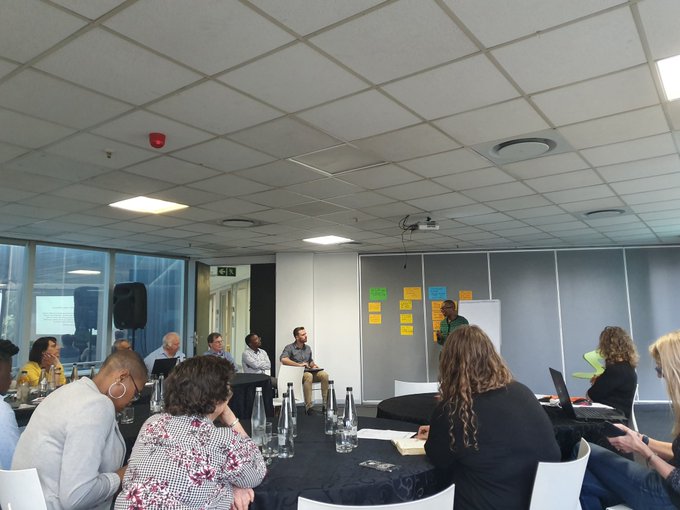
According to the City of Johannesburg in a series of tweets at the University of Johannesburg the Planning in Africa programme commits the cities to accelerate transformative climate action by delivering carbon neutrality for all new buildings and all municipal buildings by 2030 and citywide carbon neutrality by 2050.
The City said that Joburg has taken a holistic view of energy use and sustainability has incorporated energy efficiency and demand-side management measures as part of an integrated energy solution for the City. “Twenty-first-century challenges are complex and broad. At the heart of these challenges are basic needs such as energy, food, water, housing, mobility, health and access to information. These challenges will become even more acute as the population expands,” said the City.
The City said that access to energy, energy security, poverty eradication, and sustainable development are interlinked, they will require new thinking if we’re to address these issues. “Any approach we have on the green building policy should not be too rigid, it needs to make room for new ideas, we need flexibility within the policy,” explained the City.
The City also said that the green building policy will be used as a guideline for new buildings in Johannesburg. The United Nations estimated in 2015 that about 2.8 billion people still have no access to modern energy services, over 1.1 billion don’t have electricity, of which 620 million+ live in sub-Saharan Africa and 97 per cent of people dealing with rolling blackouts or load shedding live in sub-Saharan Africa and developing Asia.
“Most of South Africa’s man-made greenhouse gas emissions result from the consumption of fossil fuel, approximately 36 per cent of all greenhouse gas emissions are from the four largest metros. Energy consumption is concentrated in cities due to the number of people and economic activities,” clarified the City in a series of tweets.
The City also mentioned that buildings have a long lifespan (40–120 years). “An inefficient building built now locks in high energy consumption in the future. Decreasing buildings emissions to net-zero will require reducing buildings’ energy demand greatly and supplying the remaining energy demand with clean energy such as Solar Photovoltaic (PV),” added the City.
“National energy efficiency building regulations are currently being updated with new energy use intensity requirements. Peaks are caused by simultaneous cooking, and energy use by residents. We need to look into energy storage systems, a geyser is one of them, the bigger the geyser, the more energy stored, the less energy used. Net-zero water buildings are designed to reduce water consumption. Given the looming water crisis, how do we ensure Joburg remains water resilient. Discussion underway,” affirmed the City.
The City, however, highlighted that a major issue in the city right now is basement water, which can be used as water for the greywater system, the FNB campus is said to be already doing this. “With appropriate technology, we can ensure rainwater is purified enough to be drinking water, it’s an intricate system that needs to be worked out, we could get a lot of value out of it,’ said the City.
If we keep on using drinking water for things like flushing the toilet, we will run out of water.
Now talking on water contamination, if one has onsite water treatment one has to ensure it doesn't feed back into the grid, there's a risk of cross contamination #ujactiondialogue #climateaction ^NS
— City of Joburg (@CityofJoburgZA) October 10, 2019
Johannesburg is sitting on a massive cavity that is full of water, the issue lies in how its mine water, we will need to explore mine water extraction to bring it into potential grey water systems: expert #ujactiondialogue #climateaction ^NS
— City of Joburg (@CityofJoburgZA) October 10, 2019
We did a study that shows us that people living in high rise buildings in the inner city are using more water than people living in the suburbs, we need tenant education: expert #ujactiondialogue #climateaction ^NS
— City of Joburg (@CityofJoburgZA) October 10, 2019
Joburgs landfills will be at full capacity in 5.2 years, how do we promote waste efficiency, discussion underway #ujactiondialogue #climateaction ^NS
— City of Joburg (@CityofJoburgZA) October 10, 2019
.@JPOMA_ZA is working on assisting informal recyclers with a spot in Berea so they have a space to work in and separate waste #ujactiondialogue #climateaction ^NS
— City of Joburg (@CityofJoburgZA) October 10, 2019
The green building policy can reward companies for using recycled materials in the construction phase, it helps economically because a massive industry can come out of that : expert #ujactiondialogue #climateaction ^NS
— City of Joburg (@CityofJoburgZA) October 10, 2019
Related article: