Hat-trick of wins for Witsies at Science Oscars
BRAAMFONTEIN – Three Witsies in human genetics, economic geology, and public health research data respectively, have won National Science and Technology Forum (NSTF) awards.

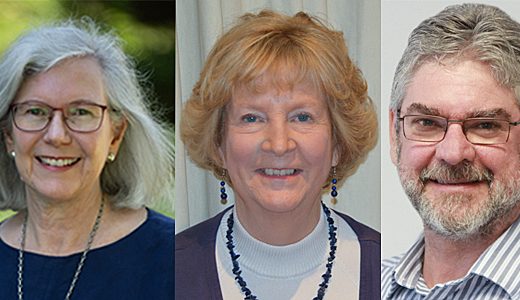
Professor Michèle Ramsay, Professor Judith Kinnaird, and Associate Professor Mark Collinson were winners in their categories at the NSTF-South32 Awards, a live-streamed gala event that took place on 30 July.
The prestigious annual awards, considered the ‘Oscars of Science’, recognise outstanding contributions to science, engineering, technology (SET), and innovation, in 13 categories. Ramsay is professor of human genetics in the Faculty of Health Sciences at Wits, director of the Sydney Brenner Institute for Molecular Bioscience, and chair of the Department of Science and Innovation National Research Foundation South African Research Chair Initiative: Bioinformatics and Genomics of African Populations.
She won the Lifetime Achievement Award for pioneering genomic medicine approaches in Africa and leading the transcontinental study on factors that contribute to African diseases.
“I feel that this is a great honour, not just for me, but for the wonderful groups of people I have worked with throughout my career. My inspiration comes from my students, postdocs and colleagues and I believe that a healthy and supportive work environment brings out the very best in everyone,” said Ramsay.
Kinnaird, who won the Management Award, is an associate professor and director of the Economic Geology Research Unit and co-director of the Department of Science and Innovation Centre of Excellence for the Study of Mineral and Energy Deposits in the School of Geosciences at Wits. The award acknowledges Kinnaird for directing economic geology research studies on metals for everyday needs, now and for the future.
Whilst Collinson is co-director with Professor Kobus Herbst of the South African Population Research Infrastructure Network (Saprin), a national research infrastructure that has harmonised core data from all three of South Africa’s Health and Demographic Surveillance Systems (HDSS) and is developing new interconnected HDSS nodes in multiple urban settings.
They won the Data for Research Award for collectively conceiving, developing and implementing Saprin, which produces up-to-date information on health and socio-economic well-being, representative of South Africa’s population, for scientific analysis, embedding research projects and policy evaluation.
“These NSTF Awards play a good role in making the public aware of the value of science for the country. They showcase the contributions of government, research councils, universities, NGOs, and the private sector to advances in knowledge for human development and well-being,” concluded Collinson.