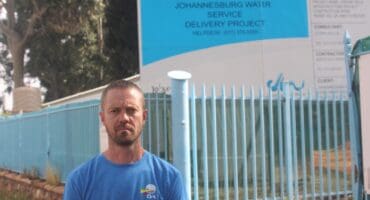
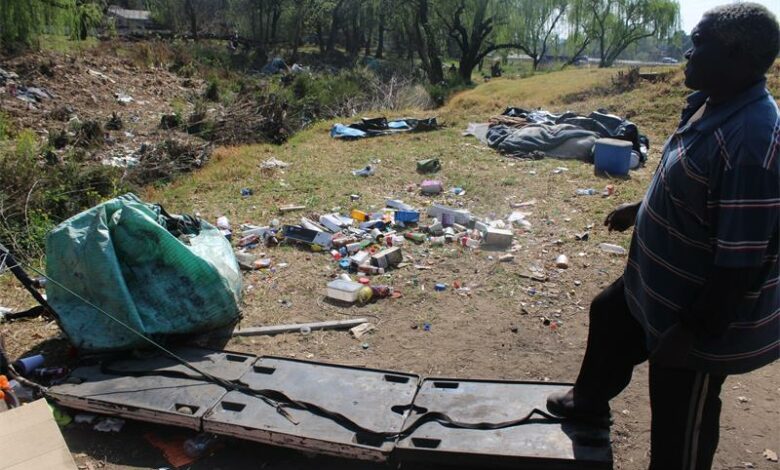
Beneath the city’s bustling streets and towering skyline lies a fractured community of thousands living on the streets, struggling daily with poverty, addiction, trauma, and systemic neglect. Johannesburg’s Region B is grappling with a deepening crisis of homelessness and displacement, a reality largely overlooked by mainstream society.
A crisis of choice and circumstance
According to Nthatisi Modingoane, spokesperson for the City of Johannesburg, many displaced individuals decline the social services designed to assist them.
“Most of the support offered by the city’s Social Development Department is voluntary, and for people scraping to survive, voluntary help can often feel like an unattainable luxury.” Many express interest in shelters, but find existing facilities too far from where they earn their daily living.
Read more: Victory for residents as city scraps CCTV by-law
Currently, Region B doesn’t have the resources to help the hundreds, if not thousands, of homeless men and women.
The majority are undocumented migrants from neighbouring countries, such as Lesotho, Zimbabwe, Mozambique, and Malawi, who remain particularly vulnerable and marginalised.
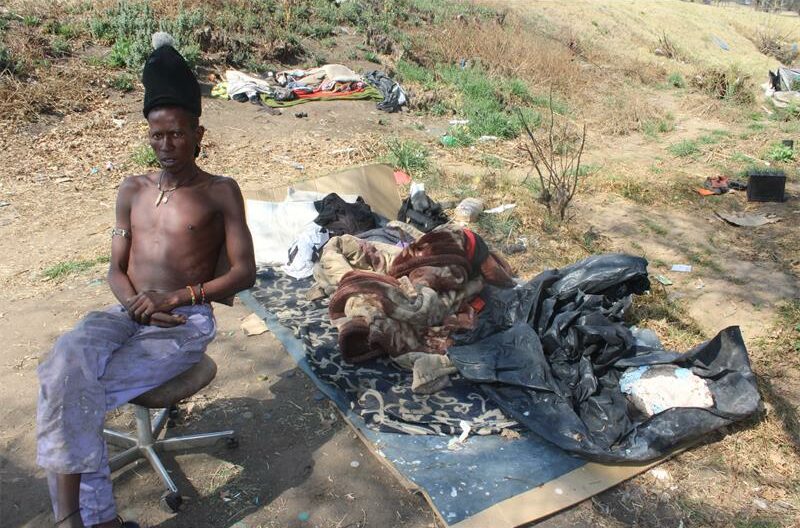
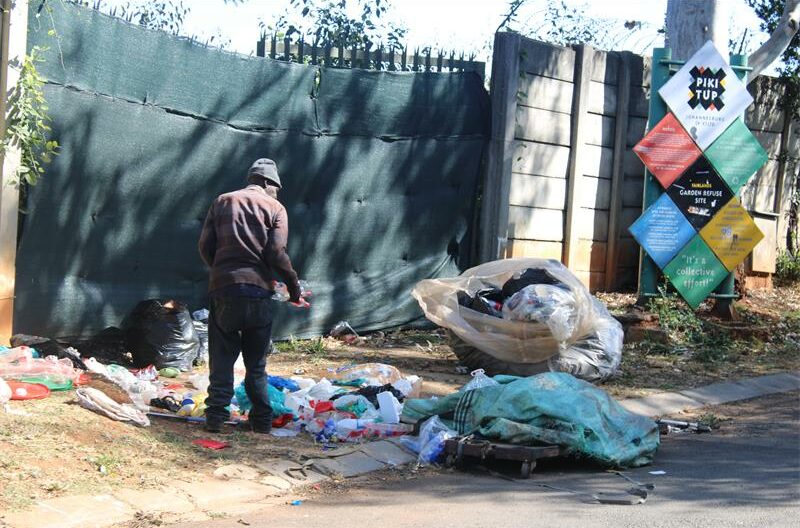
Survival often means resorting to informal work as recyclers and gathering waste to sell. This desperate hustle comes with grim consequences: Accumulated recyclables attract rodents, fires lit to stay warm cause pollution, and public spaces become overwhelmed by grime and refuse. Adding to the complexity is ‘week-in rough sleepers’ who camp temporarily in hotspots during weekdays because they cannot afford daily travel from townships like Soweto, Sebokeng, or Diepsloot.
The City of Johannesburg’s response is a patchwork of efforts. Modingoane highlights co-ordination through regional visible service delivery and mayoral high impact operations, alongside partnerships with NGOs and international bodies.
A new city policy on homelessness, approved in September 2024, aims to provide a framework for outreach and shelter.
The Social Development Department also runs programmes, including outreach and awareness, shelter management, psychosocial support, substance abuse treatment, and reintegration efforts.
Also read: Partial restoration of streetlights amid ongoing theft challenges
Outreach teams focus on mapping hotspots and educating communities not to hand out money, food, or blankets directly to homeless persons, but, instead, to direct aid through shelters. The city currently operates three shelters in Region B, with a fourth currently being built:
• Windsor West Shelter, in Ward 98, with space for 40 adult men,
• 1 Dan Street Shelter, in Ward 70, with 60 beds for men,
• 3 Kotze Street Shelter, in Ward 60, with capacity for 350 men and women, and
• Sodiak Circle Shelter, in Ward 119, which is near completion and will accommodate 200 men and women.
Psychosocial support, including counselling and social work case management, is offered both in shelters and outreach centres.
Many displaced people struggle with addiction, so social workers facilitate medical assessments, inpatient and outpatient rehabilitation, family tracing, and reintegration programmes. Yet, for many, shelters remain an unsuitable alternative.
Zimbabwean national Nhla Sibanda explains: “The shelters are not really a home. I can’t meet their criteria, so I have to survive outside.
”Strict curfews, inflexible rules, and constant movement between facilities make it impossible to build stability. Shelters are also often seen as riddled with ongoing drug-related violence.
The ultimate goal is community reintegration – helping individuals reconnect with families or transition into independent living with employment and housing. Some displaced persons are estranged from families due to past crimes or substance dependencies, while others have lost homes or property with no support to return to. Senior citizens sometimes choose the streets, over burdening households with limited resources.
Manager at Tshepo Community Development Initiative (CDI) Alet Geldenhuys has been working to address these deeper issues. She explained that simply providing food or jobs is not enough. “
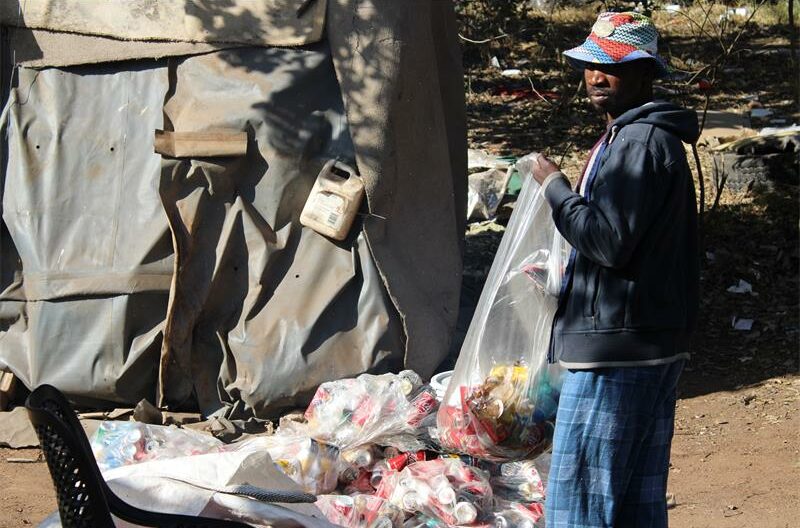
There’s a trauma aspect to living on the street that we cannot solve by just giving them a job. They need to solve their problems, and their trauma issues, before they can get a job.”
In 2023, Tshepo partnered with U-Turn, a service centre focused on helping displaced people choose to get off the street through a structured programme, rather than quick fixes.
The initiative also seeks to challenge misconceptions about homeless people.
“People think it’s all druggies or bad people. Humanity gets lost because the community doesn’t understand the systems in Johannesburg. Many come here looking for work but find that even a small job isn’t enough to pay rent, so they end up on the streets. Sleeping rough is not easy, and many turn to substances to cope.”
She also pointed out that some shelters have been closed for months. “The City of Johannesburg is not coming to the party. There are many buildings, but we’re not actually utilising them for shelters.”
He also highlighted that drug use is prevalent, even within shelters, making it difficult for those trying to recover.
Respecting human rights while enforcing the law
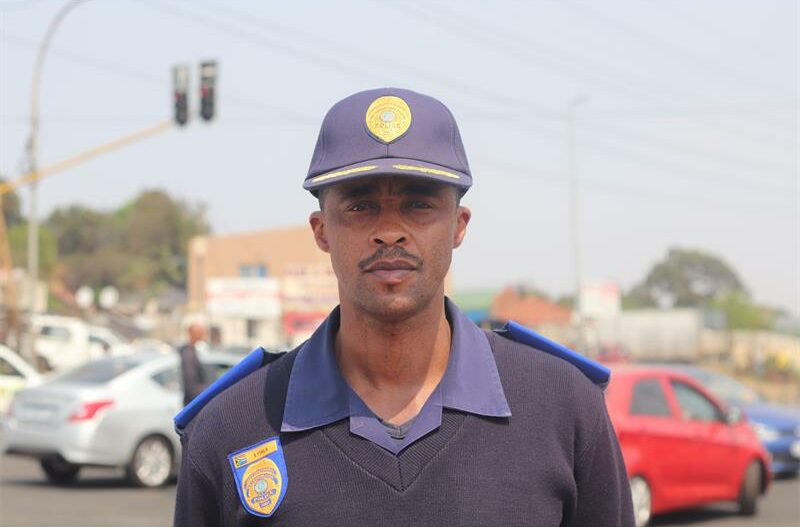
Meanwhile, the Johannesburg Metro Police Department (JMPD) continues to monitor and remove offenders from public spaces, enforcing by-laws related to public drinking, fires, and disturbances.
JMPD spokesperson Xolani Fihla says the department works with relevant agencies to respect human rights while enforcing the city’s laws. However, without tougher measures, permanent removal remains a challenge.
Region B’s crisis reflects a broader national and continental issue. While the city’s response is earnest, it remains overwhelmed and under-resourced.
Also read: Protest erupts in Coronationville over water shortages
Shelter capacity is insufficient, outreach relies heavily on voluntary compliance, and trauma and addiction are inadequately addressed. Co-ordination between municipal departments and NGOs exists, but is fragmented and slow.
Modingoane highlighted that advocates stress the urgent need to expand shelter facilities with inclusive, safe, and therapeutic environments free of substance abuse.
Sustainable reintegration through job and housing support must be prioritised. Public education is also vital to dismantle myths and foster empathy, while policy gaps that exclude undocumented migrants from basic protections must be addressed.
Follow us on our Whatsapp channel, Facebook, X, Instagram, and TikTok for the latest updates!