
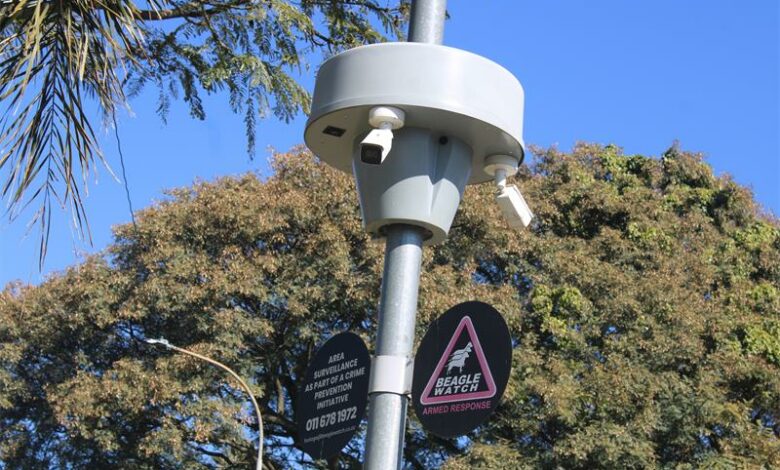
The Johannesburg City Council has officially repealed the CCTV by-law that sought to regulate the use of CCTV cameras in public spaces, such as streets and sidewalks.
The decision was made at the municipal council meeting at the end of August, marking a significant shift in the city’s approach to surveillance and public safety. The by-law, which was originally passed on February 28, restricted the release of CCTV footage exclusively to officers from the South African Police Service (SAPS) and the Johannesburg Metropolitan Police Department (JMPD).
Property owners and security providers were prohibited from independently sharing footage. This restriction extended to residents, who were barred from sharing footage with community groups or on social media, even during crimes in progress.
Read more: CoJ set to repeal CCTV by-law after South African Property Owners Association court proceedings
The by-law sparked widespread controversy, with many stakeholders raising concerns about its impact on crime prevention, privacy rights, and operational efficiency.
Critics argued that it infringed on residents’ constitutional rights, particularly their right to protect themselves. The prohibition on sharing footage was seen as a barrier to community-led crime prevention efforts.
Stefanie Fick, executive director of the accountability division at Organisation Undoing Tax Abuse (Outa), welcomed the repeal.
“Outa is delighted that the city has finally come to its senses. Before launching our review application, we wrote to the city asking it to reconsider this ill-conceived by-law, but we received no response. It ultimately took a range of civil society organisations initiating legal action to make the city admit that the by-law was a very bad idea.”
Fick emphasised that the regulation faced widespread criticism for undermining constitutional rights and creating unnecessary regulatory burdens. “The withdrawal of the CCTV by-law marks a significant victory for public participation and constitutionalism, reaffirming the role of civic organisations and residents in holding government accountable.”
The Democratic Alliance (DA), one of the political parties that opposed the by-law, also expressed satisfaction with the repeal.
Ward 74 councillor Belinda Kayser-Echeozonjoku said: “The DA is vindicated by the city repealing the flawed CCTV by-law. A full win for residents of Johannesburg. We warned the city, and the department, about various flaws in this by-law, but they went ahead and wasted valuable money that could have been spent on service delivery to residents.”
Also read: Emmarentia Residents Association invites residents to volunteer and shape Emmarentia’s future
She criticised the city for only acting after residents, and the South African Property Owners Association (Sapoa), took legal action.
“It is unfortunate that it took the residents, and Sapoa, taking the city to court, and the city losing the case, before bringing it to council to repeal. We shall be writing to Gauteng Department of Co-operative Governance and Traditional Affairs (CoGTA) to request that the money be recouped from councillors who voted in favour of this unlawful by-law. The money from residents should be spent on services and not defending unlawful decisions in court.”
Andre Aiton, managing director of Beagle Watch, described the news as excellent. He highlighted the importance of CCTV as a powerful tool in fighting crime and bringing criminals to justice.
“The country cannot simply carry on with the current crime levels without having this very strong tool in CCTV. It is one of the strengths security companies have, especially in making arrests through license plate recognition.”
Follow us on our Whatsapp channel, Facebook, X, Instagram, and TikTok for the latest updates