
Historic Braamfontein Cemetery crematorium reveals secrets behind early modern funerary practices
Visitors gained rare insight into Braamfontein Cemetery’s historic crematorium, exploring its architecture, first cremations, and enduring legacy.
Visitors to Braamfontein Cemetery were treated to more than a tranquil stroll through its historic grounds.
The Friends of Johannesburg Cemeteries (FoJC) hosted tours of the cemetery’s active crematorium, offering a unique glimpse into one of the city’s lesser-known heritage sites.
Nicole Noble of FoJC, joined by Sarah Welham, guided guests through the crematorium’s history.
Read more: Braamfontein Cemetery ash walls being meticulously repaired
“The decision to build a crematorium at Braamfontein Cemetery was made in 1931,” Noble explained. “Cremations were relatively new at the time and a novel way of dealing with death. Johannesburg was progressive in adopting this, even though burial remained the norm.”
Completed in 1932, the crematorium was designed by Johannesburg city engineer EH Waugh, an Australian-born architect and engineer who studied architecture at King’s College in England.
Noble shared details of the facility’s first cremations: Calvert J. Wakeford, aged 60, was cremated on March 1, 1932, and the following day, Morris George, aged 51, became the second.
“I often wonder who the staff were at that stage and how they were trained to undertake this new way of dealing with death,” Noble said. “The nearby Hindu Crematorium likely provided experienced personnel to guide early operations.”
Also read: Fairland relies on generator amid vandalism woes
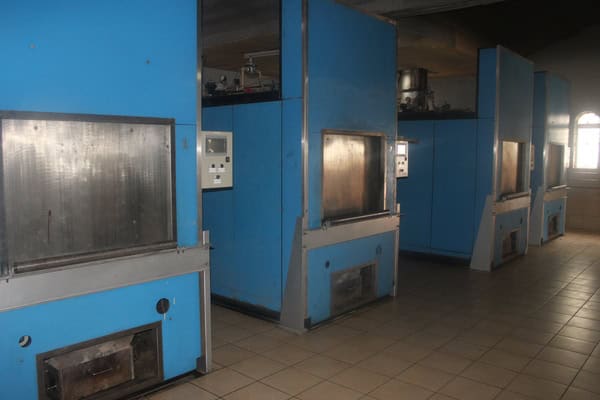
Growing demand led to the installation of an additional furnace in 1934, alongside the introduction of memorial walls. By 1942, cremations still represented only about 10 percent of all interments in Johannesburg’s city-managed cemeteries. In 2011, four modern furnaces were added, giving the chapel a more industrial appearance.
Today, cremations are conducted using a gas furnace at 800–1 000°C, taking three to four hours depending on the size of the casket.
Tours concluded at the columbarium, a dedicated space for the interment of ashes. Noble explained the origin of the term, deriving from the Latin ‘columba,’ meaning dove, in reference to niches that resemble dovecotes.
The FoJC’s crematorium tours offer visitors both historical context and a rare opportunity to understand Johannesburg’s early modern approach to funerary practices — an intersection of architecture, technology, and cultural evolution rarely seen by the public.
Follow us on our Whatsapp channel, Facebook, X, Instagram, and TikTok for the latest updates and inspiration!