Sewage pollution and litter threaten Westdene Spruit ecosystem
Sewage pollution and hundreds of kilograms of rubbish are threatening the Westdene Spruit, but conservationists and freshwater ecologists believe community action could help restore this important natural corridor.
Sewage pollution and tonnes of litter are threatening the ecological health of the Westdene Spruit, even as conservationists and freshwater ecologists work to understand the damage and restore the stream.
Beneath roads, past sports fields and through the ancient forest of Melville Koppies, the Westdene Spruit quietly connects some of Johannesburg’s important green spaces.
For Tam Scheidegger, a conservation volunteer at Melville Koppies, the spruit is much more than a stream. It is a natural thread connecting different parts of the city and a place where people and nature meet.
Read more: Community members clean up Braamfontein Spruit at Alberts Farm Conservancy
Two tributaries join at Melville Koppies West. One flows underground beneath Main Road through Melville, while the other rises above Westdene Dam, flows beneath the University of Johannesburg stadium, through Padda Dam and under more sports fields before entering the kloof at Melville Koppies West.
From there, the water passes under a bridge into the Central Reserve before eventually flowing into Emmarentia Park. “Water is life,” said Scheidegger, explaining the natural attraction people and animals have to water sources for drinking, cooling and cleansing.
The meeting point of two waterways also carries cultural significance. According to Scheidegger, a confluence is perceived by many cultures as a spiritual place, with people coming to the area to perform traditional ceremonies.
The section running through Melville Koppies is particularly special because of its landscape. The steep-sided kloof contains an ancient natural forest ecosystem alongside grassland, creating a combination that supports a rich diversity of life.
Yet the health of the water running through this remarkable landscape is a concern.
Siphelele Mbangata, a freshwater ecologist at Hlanzekile River and Ocean Cleaning, works with the organisation to link threats such as pollution to their impacts on freshwater ecosystems. The aim is also to track changes after litter is removed, find solutions to make urban rivers clean and safe, and involve surrounding communities in protecting them.
Mbangata and Scheidegger have been using the WaterCAN kit to assess the stream’s water chemistry. The results have been returning as unsafe because of the presence of E. coli bacteria, which Mbangata said is most likely due to sewage.
Other chemical indicators tested so far, including nitrates, phosphates and pH, have returned safe results. To get a fuller picture of the spruit’s ecological condition, Mbangata conducted a miniSASS5 assessment on March 14. The citizen-science method examines aquatic macro-invertebrates — small organisms living in the water — because the groups found can indicate river health.
The assessment produced a score of 4.3, placing the spruit in the very poor ecological condition category because of pollution and sewage. The assessment has not yet been repeated, so there is currently no new miniSASS5 score to indicate whether the river’s ecological condition has changed since March.
For Scheidegger, sewage entering the stream through leaking infrastructure is one of the most serious threats. The problem is not only what can be seen. The smell itself can be an indication that something is wrong. “What should it smell like? Our nose tells us that when something will make us sick, and here the water is toxic,” she said, recalling how some volunteers were gagging while working near a sewage leak.
Johannesburg Water has been approached for comment on the concerns about sewage pollution. Spokesperson Phakamani Ndlovu said the utility had followed up with the relevant depot and was awaiting feedback.
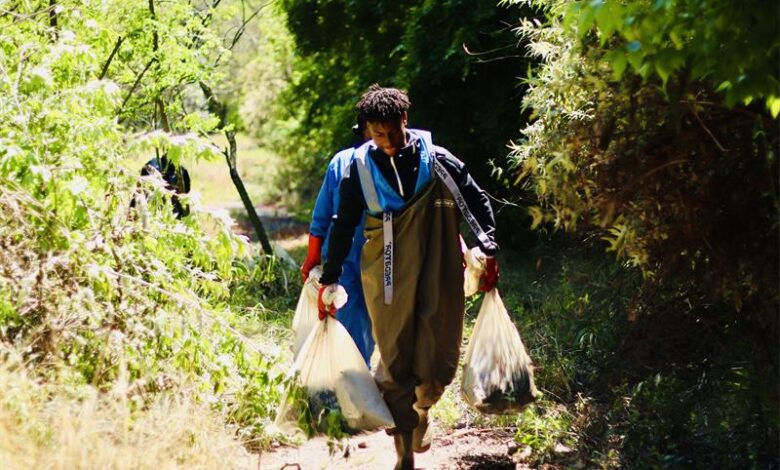
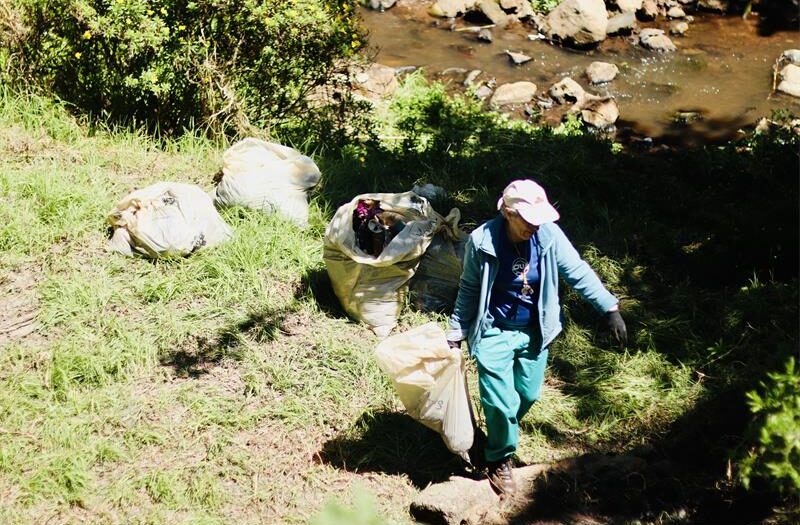
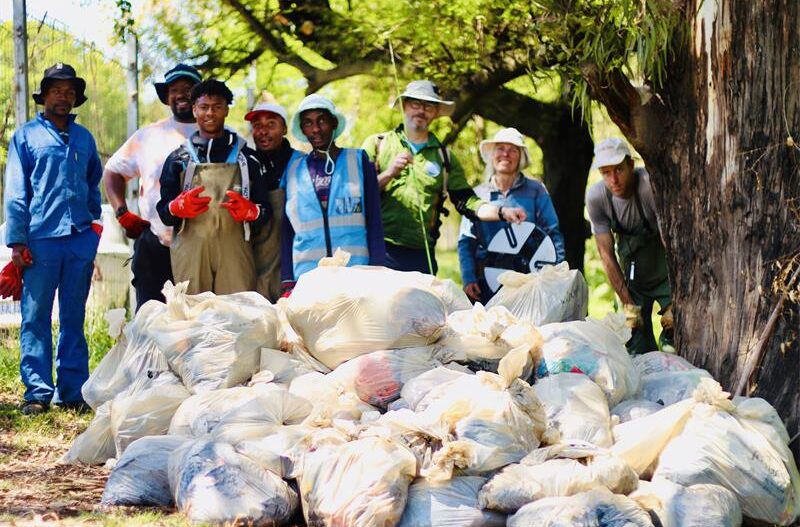
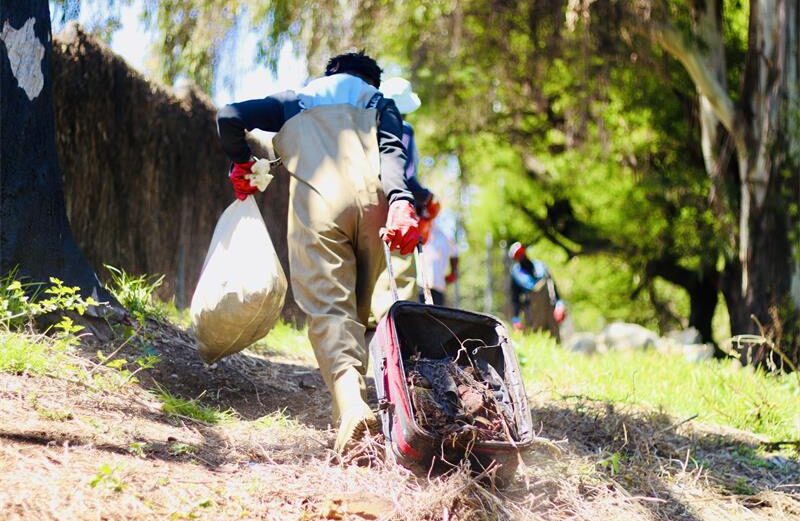
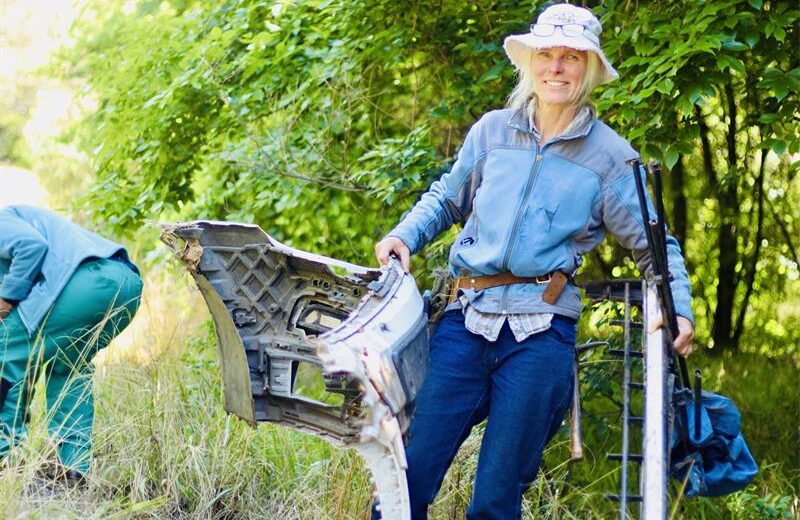
The sewage problem is compounded by the amount of waste entering the waterway. During a recent clean-up, about 15 people collected an additional 612.72kg of rubbish from a 150m stretch of the spruit.
Scheidegger said the section had never been cleared before and that there are worse sections elsewhere. Even after the recent effort, she believes repeated clean-ups will be needed to remove rubbish that has become deeply embedded in the landscape.
The waste creates more than an eyesore. Scheidegger describes two broad forms of pollution: debris, including macro- and microplastics, and chemical pollution.
Also read: Pollution threatens Westdene Spruit as Melville Koppies conservationists urge action
Plastic bags and other materials can become wrapped around aquatic birds and animals, restricting their movement and potentially strangling them. Waste can also become caught around boulders and tree roots in the riverbed, smothering habitats and making it difficult for invertebrates to access the soil.
Chemical pollution from leaking sewers poses a different threat by killing the invertebrates that form part of the riparian food web.
These tiny creatures may be easy to overlook, but their presence — or absence — can reveal much about the health of a river.
Despite the pollution, the waterway is part of a natural system with its own ability to recover.
According to Scheidegger, bacteria in the soil can help remove pollutants from water if they are given enough space and time. The wetlands and aeration created when water moves turbulently over a rocky riverbed also help cleanse the water.
She points to the last of the Emmarentia dams as an example, noting that the water quality there is already much better than it is upstream. For Scheidegger, restoring the Westdene Spruit would mean more than simply having clean-looking water.
She imagines dappled sunlight filtering through an indigenous forest canopy and sparkling on clear water, accompanied by the sounds of crickets, buzzing insects and different bird calls. But achieving that vision requires people to become part of the process.
Scheidegger believes one of the most important things residents can do is use their local green spaces.
‘Use it or lose it,’ she said.
Regularly spending time in these areas allows people to get to know them, she explains. They see the seasons change and are more likely to notice when something is wrong — such as a leaking pipe or new pollution — because they have developed a relationship with the place. “You get to know a place like a friend. One sees it change seasonally and when there are threats, like leaking pipes, one will do something about it, because one looks after our friends.”
That relationship also means understanding that waste thrown away in one place can become a problem somewhere else. “What residents put down their drains and what they toss out the car window or sweep into the stormwater drains on the side of roads actually all ends up in our rivers. ‘Not my problem’ becomes your problem when there is no supply of clean drinking water.”
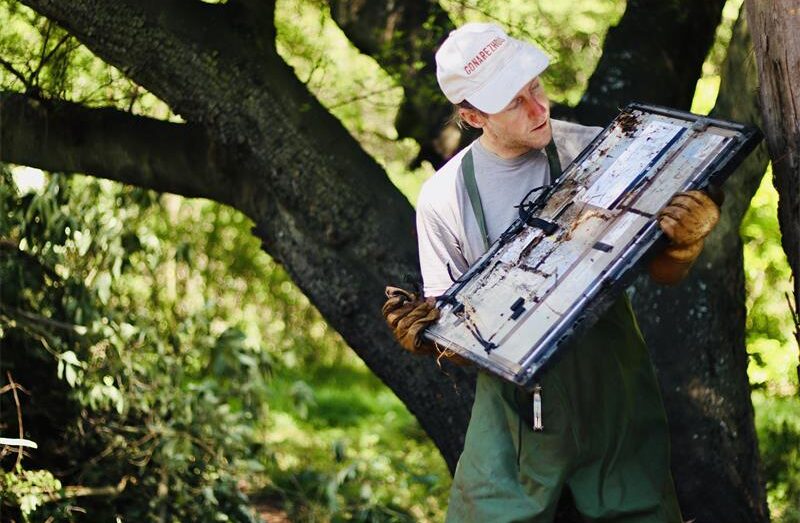
For Mbangata, community involvement forms an important part of the work being done through Hlanzekile: understanding the threats, measuring their impacts, tracking changes and finding practical solutions for urban waterways.
Scheidegger believes the Westdene Spruit could become something very different from the polluted waterway it is today. Her vision is of a safe sanctuary where mothers can bring their children to play and catch tadpoles in shallow water; a place where people and nature can reconnect.
It is a vision that starts with clean water, but extends much further. It means a stream where aquatic life can return, where birds and insects can thrive, where children can explore and where residents feel connected enough to notice when the waterway needs their help.
The Westdene Spruit may be hidden beneath roads and tucked between the city’s developed spaces, but its journey connects a chain of Johannesburg’s green spaces.
Protecting it means recognising that what happens in one part of the city can eventually flow downstream — and that the future health of the waterway is, in many ways, a shared responsibility.
Northcliff Melville Times will do a follow-up article once Johannesburg Water responds.
Follow us on our Whatsapp channel, Facebook, X, Instagram, and TikTok for the latest updates!