Gallery of belonging finds a home in Melville’s art scene
After closing her showroom in Rosebank, curator Lynn Grobbelaar moved to Melville in search of something more intimate, that would foster a connection. TROV was that connection, where artefacts tell a story and a calling she could not ignore.
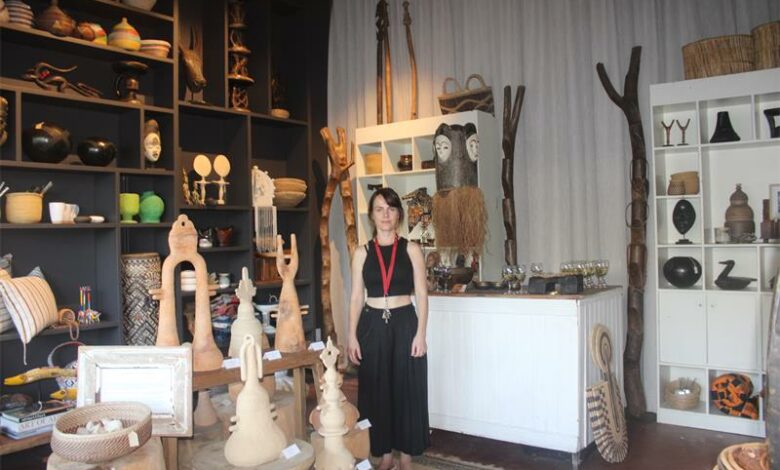
In the middle of the art scene in Melville there is a gallery that hums with the presence of memory.
At its centre is Lynn Grobbellar, the curator of TROV, who speaks of African artefacts not as inventory, but as inheritance. Her relationship with the continents’ craft traditions began, as she puts it, quite by chance in 2013. “I took a job in sales – exporting African, Indian, Chinese, and Indonesian artefacts and furniture, without knowing it would quietly alter the course of my life. What began as work became devotion, a calling that I did not see coming, but could no longer ignore.”
When she left her position in 2020, during the uncertainty of Covid, the next step felt instinctive. Founding TROV in 2021 was, she describes, an act of faith. A promise to continue honouring the craft and stories that had reshaped her.
Read more: Meet the Northcliff artist transforming his craft into a mission to teach
The move to Melville followed the closure of her Rosebank showroom. Seeking intimacy over spectacle, she found a space that felt destined. A recent revamp by Oksijen Interior Design has since deepened the gallery’s quiet confidence. Before visitors study a sculpture or textile, Lynn hopes they feel something simpler: Welcome. Belonging, she believes, must come before interpretation.
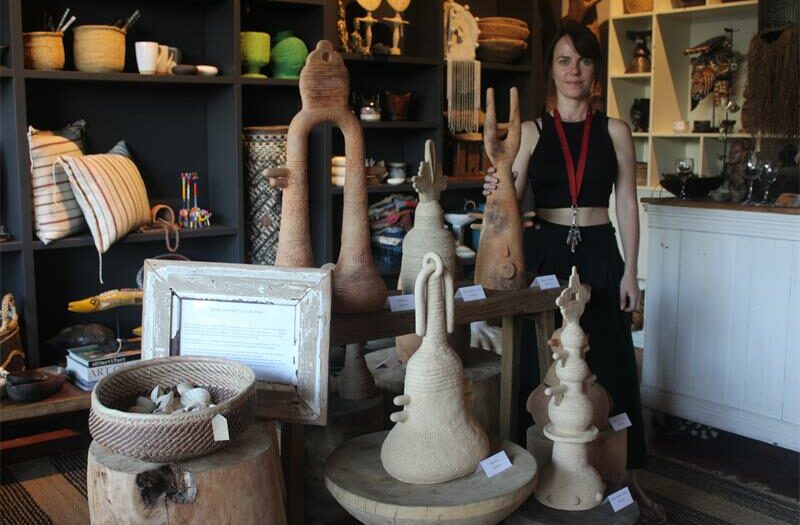
She resists reducing the collection to a neat phrase. The works carry lineage. Gestures repeated across generations, materials shaped by specific landscapes. “Its identity is layered, lived,” she says, too expansive for a single line. Sourcing is intuitive. Story, skill, and the authority of tradition guide her choices. “It feels less like selling and more like adoption.” Each object is stewarded until it reaches its next chapter.
Also read: The art of learning with Theresa Giorza
Among the regions that captivate her are the Tuareg communities, whose functional objects often feel ceremonial. Yet her admiration spans the continent: intricate textiles, architectural baskets, carvings that seem almost animate. In what she calls the Temu era of speed and mass production, preservation feels urgent. Craft demands apprenticeship, patience, and repetition. Housing it within a contemporary gallery, she insists, is not nostalgia, but protection.
Lynn wants her viewers to have a renewed appreciation for slowness when they walk into TROV. “An understanding that not everything of value is immediate or loud. That connection requires presence and that history deserves time. If someone leaves feeling even slightly more atuned, more patient, more aware, and more connected to the human hands behind the objects, then the space has done its work.”
Follow us on our Whatsapp channel, Facebook, X, Instagram, and TikTok for the latest updates and inspiration!