En Passant: History, and Robert ‘Bob’ Crisp
I GAVE up History as a subject at school at the end of Standard 6. I remember nothing about what I was supposedly taught that year except that it had something to do with the ancient Romans. Even now, I cannot imagine what relevance this had to us pre-pubescent lads in khaki short pants, living …
I GAVE up History as a subject at school at the end of Standard 6. I remember nothing about what I was supposedly taught that year except that it had something to do with the ancient Romans. Even now, I cannot imagine what relevance this had to us pre-pubescent lads in khaki short pants, living in the middle of the 20th century towards the bottom of Africa.
So, any history that I have encountered subsequent to that time has been on a voluntary basis, and I have to tell you that I am enjoying it more and more. This might have to do with the fact that I don’t have to learn it, and nobody is going to test me on what I have and have not absorbed. I can read it and forget it, although I suppose I must retain some of it somewhere in my brain.
Thus it was that in June I read A History of The English Speaking Peoples, in four volumes, by Winston Churchill (“Winnie” to his mates down at the Frog & Bucket), which I really did enjoy. It was a vast canvas which put many things into perspective for me. Then I read some lighter stuff, and last week picked up a book called The Outlanders – The Men Who Made Johannesburg, by a bloke called Robert Crisp (“Bob” to his pals down at the Dog & Sprocket).
Well, I tell you, it’s a very interesting book, The Outlanders (published in 1964 by Peter Davies Ltd), very easy to read, and it’s teaching me all sorts of things about Johannesburg, about Paul Kruger and the men who made Johannesburg, about the Transvaal Republic, about South African history. Winston Churchill’s History… ends with the Anglo Boer War, and so does The Outlanders, so it will be interesting to compare these two accounts of the same event.
The bloke who wrote The Outlanders, I’d never heard of – Robert Crisp, but the blurb at the back of the book made me believe that he was either very unlucky or very lucky, depending.
It said that during World War II, Crisp was in 17 different tanks that were hit by enemy shells, and was several times wounded. So he was unlucky that his particular tank was hit by enemy fire, 17 times, but he was lucky to survive anyway. He was awarded the Distinguished Service Order (DSO) and the Military Cross (MC). It said too that he played cricket for South Africa in 1935, and that, presumably at the time of publication in 1964, he was farming ducks in England.
He sounded to me like an interesting chap.
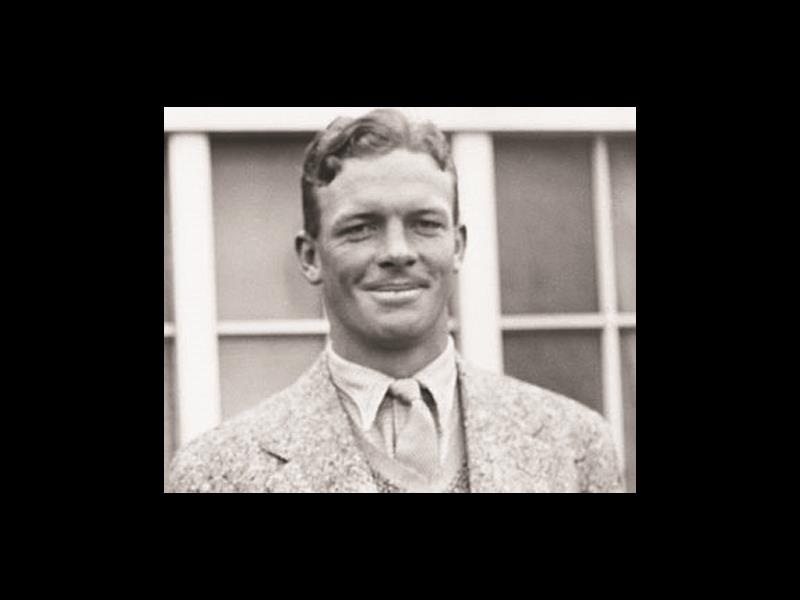
And so he was. He was born in India in 1911, played cricket for what was then Rhodesia, also Western Province and Worcestershire, and played nine tests for South Africa (against England and Australia). He was a fast bowler. He was part of the team, and instrumental in the first test victory for South Africa in England, taking five for 99 at Old Trafford.
He climbed Kilimanjaro, and on the way down met a pal of his who was going up, so he turned around and climbed the mountain again. During World War II, he was, as mentioned above, decorated for bravery, King George VI himself pining the MC to Bob’s chest. The King asked Bob if his wounds would affect his cricket career. “No, sire,” said Bob, “I was only hit in the head”.
Apparently he was recommended for the Victoria Cross, Britain’s highest decoration for bravery, but the boss man, Montgomery, General Montgomery nogal, vetoed the idea because Bob was “ill-disciplined”. Major Bob Crisp was demoted three times for insubordination.
But his wounds did end his cricket career, and he returned to journalism, working in England at the Daily Express and the East Anglian Daily Times. In South Africa Bob was one of the founders of Drum magazine – now there’s a thing.
He seems to have been a man who couldn’t settle down. He was a drinker, a womaniser and a gambler. He fled convention and lived in Greece, at one time living in a goat hut. At 60, he was diagnosed with cancer, and treated it by walking round round Crete with a donkey, and drinking an experimental drug (mixed with the resin-infused Greek wine called retsina) given to him by Greek doctors. They said rub it on, instead Bob drank it, and seemingly was cured!
He really does seem to have been a remarkable man.
Andy Bull in The Guardian, wrote: In 1992 Crisp, then 81, was in Australia to watch the 1992 World Cup. One of his two sons, Jonathan, had flown him there as a treat.
At the Melbourne Cricket Ground, Jonathan bumped into the old England wicketkeeper Godfrey Evans… “Godfrey said to me, ‘Your father is here? Oh God, I’ve got to meet him, he’s my hero,” Jonathan Crisp says. “I said ‘Come off it, Godfrey, you were a proper cricketer, how can he be your hero?'” Evans replied that Bob Crisp was the first man to make a 100 on tour. “I said ‘What? How can he be? Plenty of people have made 100s.’ And Godfrey said, “No, no, not runs, women, 100 women.”.
Bob Crisp died in 1994.