
The rise and rise of Newcastle
The market square came into existence when farmers set up camp in the area in the 1840s, to supply and obtain agricultural products and other livelihood necessities.
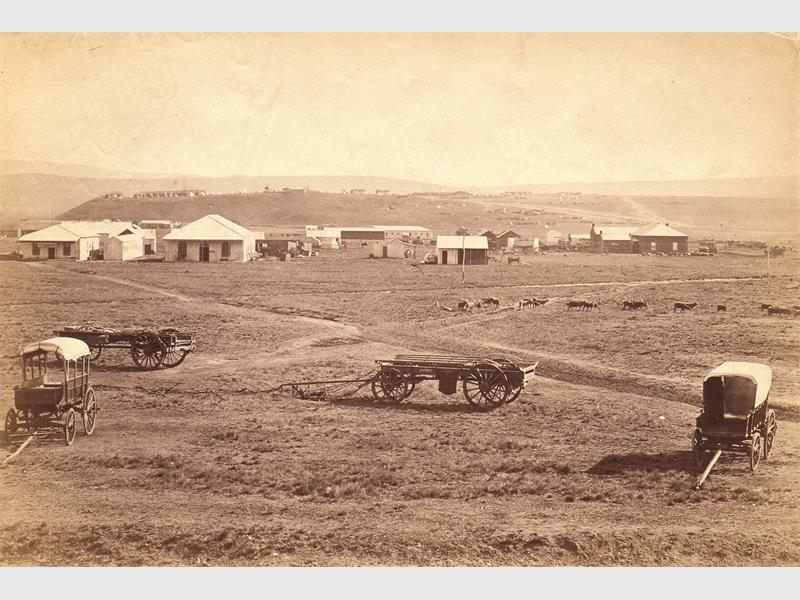
Newcastle was established in 1864, nothing more than one-horse town.
“It was a post halt initially. But where other towns started around church squares, Newcastle started around a market square,” explained Curator of Fort Amiel, Louis Eksteen.
Read: Majuba College rewards World Skills students
The rise of the entrepreneur in Newcastle had began.
The market square came into existence when farmers set up camp in the area in the 1840s, to supply and obtain agricultural products and other livelihood necessities.
“Shortly after the town was established, the first shop was officially opened by Edward Dixon.
William Steel joined the business and managed it for nine years. It operated as a general dealer and also served as a post office.
While the store has long since gone, Fruit & Veg City is now situated where the shop once stood.
Mr Eksteen said more settlers made their way to Newcastle, especially after the Boer-Zulu War and the discovery of gold in Barberton.
“More buildings started appearing and fortunately stone and good clay for bricks were in abundance.”
As the town expanded, wagon builders and wheelwrights prospered because the town was strategically situated between Durban and Johannesburg.
Related article: Official launch of Newcastle’s community tourism organisation
Millers, weavers, a tailor and a jeweller soon set up shop in Newcastle, contributing to the town’s economy.
The influx of businesses opening in town saw the establishment of the first school and municipality in 1882.
The school, Newcastle High School, still stands to today, albeit it has undergone some changes over the years and expanded significantly
“Things then started developing, and by 1891, Newcastle sported a railway station,” Mr Eksteen related.
Development of the town lured the steel industry to Newcastle in 1918. The third Iscor Works was announced in 1969. This ensured Newcastle grew rapidly and by 1980, the town’s population consisted of 26 800 Whites, 7 150 Indians, 980 Coloureds and an estimated 140 000 Africans.
This is a far cry from the town’s population in 1867, when a visitor to Newcastle by the name of Ralph Clarence described the town as a place with only two houses, one shop and a Zulu hut.
During the formation of the iron works industry, businessmen saw the opportunity of adding to the community and several hotels opened, which included the Masonic, the Plough, the Salisbury and the Old Cock.
Mr Eksteen explained these hotels and other businesses provided a platform for trading in Newcastle and brought it into the national economy.
“It also brought churches and other religious institutions, which are in their own right businesses, and just as important to educating people and helping towns develop.”
Enterprising entrepreneurs further contributed to the economic development of the town.
The Newcastle Mall, the textile industry, and other businesses all speak volumes of the influence of businesses on the evolvement of a once shanty town to a thriving community which is Newcastle in the 21st century.
Also read: Rolene Strauss welcomes her ‘little prince’