Restoring history as only Dundee can
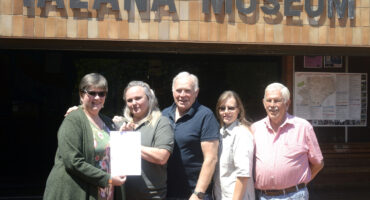
Pam McFadden, Talana Museum curator, recalls the day last August when Andre van Ellinckhuyzen, a policeman from Vryheid, telephoned her about a wreck of a cannon he found on a rubbish dump in Paulpietersburg.
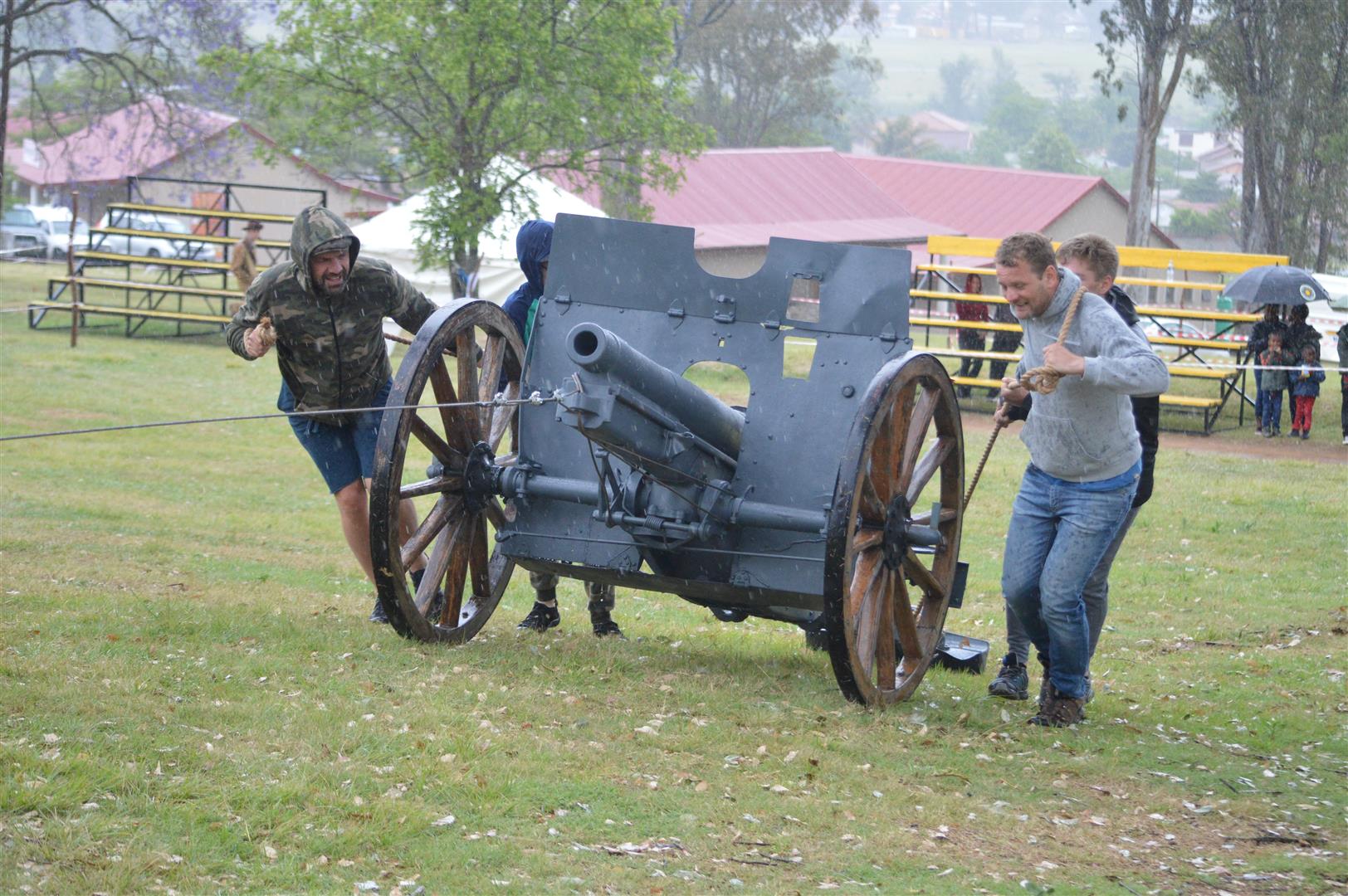
A 900kg twisted piece of rusted metal has been miraculously transformed back to what it was – an historic German Krupp field gun made at the turn of last century.
The story of the transformation is typically Dundee; it brought together historians, miners, carpenters and many others passionate about heritage.
Pam McFadden, Talana Museum curator, recalls the day last August when Andre van Ellinckhuyzen, a policeman from Vryheid, telephoned her about a wreck of a cannon he found on a rubbish dump in Paulpietersburg.
“Andre is a keen historian based in Vryheid and over the past couple of years has become a firm friend with requests for information about his various research. I was fascinated to know how the cannon had ended up in a dump.
“Was this the cannon that had for many years stood in the town gardens in Paulpietersburg? – no-one could answer that at the time.”
Pam said her biggest concern was that the bits and pieces would disappear and be sold as scrap metal. Fortunately, Andre arranged a couple of policemen and local farmers to transport the scrap cannon to the local museum for immediate safe-keeping.
Once there he negotiated that the cannon would come to Talana Museum and would be restored.

Pam jumped into action as only she can, rounding up tour guides, Pat Rundgren and Mike Nel, to accompany her to Paulpietersburg.
From there, arrangements were made to have the cannon handed over to Talana and taken to Aviemore Mine where manager Bob Bentley, had generously offered his workshop and men to help with the restoration.
There were collective grunts of disbelief from the Aviemore men when the 900kg piece of rust, purporting to be a piece of history, arrived.
“There was hope when we discovered that the axles still turned although the wheels had long gone of course.”
This old German Krupp Field Gun, in manufacture between 1901 and 1910, bears the imperial emblem of Kaiser Wilhelm II, and numerous other stamped marks.
The comments ranged from “This is not the same cannon we saw on the photographs” to “Absolutely amazing what has been done to restore this cannon.”
After much work, the restored cannon arrived at the museum in time for Talana Live –albeit without the restored wheels (they are still being completed) but the wagon wheels from the cannon at the War Memorial were borrowed temporarily.
The comments ranged from “This is not the same cannon we saw on the photographs” to “Absolutely amazing what has been done to restore this cannon.”
“It is indeed a tribute to the men on the mine and their adoption of the project… Ivan van der Stok undertook the fetch and carry, Soppies Ackerman saw to the refurbishment, a monstrous and delicate job – superbly accomplished. Well done and thank you guys. Rob Streak was requested to approach Van Zyl Conradie to manufacture the timber work – this is a work in progress, as and when time is available. Our thanks to Buffalo Coal for their support,” remarked Pam.
The cannon is now in its permanent home on the front verandah of the First World War exhibit hall at Talana Museum.
But what is the story behind this cannon, (which is the same vintage as the one at the War Memorial), that is a Krupp gun date stamped 1910?
The story behind the cannon
Being the inquisitive type she is, Pam delved into the past and came up with two stories:
A number of these guns were captured by the South African Defence Force in German South West Africa during the First World War. In the 1960s many of these guns were given to MOTHS (Memorable Order of Tin Hats) to be positioned in their towns – that is how the one at the War Memorial arrived in Dundee. Is this how the one arrived in Paulpietersburg?
Meanwhile, Andre van Ellinckhuyzen came up with another possibility.
“We are now getting requests from all over to save all sorts of military hardware in Northern KZN – so I guess we will be busy with that for months to come“
South Africa officially declared war on 14 September 1914 under the overall command of General Louis Botha, and invaded German South West Africa in September 1914, and again in January 1915. The then Brigadier-General MW Myburgh, (who aged 29 was commandeered and joined the Boer forces in 1899 and had fought throughout the Boer war), commanded the South African Third and Fifth Mounted Brigades, which included 4595 men and two artillery batteries.
In August 1918 he was awarded the “Companion of the Most Honourable Order of The Bath” by King George V. He was posthumously awarded The Decoration for Faithful Service, The Transvaal and Free State War Medal, The Union Medal, The 1914-1915 Star, The Victory Medal, The British War Medal and recognition for being wounded in Battle. He suffered from tuberculosis (TB), and died on June 28 1920, in Paulpietersburg.
The Legend goes that General Myburgh had seized this German Field Gun during the war in German South West Africa in 1915 and that with his return he had brought the gun back home with him to Paulpietersburg. How the cannon ended up in the local dump is a sad indictment on how many people see local history.
Pam says the story behind the cannon is what makes history wonderful.
“We are now getting requests from all over to save all sorts of military hardware in Northern KZN – so I guess we will be busy with that for months to come.”

HAVE YOUR SAY:
Like our Facebook page, follow us on Twitter and Instagram or email us at dundee.courier@caxton.co.za. Add us on WhatsApp 071 277 1394.