Newcastle pharmacist returns from war ravaged Gaza
A Newcastle medical volunteer shares how Gaza war changed him forever.
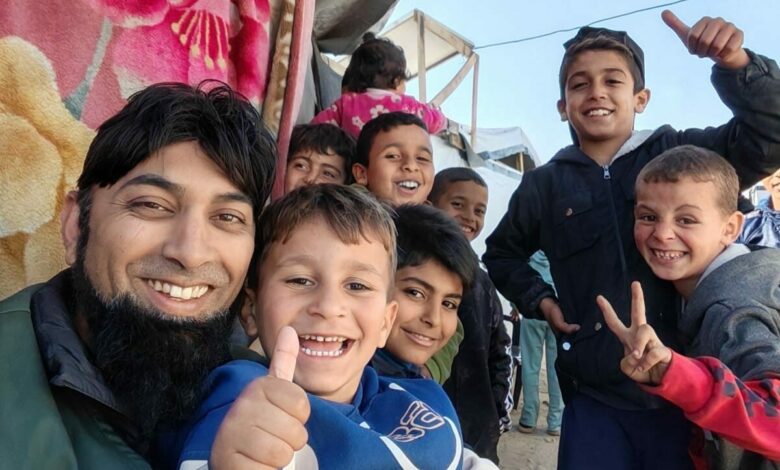
The first time Mahomed Haniff heard a bomb, it was still dark.
He and the other volunteers had arrived at Nasser Hospital only hours earlier, in the early morning of January 21.
The air was cold and heavy with exhaustion. Somewhere inside the hospital complex, a mosque had been set up beneath a canvas tent. When it was time for Fajr prayer, just before sunrise, a local man quietly escorted Haniff there.
He stood behind the Imam, shoulder to shoulder with strangers, and began to pray.
Then it came.
“I was standing behind the Imam, praying as normal,” Haniff recalls. “And then all of a sudden, I heard it for the first time in my life.” The explosion tore through the silence. “It was absolutely terrifying.”
The tent shuddered violently.
A deep vibration surged up from the ground, through his feet, into his chest, rattling his entire body. The sound was deafening , close enough to feel, close enough to imagine it landing beside him.
“I promise you, I was absolutely terrified in that moment,” he says. “I had no clue what to do next. It felt like it was next to me. That’s how loud it was. I didn’t know if I should turn and run. I didn’t know if this was an attack. I had all these questions running through my head.”
Calm amid chaos
But then he noticed something strange. No one moved.
The Imam continued reciting. His voice did not tremble. There was no hesitation, no pause, no crack of fear. The men standing around Haniff remained steady, as if the earth had not just shaken beneath them.
“And nobody flinched,” he says. “The Imam was busy reading aloud. His voice didn’t even shake. There was no stutter. No break. That was so comforting. I felt that if something was going to happen, I would have seen it in them.”
When explosions became routine
By the end of his two-week rotation, the sound of bombs no longer startled him. “What I didn’t get used to,” he says, “was what comes after.”
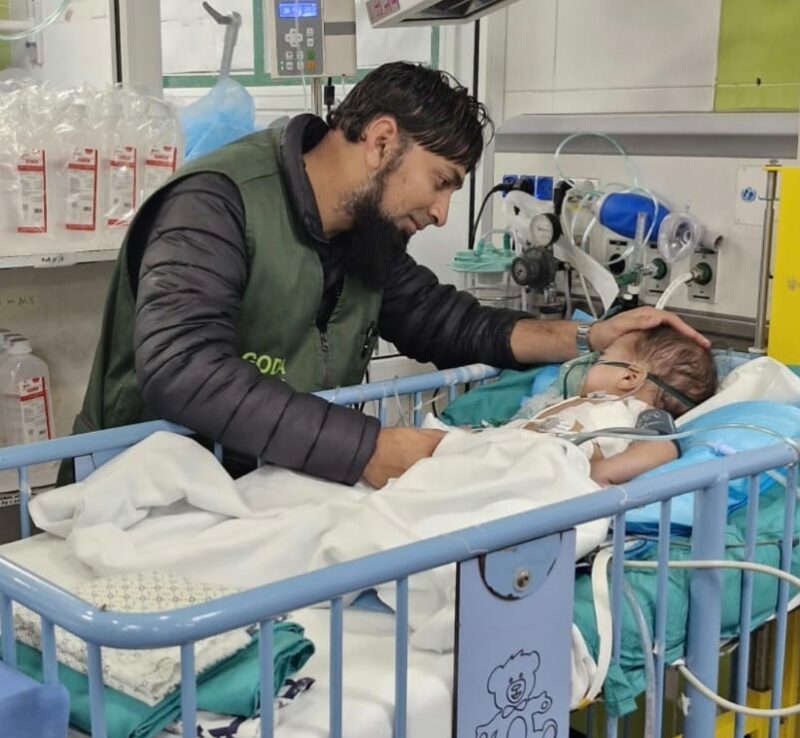
Whenever an explosion echoed across the skyline, he and the other volunteers would head straight for the emergency room. Like clockwork, 30 to 45 minutes later, they would begin to arrive.
In broken-down cars, on donkey carts and in ambulances.
Those who could still walk stumbled in on their own. Others were carried. Some were silent. Some were screaming. They just kept coming.
The reality inside the emergency room
“I can’t even tell you it’s something out of a movie,” Haniff says. “Nobody has the heart to write a screenplay like this.” He had seen the videos online before arriving — the father carrying a child through hospital doors, dust-covered, frantic, pleading.
Then one day, that father walked in front of him. “This time,” Haniff says, “I was the one receiving the child.” He lifted her gently onto the hospital bed. But the moment she was placed down, he already knew.
“She was gone.”
Click here, to read the full story: What it’s really like in Gaza
The news provided to you in this link has been investigated and compiled by the editorial staff of the Newcastle Advertiser, a sold newspaper distributed in the Newcastle area. Please follow us on Youtube and feel free to like, comment, and subscribe. For more local news, visit our webpage, follow us on Facebook and Twitter, and follow us on our WhatsApp Channel