AbaQulusi tackles undocumented immigrants at community Imbizo
AbaQulusi stakeholders discuss undocumented immigrants, business permits and community concerns at public Imbizo.
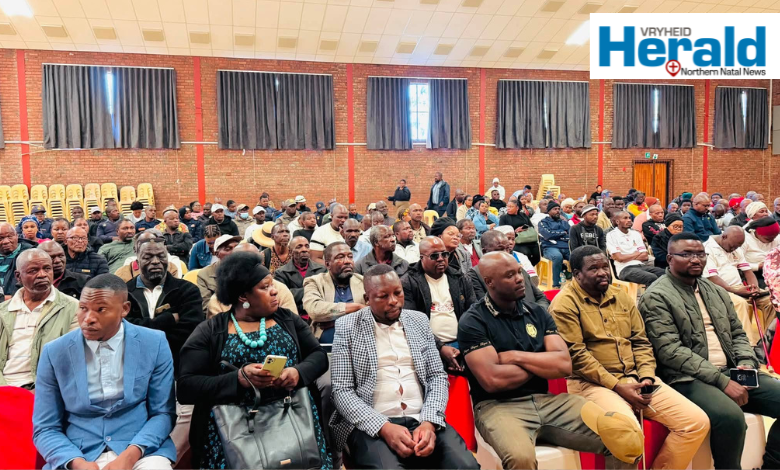
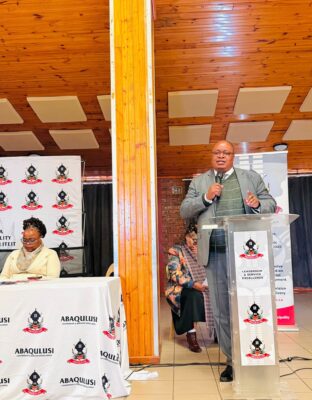
AbaQulusi Local Municipality Mayor Sifiso Mkhwanazi invited various stakeholders and members of the public to an Imbizo (community meeting) to discuss the issue of undocumented immigrants in the municipality.
The Imbizo was held at the Cecil Emmett Hall on Tuesday last week and brought together Amakhosi (chiefs), Izinduna, councillors and representatives from the South African Police Service (SAPS), Public Safety and departments of Transport, Health and Home Affairs.
The purpose of the Imbizo was to identify solutions and find a way forward in addressing the issue of undocumented immigrants.
Mkhwanazi said the country was facing a serious challenge that required co-operation from all stakeholders and community members.
“We are faced with a crisis in our country. We need stakeholders and members of the community to help us solve the issue at hand, because we are all affected by it in one way or another. The Department of Home Affairs has serious work to do in ensuring proper checks on who enters and leaves the country, while the SAPS also has a duty to enforce the law and ensure that people have the correct documentation to be in South Africa.”
Business ownership under scrutiny
Mkhwanazi also spoke about businesses operating within the municipality. He explained that the municipality had launched an initiative to visit businesses in the CBD, Bhekuzulu, Sasko and Lakeside townships.
He said business owners, both formal and informal, had raised concerns over business permits, claiming that foreign nationals appeared to have taken over businesses that should be operated by South African citizens.
According to a municipal report, there are 549 businesses operating in AbaQulusi Municipality. Of these, 372 are run by South African citizens, while 177 are operated by foreign nationals.
“We may not know whether these figures are entirely accurate, because some businesses registered as South African-owned may actually be owned by foreign nationals. The second phase of the process will focus on identifying the real owners,” said Mkhwanazi.
He also highlighted the situation in the local salon industry, saying there are 55 salons operating in Vryheid. Of these, 32 are owned by foreign nationals, while 23 belong to South Africans.
Calls for stronger intervention
Stakeholders were given an opportunity to address community members.
Mduduzi Buthelezi of the March and March movement said the organisation remained firm in its position.
“We still maintain what we have always said – they must go back to their countries.”
Buthelezi then handed over a memorandum to Amakhosi and the municipality, calling for the termination of all business permits issued to foreign nationals. The memorandum also requested that South Africans operating informal businesses – including spaza shops, salons and internet cafés – receive funding through the municipality’s Local Economic Development (LED) programme.
Border challenges highlighted
Border Management Authority representative Miss Nsele said everyone entering South Africa should do so through a recognised port of entry.
“Our position is that everyone who enters the country must do so through a legal port of entry. If you do not use a port of entry, then you are an illegal immigrant. No one has the authority to demand documents from foreign nationals unless they are SAPS members, immigration officers, Home Affairs officials or soldiers.”
She explained that many foreign nationals enter South Africa on visitors’ visas that are valid for one to three months, but remain in the country after their permits expire, making them undocumented immigrants.
“Our border infrastructure is non-existent. In the Zululand District, we currently have two border posts and three ports of entry, including Mahamba. We are operating at only 25% capacity. There are only two immigration inspectors in Vryheid, one in Pongola and just seven inspectors across the entire Zululand District. We have very few staff members and a significant amount of work to do regarding undocumented immigrants,” she said.
Home Affairs warns against harbouring undocumented immigrants
Department of Home Affairs immigration officer Ayanda Zaca explained that Section 11 of the Immigration Act, particularly relating to business visas, had become a major concern.
“We have many cases in Vryheid involving aiding and abetting illegal foreigners. This includes assisting undocumented immigrants to remain in or enter South Africa, harbouring them, providing accommodation, or renting or making property available to them. If you are renting out a room or spaza shop, you need to know how long the tenant is legally permitted to stay in the country and what their permit allows them to do. If you are harbouring an undocumented immigrant, you are committing a crime and may be fined.”
Community engagement to continue
Residents were also given an opportunity to ask questions and raise concerns, with stakeholders responding to issues raised during the meeting.
Concluding the Imbizo, Mkhwanazi urged residents to remain respectful despite their frustrations.
“Our frustrations must not take away our Ubuntu,” he said.
He added that further engagements would be held with formal and informal business owners, as well as other stakeholders, in an effort to find solutions to the issue of undocumented immigrants.
The news provided to you in this link comes to you from the editorial staff of the Vryheid Herald, a sold newspaper distributed in the Vryheid area.