
En Passant: Tick, tock, and it’s September
IT IS HARD to believe that we are well into September, the ninth month of the year, and that although we might still have a cold spell, winter is largely over. We are, folks, like a galloping aardvark, rapidly heading towards Christmas and 2016. I have never quite resolved in my mind this thing we …
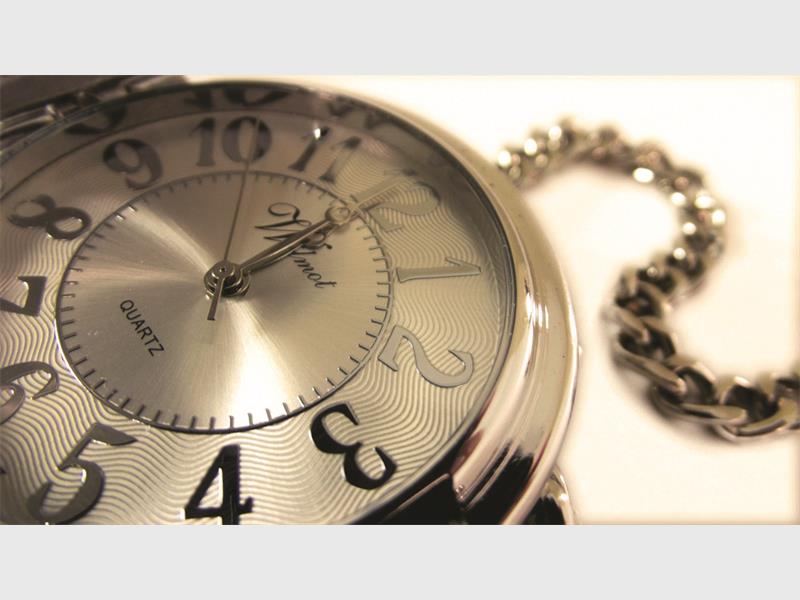
IT IS HARD to believe that we are well into September, the ninth month of the year, and that although we might still have a cold spell, winter is largely over. We are, folks, like a galloping aardvark, rapidly heading towards Christmas and 2016.
I have never quite resolved in my mind this thing we called time, and I’m not sure anyone else has either. I reckon that all our musings are at best speculation.
Over this past weekend there was a re-run on TV of the 1985 film Back to the Future, with a very young Michael J Fox, and that film is speculative of time travel, which is another possibility of time that fascinates us. The film starts with a scene that includes scores of different clocks on shelves, all ticking away merrily, and I was reminded of the Palacio del Tiempo, the Palace of Time, at Jerez de la Frontera in the south of Spain.
I visited this museum back in about 1980, and had never before seen anything like it. And nor have I since. It is a collection of old clocks, that belonged to the then very rich boss of the company that I was working for in London, one José María Ruiz Mateos (I kid you not). Apparently there are over 300 timepieces in the collection, and they date from the 17th to the 19th centuries, and were made all over Europe, and particularly England and France.
The collection is astounding, each clock, in itself a marvel of miniature engineering, being mounted in what in itself is a masterpiece of decorative art. And every timepiece in the museum works – ticks and tocks. The group of visitors I was with (about a dozen bottlestore managers from England) happened to be there at midday when the clocks struck 12:00, and it was a cacophony of tintinnabulations, which in other circumstances might have made you believe that you’d stumbled into a particularly unmusical malhuis.
Each timepiece, those in the museum and the one on your wrist, is an attempt to measure time, to compartmentalise its passing into seconds, minutes, hours, days, weeks, months, years, decades, centuries and lifetimes. We have to because as a bloke called Thomas Mann said:
“Time has no divisions to mark its passage, there is never a thunderstorm or blare of trumpets to announce the beginning of a new month or year. Even when a new century begins it is only we mortals who ring bells and fire off pistols.”
For the general purposes of us Earthlings, we measure our time in terms of our movements through space – a year is the time it takes our planet to go round the sun, a month is linked to the waxing of the moon, a day is the time it takes the Earth to go once round its own axis. But time, in fact Time with a capital “T” , as Thomas Mann said, is unaware or careless of our conventions.
For a start and as I understand it, and I really, really don’t understand it, Time once upon a time did not exist. It was instantly created as the Big Bang went off and started it all (including the Nkandla renovations) some 13.798 (plus or minus 0.037) billion years ago. Up to that instant there was no Time.
How is that possible?
I dunno, I cannot get my head around the concept.
One other thing I cannot conceive is that the Big Bang did not, they say, fill an empty space with matter, did not explode out filling a waiting void. “Instead,” they say, “space itself expands with time everywhere and increases the physical distance between two co-moving points. In other words, the Big Bang is not an explosion in space, but rather an expansion of space.” And presumably time goes with it.
The mind, among other things boggles.
And then along comes old Albert Einstein and links time with motion, another idea that I accept without understanding the theory. Thus it is that if you travel at speeds approaching the speed of light, Time begins to behave somewhat weirdly.
They have used this concept in a number of films, and it sounds like a Hollywood invention because it is so unlikely, or appears to be unlikely. But it is apparently true (although, I imagine, very difficult to prove) that if you could travel at, say, 90 percent of the speed of light (which is around 300,000km/second), time would be halved. While back on Earth an hour had passed, the watch on your arm would have registered just half an hour.
You’ve seen it in a movie – the hero goes into space, flies at incredible speeds all over the universe, is away from Earth (as far as he is concerned) for five years, and returns to find his child in an old age home. They used the concept in the movie Planet of the Apes in which astronauts return to Earth after an extended period away, and whereas they have aged a couple of years, back on Earth mankind has had time to decline and fall while the apes have risen and taken over.
Yep, it’s an odd thing Time, and before you can spit and say “sawdust” another year has rolled around.