
En Passant: Walking history, that’s what we are
I AM READING a book at the moment that I confidentially predict I will not finish, and it will join a select few books, perhaps seven or eight of them, that I have started to read but eventually said, “Bloody hell, this is hard going,” or “Bloody hell, this is a crock of horse manure”, …
I AM READING a book at the moment that I confidentially predict I will not finish, and it will join a select few books, perhaps seven or eight of them, that I have started to read but eventually said, “Bloody hell, this is hard going,” or “Bloody hell, this is a crock of horse manure”, and put aside.
Yep, I reckon about seven or eight books, certainly no more than ten, have I started and failed to read completely, and I read every day. I’ve read hundreds of books and my thinking is that if someone has gone so far as to write it, and if a publisher has thought it worth publishing, then there must be some merit in it somewhere even if it’s not immediately apparent.
So I plough on and eventually, in most cases, the book will “grab” me and I will finish it. But I am not going to finish The Works of Beaumont and Fletcher, which was first published in 1840 and has an introduction by a bloke called George Darley, a now long-dead Irish poet (who up to this point I had never heard of).
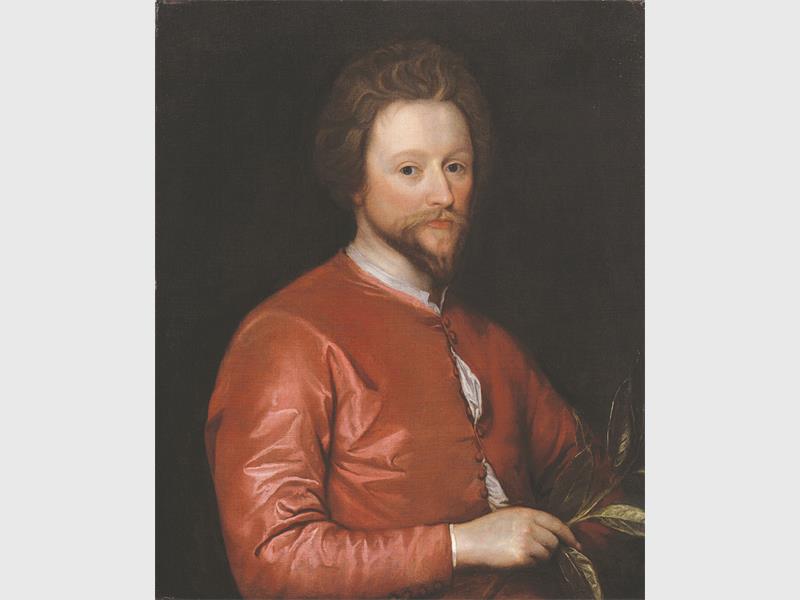
John Fletcher, who was born in 1576, and Francis Beaumont, who was born in 1586, were English playwrights and contemporaries of old William Shakespeare (“Bill” to his pals down at the Rat & Pickle). The book is a collection of their plays, and it is George Darley’s introduction that I am finding interesting reading. I have glanced at ol’ John and Francis’s plays, and oh boy and forsooth nogal, verily, I can’t be bothered to plough my way through them.
But George’s introduction makes a point as he bemoans the lack of personal details about the lives of Beaumont and Fletcher. He writes, “…the facts of a particular life, unless it were prominent to be historic, are so scanty, exclusive and meagre…” He adds that he has been placed “in the predicament of a tombstone-poet, expected to draw out a handsome epitaph from a proper name, two calendar dates and ‘here lies'”.
I thought about that.
I thought of the times I have been to Vryheid cemetery, and seen all the tombstones, some now well over 100 years old. And in the vast majority of cases in Vryheid cemetery, as in any town’s cemetery I suppose, those tombstones are the only real evidence that the person actually once lived and breathed and drank of Vryheid’s water.
If we have children and then grandchildren, and then if we’re lucky great-grandchildren, then they are evidence that we lived, but I can’t tell you who my great-great-grandparents were. I have no idea, and yet they are directly responsible for my being here; I am evidence that they lived.
For the people who lie in Vryheid cemetery, yes, in the archives of Home Affairs there will be buried a record of their birth, marriage (if applicable) and death, but of all the hundreds of graves that lie baking in the sun and sodden in the rain, how many do you see with fresh flowers on? Very, very few in the older areas. Like my great-great-grandparents who lie somewhere, they are forgotten (or at least not visited).
Some of those now-long-dead people have living descendants, perhaps great-great-great-grandchildren. Chances are, I suppose, that over time families have moved away from Vryheid so that, yes, the only evidence that some people lived in this town is their name carved into stone above their final resting place.
I think that’s sad, but we were having a discussion in the Speog & Spittle last week, us older geysers, and I was surprised that more than half of us had opted to be cremated rather than interred in Vryheid’s red earth at the cemetery. The main reason, as far as I could tell, was not so much a matter of a particular faith as much an aversion to lying under uncut grass, and assorted weeds including rampant khakibos.
Isn’t that odd – that you don’t want to be buried in a badly maintained cemetery, but are prepared to be scattered somewhere where ultimately you could be crapped on by a hadeda?
George Darley above makes the comment that unless someone is “prominent to be historic”, or what we would call “famous”, details of their lives are few and far between. But you know what I think? I think that everybody’s lives are “prominent to be historic”. I really do.
I am absolutely sure that all the people who lie in Vryheid cemetery, whose only evidence that they lived is carved into their headstone, all had a story to tell. If it were possible now to hear those stories, however humble in a historic context, stories about Vryheid in the 1800s, during the Anglo Boer War, about the early 1900s, about the first time a train chugged into Vryheid station, about the first car in town, how they used to drive cattle up and down Church Street every day from the hotel (where else would the hotel get milk for its guests?), stories about ordinary people in an ordinary town, we would listen to those stories.
Yep, we all have a story, and don’t let anyone tell you otherwise.
And our stories are further evidence that we have lived.