Relocating the Potchefstroom Concentration Camp
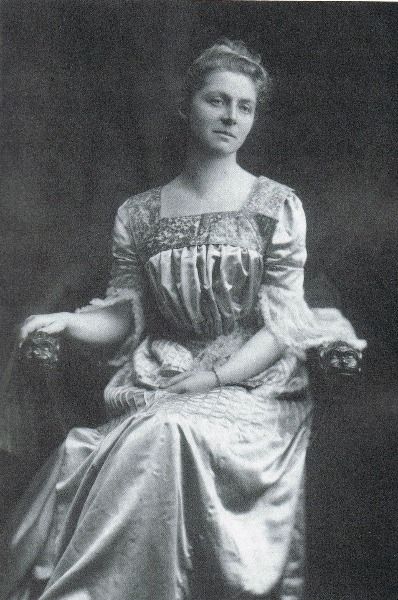
The harsh conditions of the Potchefstroom Concentration Camp were later criticised by Emily Hobhouse and the British Women’s Committee who had visited the camp in 1901. They made various recommendations which, however, were only implemented a few months before the peace treaty was signed.
The Herald published a historical series on the Potchefstroom Concentration Camp to commemorate those who were affected by the Anglo-Boer War that took place 120 years ago. The Potchefstroom Camp was the largest in the Transvaal (area north of the Vaal River) and was later relocated to the area that was known as Old Baillie Park.
The harsh conditions of the camp were later criticised by Emily Hobhouse and the British Women’s Committee who had visited the Potchefstroom camp in 1901. They made various recommendations which, however, were only implemented a few months before the peace treaty was signed.
Emily Hobhouse and the Women’s Committee
The Women’s Committee, a British parliamentary committee of six independent women, visited all the concentration camps in South Africa during their six-months stay, including the one in Potchefstroom.
Emily Hobhouse and the British Women’s Committee publicly criticised their glaringly inadequate state. This was by far the biggest influence in transforming them into institutions that provided bearable accommodation. The stinging attacks from opposition parties in the British parliament and the public press also played a role.
Recommendations
Their recommendations involved undertaking a comprehensive reform of the camp system. They recommended that the number of inhabitants of the camps should be reduced, that only full rations should be implemented and that allowances should be increased.
For Potchefstroom, the ensuing improvements only came a few months before the peace treaty was signed.
Relocating the camp to old Baillie Park
The concentration camp was moved to a healthier site to the eastern side of the town during August and September 1901. Today, the area is known as old Baillie Park.
The new camp covered an area of about 15,5 hectares, roughly in the area bounded by what we now know as Holtshausen, Landsberg, Buskus and Ben Pienaar streets.
As before, the new camp was divided by two roads, approximately 20 metres wide, crossing in the middle of the area. It was, therefore, divided into four blocks. One had a warehouse for rations, a soup kitchen, and an oven. On the second was the tent of the chemist and the camp doctor’s quarters. The living quarters for the matrons and their staff were in the third corner and four big classrooms on the fourth. Along the inner side of the boundary was a broad road some 30 metres wide.
In each of the blocks, there were to be 300 steeple tents. Two hundred more were provided with the relocation.
The move went quite smoothly. At first, 100 tents were pitched and the people for whom they were intended, were taken there. As soon as they had vacated them, the tents were taken to the new camp to be erected in anticipation of the new arrivals.
New cemetery
The cemetery of the new camp was located on the far northern side where the Garden of Remembrance is situated today.
After the relocation, WK Tucker succeeded Swart as the camp superintendent. Swart made use of the relocation to bring about several changes in all aspects of the layout and organisation of the camp.
Four sturdy, permanent structures replaced the hospital tents. Following the recommendations by the Women’s Committee, a central soup kitchen and ovens were built.
Foster home
By the time the camp had to close down, there was a foster home, providing shelter for children whose fathers were expected back from the war. Women in the camp probably managed the foster children.
When new tents became available in May 1902, they were pitched at the upper end of the camp. The families nearest to the river were moved there.
Water provision
As far as water provision was concerned, a new water channel was made available some distance away from the upper end of the camp. There was already a channel at the lower end, most probably the one leading to the farm Elandsfontein, which still exists today. During 1902, a pipe system was introduced for the provision of water.
The proximity of the Mooi River ensured further improvement. In February 1902, an area of 4,5 by nine metres was partitioned off alongside or in the river, forming a swimming pool. Here, young women could take a bath, a privilege they never had in the old camp, with its one water channel. Some time later, two bathrooms for older women were built next to it.
The proximity of the river also made doing the washing considerably easier.
REFERENCE
VAN DEN BERG, GN. 1999. The Potchefstroom Concentration Camp. Potchefstroom Afrikaanse Kultuuraksie.
* Read in next week’s Midweek edition more about the closure of the camp.