What to expect during fibre network installation
For construction queries, you can also contact Alwyn Schoeman on 083 225 2257.
Civil construction for the 75 km of fibre running through town has started and should be completed by the end of September. The first live installations are planned for October.
Construction teams started in Schilbach Street.
What you can expect to see in the next three months:
* The teams might pass your home multiple times during the civil and fibre work processes. The entire process per area is estimated to take between 8 and 10 weeks to complete before your neighbourhood is live and ready for home installa- tions.
* Three phases need to be done – trenching, reinstatement and the fibre works. Home installation and service activation follow after that.
* Remember that there are time lapses between the build and activities. Although these are invasive activities that could cause some inconvenience, they will not affect you getting in or out of your home.
* Once your neighbourhood is fibre-ready and you have elected to sign up for an internet service, a home installation will be done at your home. The home instal- lation will entail an optic fibre installation into the house from a box on the sidewalk. A termination box with an optical network termination device will also be installed.
* The fibre network will be open access, which means you have access to a magnitude of internet service providers, giving you the choice of the right package and partner for your internet needs.
Trenching methods to be used:
For Parys, in-road- and verge trenching methods will be used.
In-road trenching
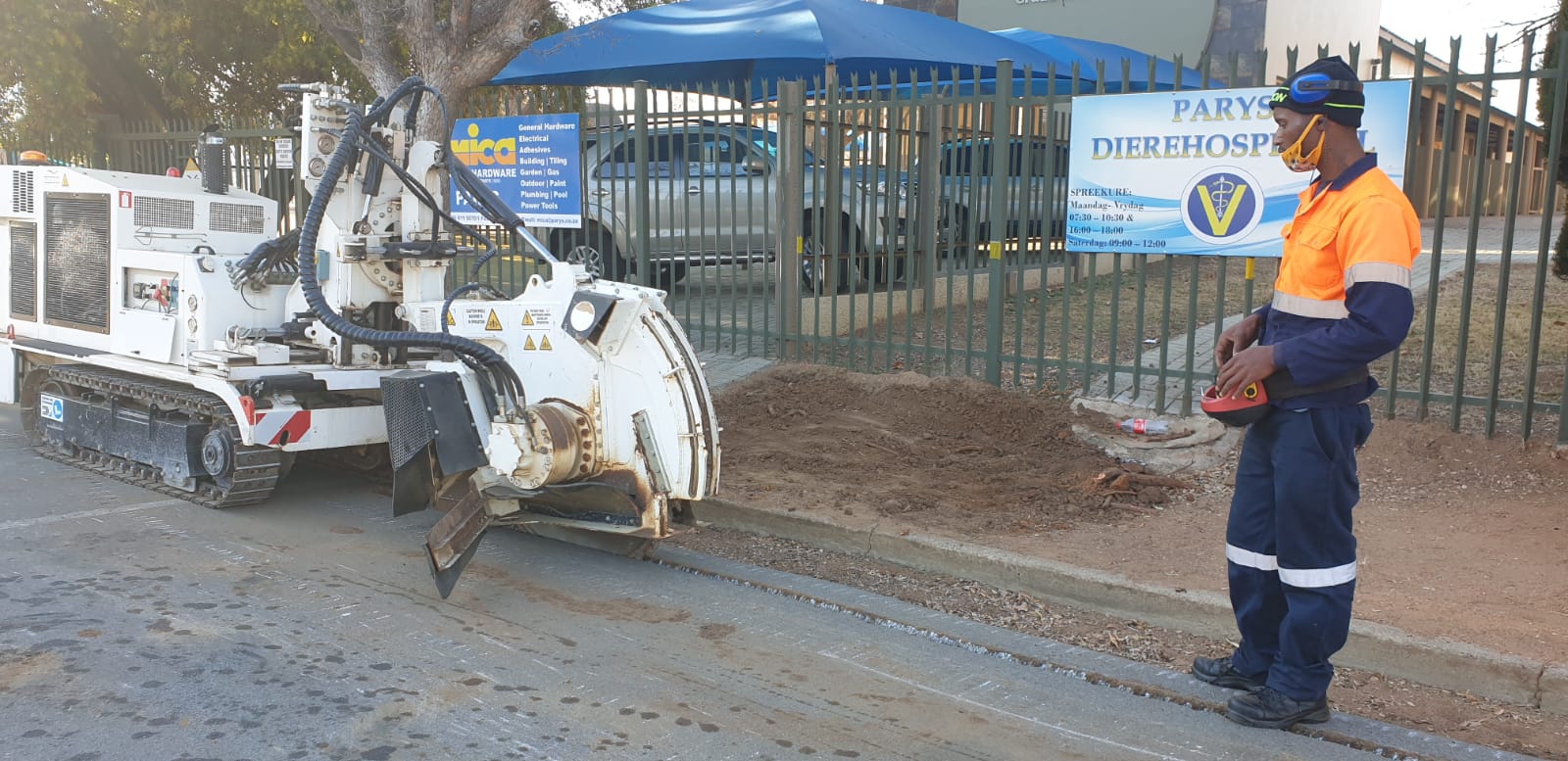
This entails using a remote-operated micro-trenching machine, cutting slots of 300 mm deep and around 50–60 mm wide. The equipment puts the soil to one side and the cleaning team follows to clean the trench and debris and pick up and remove the displaced earth from the site.
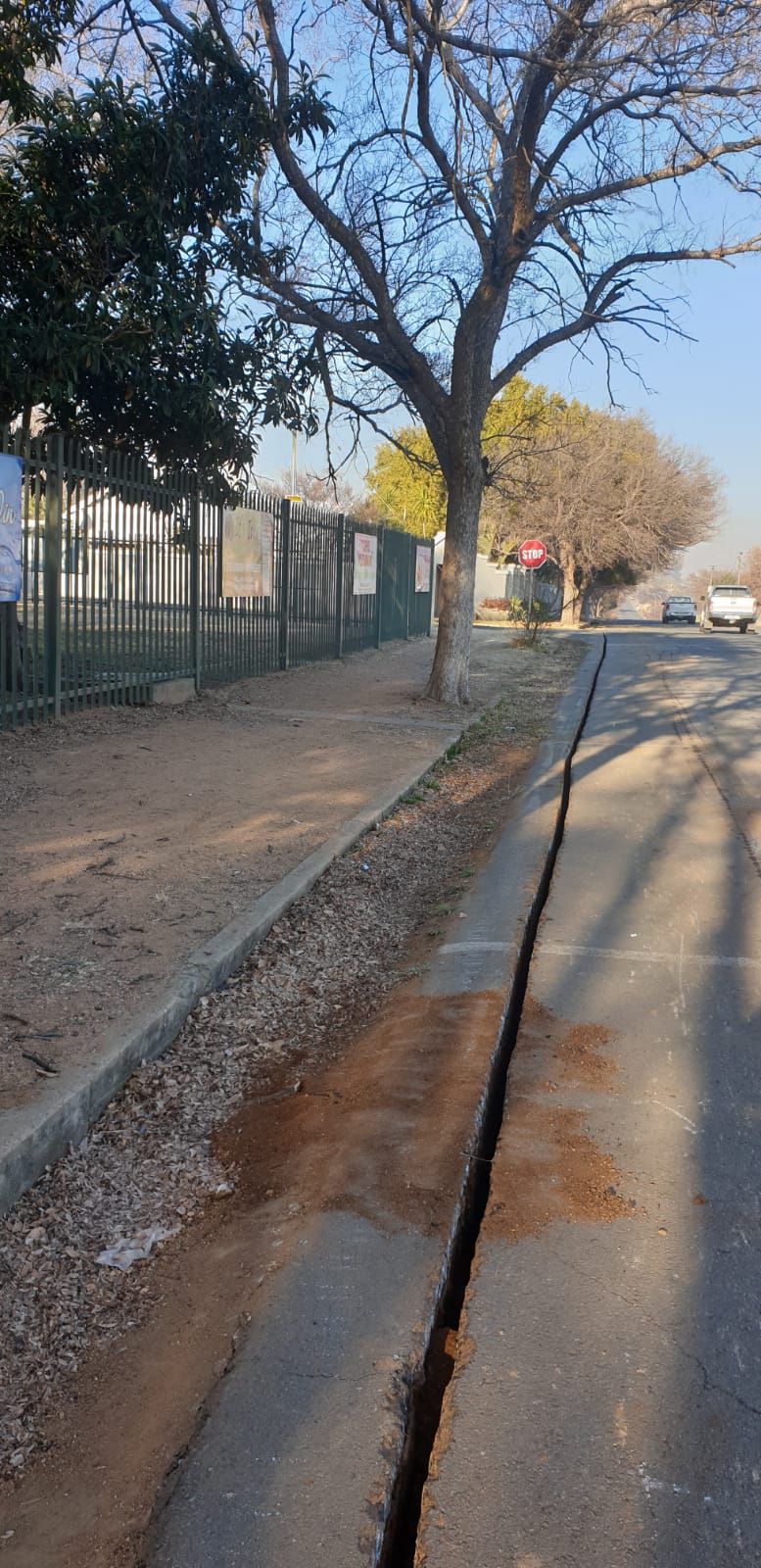
The duct team will install plastic ducts into these trenches and connect the boundary boxes or manholes through the sleeves installed. When all the ducts are in the ground, a premixed, pumpable soilcrete will be poured into the slot to fill the cavities under the curb and in the slot.
Although full curing time is around two days, the trenches can be crossed or driven over within an hour. Once dry, an asphalt layer will be installed in the slot to the same level as the existing asphalt. A sealing layer will be applied where the cut was made and all reinstatement should be completed on roads and road reserves.
Verge trenching:
This team will go ahead of the main pack “train”, to start installing maintenance holes and boundary boxes in the middle of two properties. They will be flush with the ground and as close as possible to the boundary fence. They will dig a trench from the hole or boundary box in the curb and tunnel under the current drainage system, installing a sleeve (plastic pipe) close to it.
Reinstatement:
This process involves various tests to ensure that there are no obstructions or impediments in the ducts/tubes and that the underground infrastructure is ready for fibre to be deployed. On completion of trenching and testing, which will take a few days, the reinstatement team will be dispatched to return your neighbourhood to the same or better condition than they found it. The supervisors will take pictures before and after completing the project to ensure your garden gnome is returned to its original home. Once all civil work has been completed, the teams will conduct thorough inspections.
Fibre works will commence after or during the reinstatement activity.
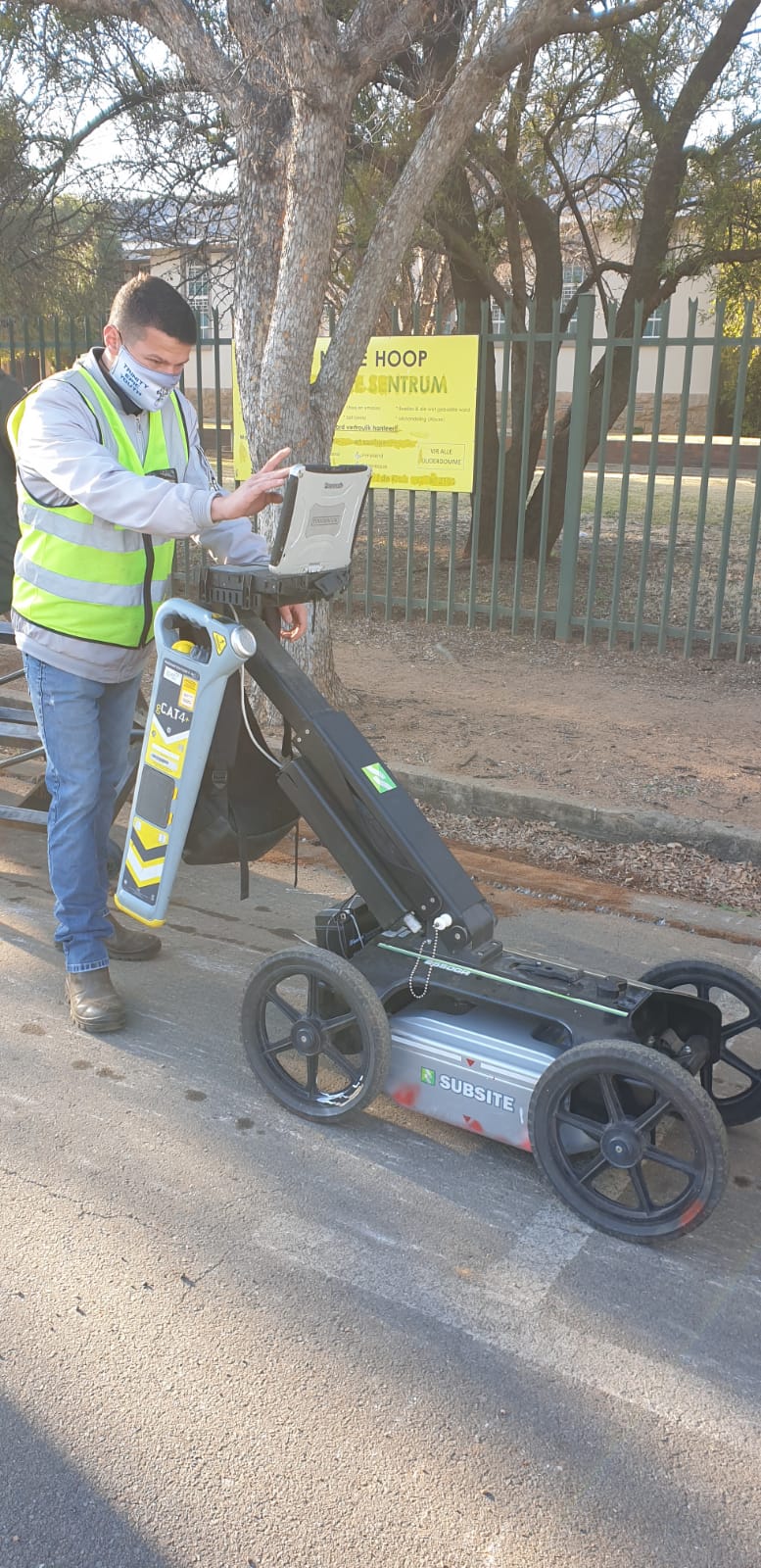
The teams will scan in advance to detect and identify underground services before any invasive or civil engineering groundwork. A variety of detection methods and equipment will be used to locate, identify and map underground pipes, cables, anomalies and other services in verges, roads, driveways etc. For road crossings, especially concerning drills and roadcuts, the subsurface is screened with ground-penetrating radar (GPR).
All these services are then marked with spray paint on the surface. The marking pigment is environmentally friendly and water-soluble. There is, therefore, no need to worry if you see markings on the road that you have not seen before where the construction team is working.
What if there is damage?
During the building process, community WhatsApp groups will be created in conjunction with your ward councillor. Should there be any issues, residents will be able to contact the Veatel teams to resolve them. Constant updates and progress will also be communicated on these groups and other social media platforms. You can approach the teams on- site if there is anything you want to bring to their attention. For construction queries, you can also contact Alwyn Schoeman on 083 225 2257.