How to get barcodes for your business in SA
There are two main types of barcodes, and knowing their uses and their advantages and knowing which ones will work best is vital to your business’s success.
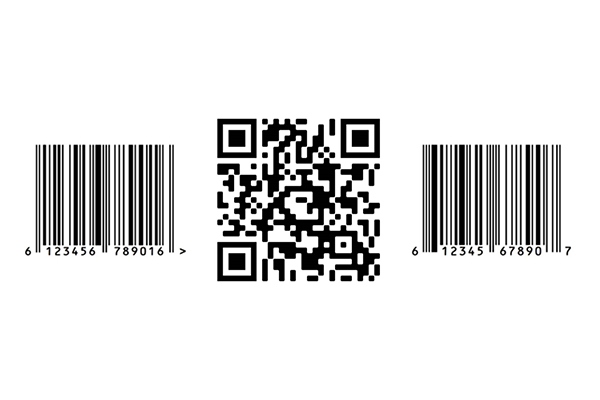
Barcodes are everywhere nowadays, yet we barely notice them as we go about our daily lives. As a business owner these days, if you have not already incorporated some type of barcodes into your business, you may have wondered if it was really necessary to do so. There are two main types of barcodes, and knowing their uses and their advantages and knowing which ones will work best is vital to your business’s success.
1-Dimensional Barcodes
The most common 1D barcodes out there are retail barcodes, found in almost all retail shops around the world. They can be found on all products on retail shelves, and appear as a rectangle made up of white and black stripes of varying widths. These barcodes are governed by three common barcode standards – the UPC, EAN, and ITF-14 standards.
UPC barcodes were originally created in the early ’70s and since then have become ubiquitous in retail stores all over the world. EAN barcodes are simply an extension of the UPC barcodes, and, being one digit longer, offer more versatility in supply chain management, manufacturing, and production.
Each UPC or EAN barcode identifies one product or one variation of that product. This is important when you are deciding how many barcodes you might need. For each product variation (colour, size, flavour, etc.) you will need a unique UPC or EAN barcode.
If you are supplying single products in bulk (e.g. a box of 100 pens), you will be required to have an ITF-14 barcode. These barcodes are linked to the individual UPC or EAN barcode of the product that you are supplying in bulk (e.g. each pen in the box will have the same UPC or EAN barcode). Instead of scanning every single product individually, you simply scan the ITF-14 barcode to register all the products in bulk.
If you are looking to publish books or magazines, you will also need barcodes (in addition to a publication number). You will first need to register and be issued with an ISBN / ISSN number for your publication from the National Library of South Africa. After that, you will need to link that number to an ISBN / ISSN barcode in order for your books to appear in libraries and shops. The barcode simply allows the books to be scanned into the inventories of the library or shop, while the ISBN / ISSN number registers the publication in the international database.
2-Dimensional Barcodes
The most commonly used 2D barcode is the Quick Response (QR) code. These have become more and more common in the modern age. These days every smartphone out there can scan and read QR codes. QR codes have several uses, mainly falling into the categories of mobile payments and advertising.
Mobile payment applications, such as Snapscan, are seeing greater use among businesses all over South Africa. These apps can generate QR codes for the customer to scan, which then instantly redirect the customer to the payment page with all payment details ready to go.
QR codes are also often found in promotional material, for the curious customer to scan. There are many creative ways to make use of QR codes, and many companies use QR codes to redirect customers to promotional pages showcasing new products or special deals.
Where to get barcodes in South Africa
Once you have decided which barcodes you need and how many you need, the next step would be to find a reputable barcode reseller. Barcode resellers provide barcodes at much more affordable rates, as they are not catering to large corporations and manufacturers. In addition, they can provide barcodes at a once-off fee.
In South Africa, SA Barcodes has served local businesses and individuals for over a decade, and provide a more convenient and much more affordable way for small to medium businesses looking to get their products onto retail shelves quickly and effortlessly.
SA Barcodes provides fully registered barcodes sourced directly from the international barcode database. For every barcode you purchase, SA Barcodes will issue a certificate of authentication certifying that you are the sole user of that barcode, forever. Get in touch with SA Barcodes and let their experts help you navigate the world of barcodes!