
Watch: Rhino calf airlifted to Care for Wild near Mbombela
A dry season left a rhino mother struggling to produce enough milk for its calf, prompting an urgent rescue and veterinary treatment.
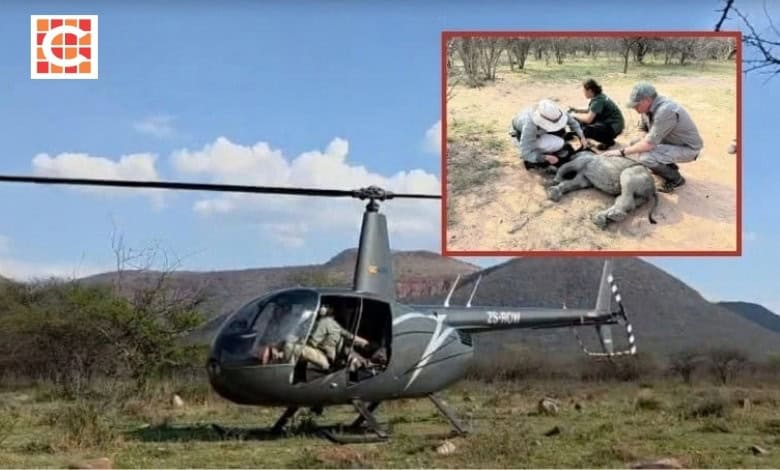
A two-month-old white rhino calf was transported by helicopter to the Care for Wild rehabilitation centre outside Mbombela on Monday, September 21, to treat severe dehydration, reports Lowvelder.
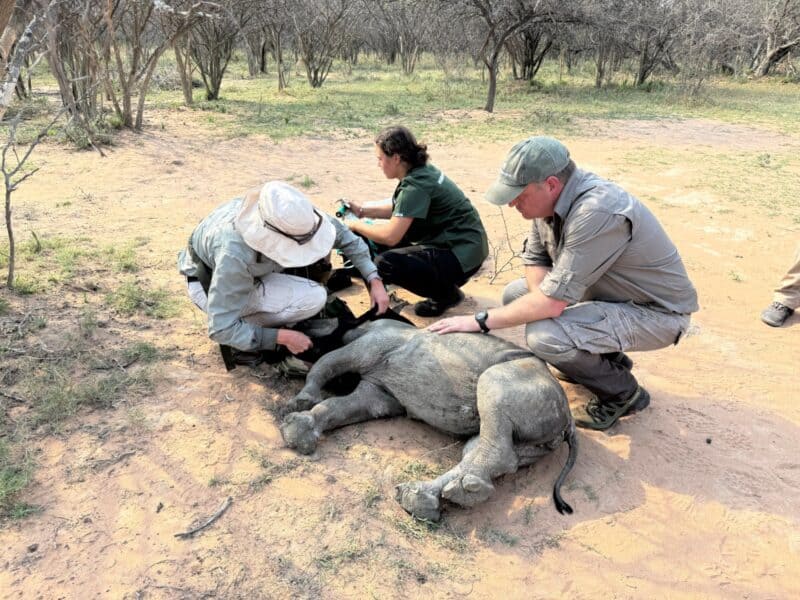
The rescue operation was led by a joint team from WeWild Africa, WildLifeVets, the Mpumalanga Tourism and Parks Agency (MTPA) and the Wildlife Emergency Fund, with several veterinarians also involved.
According to Middelburg Observer, the calf was airlifted across Loskop Dam, near Middelburg, after receiving medical treatment and fluids on site.
Mother struggles to supply milk during dry season
According to Gait-Jan Sterk from the MTPA, the calf’s mother, struggled to produce enough milk for her baby. Wildlife teams from the reserve who monitored the animals’ movements noticed the issue and quickly stepped in to save the calf.
“It’s a bad time of the year with limited grass for animals to feed on, so the mother was also weak,” he said.
He added that calves eat and drink a lot, and the teams decided to move this one to a rehabilitation centre after discovering that both mother and baby were in a life-threatening state.
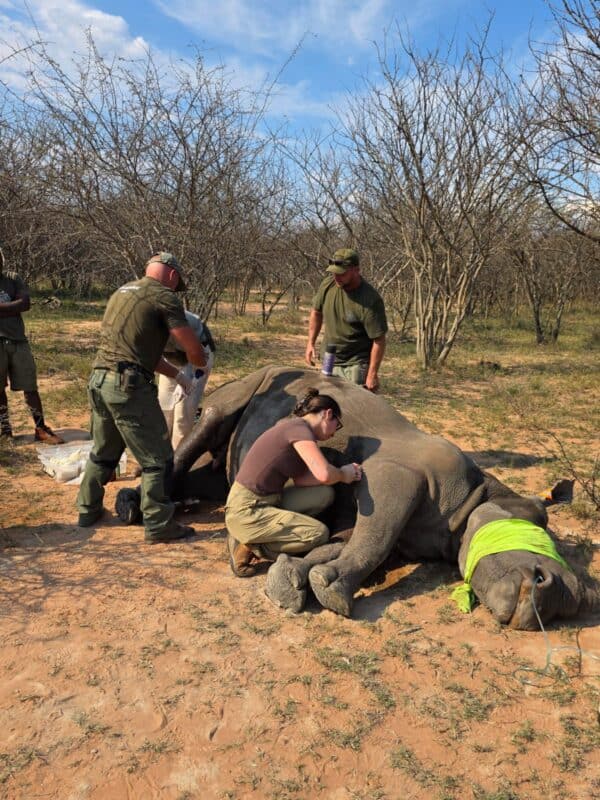
“The mother is also receiving supplementary feed to improve her condition and support milk production,” Sterk said.
He added that she sustained two wounds from lying on the ground for too long after feeding her baby, which wildlife vets also treated.
Calf to remain at centre to build own territory
According to Sterk, the baby rhino will not return to her mother after treatment since the risk is too great that its mother might not take it back.
“Due to the cow’s territorial behaviour, it will only be released back to the reserve once it is big and strong enough to establish its own territory,” he explained.
Poaching cases rise as rhinos face severe trauma
In light of World Rhino Day yesterday (September 22), Sterk noted that rhinos are the most challenging animals to protect.
“We saw a decline in poaching cases last year, but sadly saw an increase again. With fewer rhinos, poachers struggle to find them,” he said.
He added that rhinos are social animals and that poaching incidents severely traumatise them.
Dereck Milburn from WeWild Africa said that through long-term relationships, teams are able to continue conserving these animals.
Care for Wild shared an update on Facebook for World Rhino Day:
“Rhino conservation is not the work of one organisation, one country or one person. It is many people, in many different places, bringing their skills, time, resources and hearts to the same purpose of giving rhinos a future.”
Watch the video:
@lowvelder A baby white rhino was airlifted from a nature reserve outside Mbombela on September 21 after she was found severely dehydrated. > Video: Supplied/WeWild Africa
Read original story on www.citizen.co.za
