
Helikonpark toddler survives near-drowning
A Helikonpark family is warning parents about water safety after their two-year-old boy was saved through immediate CPR following a pool incident.
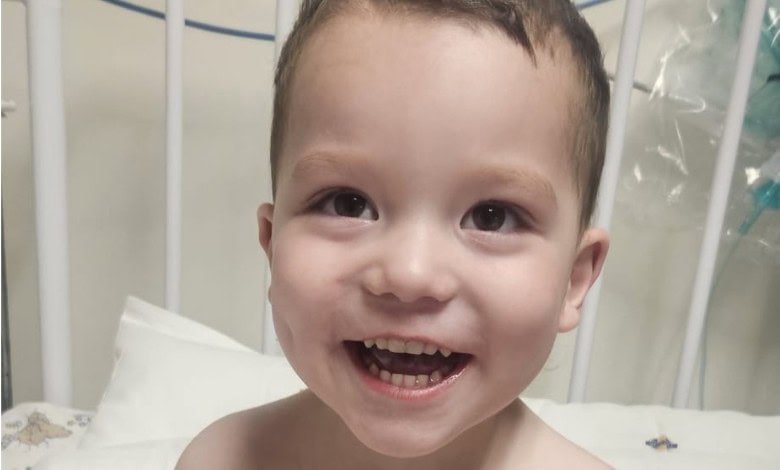
A normal Saturday in August turned into a terrifying near-drowning ordeal when a two-year-old boy fell into his family’s swimming pool in Helikonpark.
The incident unfolded within seconds and left his parents with a message they hope will prevent another family from experiencing the same nightmare.
Toddler found face down in pool
What started as an ordinary Saturday quickly turned into a life-threatening emergency when Johnny fell into the family pool. His father, Johnny Senior, saw his son face down in the water, jumped in immediately, and pulled him out.
Johnny was already blue, was not breathing, and had a hard stomach from the amount of water he had swallowed.
CPR begins immediately
Johnny’s mother, Rozette, explained that his father immediately began CPR. After about three to four minutes, the toddler started spitting out water.
His mother said Johnny began breathing and crying again, but his father decided to rush him to Netcare Krugersdorp Hospital after the toddler started breathing heavily.
Admitted to ICU
After about six hours in the emergency department, Johnny’s oxygen levels were still low. Tests showed that there was fluid and damage in his lungs.
He was transferred to the Paediatric Intensive Care Unit (PICU) at Netcare Garden City Hospital, where he spent five days.
“For me, as his mother, it felt like my whole world was falling apart. All I could think was, ‘Why does he need to go to the ICU if he’s breathing on his own again?’” Rozette said.
The aftermath of the near-drowning
Although Johnny survived the near-drowning, the incident placed significant strain on his lungs. He is now receiving regular physiotherapy to support his respiratory recovery.
“We currently need to take extra precautions to protect him from respiratory infections, because even a common cold could cause serious complications while his lungs recover,” his mother explained.
Rozette said Johnny is their miracle.
However, for his parents, his survival has highlighted how quickly drowning can occur and the critical importance of immediate caregiver intervention.
A warning to other parents
The Rogers family is sharing Johnny’s story not to frighten other parents, but to warn them about how quickly a child can get into danger around water.
“We’re not telling this story to scare other parents. We’re telling it because we want other children to have a chance too,” Rozette said.
She urges all parents to learn CPR and ensure that swimming pools are properly secured.
“If a child has been underwater, never simply assume that everything is fine because the child is breathing again. Johnny started breathing and crying again after he was rescued. But less than an hour later, he began struggling severely to breathe.”
She said that if the family had simply stayed at home because Johnny was breathing again, the outcome could have been very different.
“We know firsthand how important that knowledge can be in that moment between life and death.”
A timely warning as warmer months approach
As spring and summer bring warmer days, more families are likely to spend time around pools, dams, and beaches.
For the Rogers family, Johnny’s near-drowning is a reminder that water-related emergencies can happen in seconds, even when a child is close to home.
According to Affinity Health, drowning remains one of the leading causes of accidental death in young children. The World Health Organisation reports that drowning claims more than 300 000 lives globally each year, with children under five at the greatest risk.
In South Africa, where backyard and communal pools are shared, the risk is exceptionally high. Even confident swimmers can get into trouble quickly because of fatigue, slips, or sudden medical events.
“The reality is that accidents happen in seconds and often without warning,” said Chief Executive Officer of Affinity Health Murray Hewlett.
“That’s why awareness and basic first aid knowledge are so important for parents and caregivers, as they can save a child’s life,” Hewlett said.
Pool safety tips from Affinity Health
• Stay calm and assess the scene: Approach the child carefully, ensuring you do not put yourself in danger.
• Call for help: If a child is unresponsive or struggling to breathe, call emergency services immediately.
• Remove the child from the water: If it is safe to do so, remove the child from the water immediately. Use a pool pole, float, or rope if they are out of reach, but never enter the water unless you are sure it is safe, as you could also be at risk.
• Check breathing: Once on land, check whether the child is breathing and has a pulse. If not, begin CPR immediately.
• Perform CPR: For children, perform 30 chest compressions followed by two rescue breaths, continuing until help arrives or the child begins breathing on their own. Parents should ideally undergo certified CPR training to ensure the correct technique.
• Clear an obstruction: If the child has water or a foreign object in their throat, perform the Heimlich manoeuvre (abdominal thrusts) if they are older than one year. For infants, back blows and chest thrusts are recommended.
• Prevent hypothermia: After a water rescue, wrap the child in a dry towel or blanket to prevent hypothermia, which can occur even in warm weather.
• Seek medical attention: A child who seems fine after a near-drowning incident may still be at risk of breathing difficulties hours later.
• Keep a first aid kit nearby: A well-stocked first aid kit should include bandages, antiseptics, scissors, gloves, and a CPR mask.
Preventive measures for drowning
Parents and caregivers can reduce the risk around water by:
• Using fences and lockable gates around pools
• Never leaving children unattended, even for a minute
• Teaching children water safety and swimming skills from an early age
• Ensuring children wear approved life jackets when appropriate
• Taking toys and floats out of the pool when it is not in use to prevent unsupervised access
Johnny’s parents hope sharing their family’s frightening experience will encourage other parents to take water safety seriously before the warmer months bring more opportunities to be around water.
Their message is simple: A child can get into trouble in seconds, and knowing what to do could make the difference between a tragedy and a child coming home.
Read the Randfontein Herald’s October 9 edition for the full interview with Rozette, as she shares the family’s harrowing experience and her urgent message to other parents.