E-toll chaos continues
Pretoria's residents are fed up with Sanral's poor billing process, which has proven to be riddled with faults. Outa says Sanral must face critics in a "responsible and mature way" before the situation escalates into a "fiasco which South Africa cannot afford".
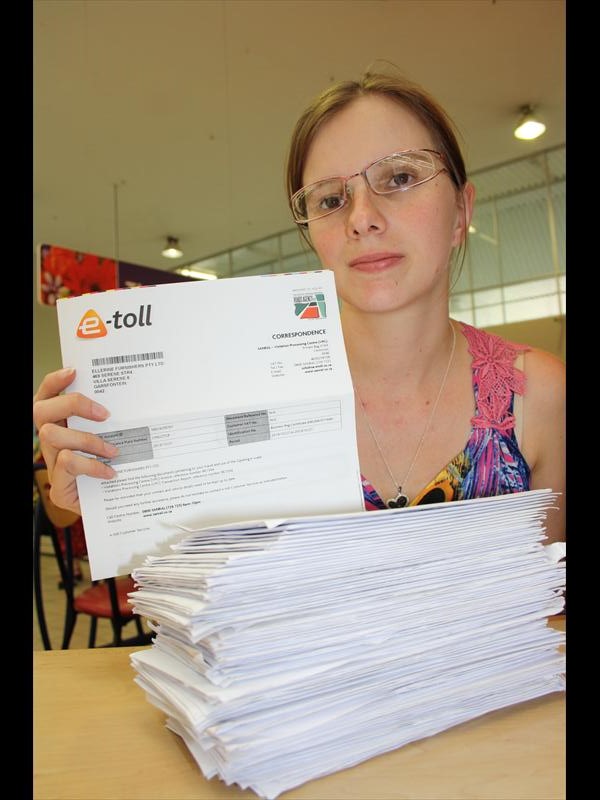
Pretorians are up in arms, as the South African National Roads Agency Limited’s (Sanral) billing has resulted in chaos across the city. Calls from the Opposition to Urban Tolling Alliance (Outa) for help from the Public Protector have been welcomed by the public.
The office of Thuli Madonsela has been asked to mediate between Sanral and the public. Outa said it wanted Sanral to face its critics in a “responsible and mature way” before the situation deteriorated into a “fiasco which South Africa cannot afford”.
According to Outa, it has received more than 500 complaints from motorists about being harassed by texts, incorrect bills and problems with paying accounts. Rekord also received several complaints from motorists who claimed they had never used the e-toll highways, yet continued to receive exorbitant bills. Others said the payment system had let them down, while some received bills for other e-toll users in their private post boxes.
In the latest string of incidents, Liesel Pretorius from the east of Pretoria explains how her home post box was flooded by e-toll accounts from a local business. Neither the business nor the vehicles billed belong to Pretorius. “I can clearly see the details of each vehicle on the road. And on all of these bills my address appears clearly. I cannot explain this, I cannot have my mailbox swamped at the end of each month. I am concerned that my personal details, contained in these accounts, can very easily get into the wrong hands. We have not received our private e-toll bills, they could be anywhere.” Pretorius added that her calls to the Sanral offices in Centurion remained unanswered.
Francois Botha from Centurion told Rekord that he had been receiving conflicting SMSs. “I used the highway in December and received an SMS shortly after leaving Gauteng for my holiday that my e-toll account was in arrears and that I was being handed over for litigation for the amount of R85.” Last week he received another SMS informing him that he had incurred another R275 that he would have to sort out through litigation. “I don’t know what is going on. I have not received a bill. I can’t just pay money, I need to know what I’m paying for,” he said.
Leoni Viljoen, a Capital Park resident, said she recently received two SMSs from Sanral informing her that R51 was outstanding on her e-toll account. The second SMS warned her that if she did not pay the outstanding amount, she would be handed over to their lawyers. “The funny part of this entire story is that the vehicle they are charging me on was stolen in 2012,” she said. Viljoen said that due to Sanral’s negligence, she has incurred additional costs to get the problem sorted out.
Martie de Klerk told Rekord that she also had to accept the additional cost of penalties on her e-toll account, as the e-tolling payment system crashed at e-toll kiosks and no payments could be received.
Despite news of system errors, Sanral’s Vusi Mona said the number of e-tags sold was approaching the one million mark and thanked those motorists who have cooperated. The controversial multibillion-rand system went live in Gauteng on 3 December, despite widespread opposition from various groups, opposition parties and the public.
Mona added that all legitimate errors would be rectified and complaints would be dealt with. He said that SMSs were used as a standard debt collection practice. Mona further confirmed that nobody had been taken to court for non-payment. “The system only started in December. Now, we have about 60 to 80 days before we get to that stage,” he said.
Regarding the payment systems failing when motorists arrived to settle their accounts, Sanral blamed motorists for last-minute rush payments, which resulted in the system being overloaded. “The last minute rush by road users to pay overdue e-toll accounts has resulted in our e-toll centres experiencing large volume of registrations and payments being processed at the same time, with the consequence that the system has faced intermittent interruptions. These challenges are continuously addressed by our system technicians to ensure that we can provide a professional service to our customers.”
In a recent media report, the presidential spokesperson, Mac Maharaj, said that money had already been spent on upgraded alternative roads to assist those not wanting to use the tolled roads.
Upgraded alternative roads:
– The R55 that runs parallel to the N1 from Woodmead, Sunderland Ridge, Laudium and Pretoria West. It also links to the Mabopane Freeway. This is a high-quality, dual-carriage road that is not tolled
– The M1 between Woodmead Drive and Corlett Drive was upgraded at a cost R86m into four lanes, thereby easing traffic on the busiest section of the Gauteng freeway network
– For motorists travelling from the south of Johannesburg, the R82 (Old Vereeniging Road) has been developed into a dual-carriageway between Eikenhof and Walkerville
– The N12 near Lenasia/Eldorado Park has been widened into three lanes each way and the Golden Highway has been rehabilitated
– The N14 is a busy route from Pretoria to Roodepoort/Mogale City. The section between Potgieter Street in Pretoria and the Brakfontein interchange in Centurion has been widened from two to three lanes at a cost of R115m. The sinkhole at Jean Avenue in Centurion has been repaired at a cost of R59m
– The R25 between Bronkhorstspruit and Kempton Park has been rehabilitated.
Maharaj said that as part of the massive infrastructure programme, the government was determined to make rail transport the backbone of public transport in Gauteng.
Other transport options:
– The R30bn Gautrain project is now fully functional and carries over 50 000 commuters each month. Its feeder bus system transports 350 000 passengers monthly
– The Passenger Rail Association of South Africa will spend over R120bn over the next 10 years to buy new trains. A total of 2 800 trains will be delivered to Gauteng next year
– “Johannesburg, Tshwane and Ekurhuleni all have detailed plans to roll out the Bus Rapid Transit (BRT) systems that will cost approximately R10bn. Phase 1A of the Rea Vaya is fully operational and carries 40 000 passengers daily,” said Maharaj.
Furthermore, reports suggest that R1,7b was allocated to bus subsidies in Gauteng to keep passenger fares low.