Water woes ‘induced’
A large part of the current water shortage could be blamed on human error and not nature alone, a water expert claims.
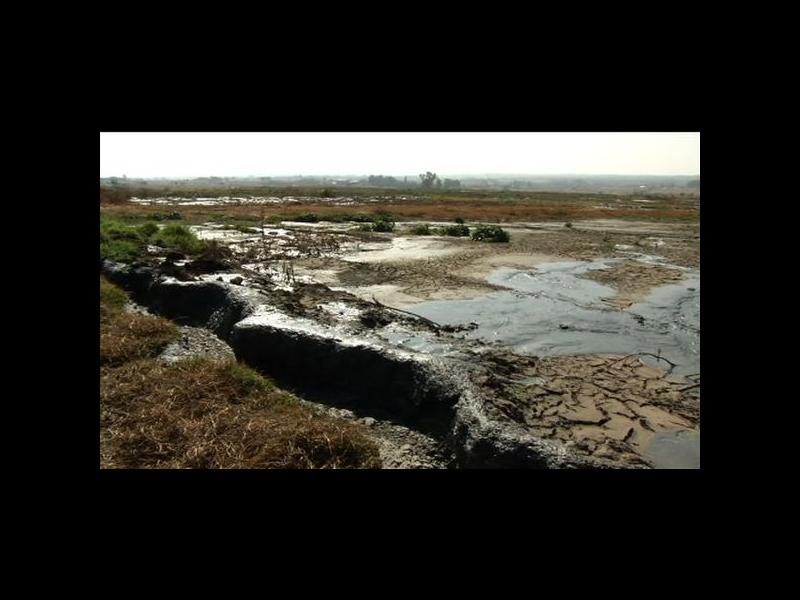
Mother Nature alone cannot be blamed for the current crippling water crisis.
Instead, a lack of strategic planning, a loss of skills to ‘transformation’ and billions of litres of sewage being spewed into the country’s dams and rivers contributed to the dire state of fresh water supply, according to water expert Anthony Turton.
“The water shortage is also an ‘induced’ one,” Turton said in an analyses of the country water resources published in the latest Institute of Race Relations (IRR) publication @Liberty.
“It stems from a lack of strategic planning, a loss of skills and that poorly functioning wastewater treatment plants are spewing close on 4 billion litres of untreated or partially treated sewage into the country’s dams and rivers every day.”
These sewage spills were, according to Turton, the most serious of the many problems in the water sector with Tshwane’s Rooiwal waste treatment plant being one of the biggest culprits.
“Just as a small volume of oil destroys the quality of a large volume of water, so does a small source of persistent sewage.”
Turton said municipalities often seemed unable to comply with the conditions of their water use licences, while the national water department seemed equally unable to stop these contraventions.
According to Turton – previously a senior water researcher at the Council for Scientific and Industrial Research (CSIR) – the Rooiwal saga went back to 2001, when it became clear that the Tshwane metro, one of the largest and best resourced local authorities in the country, was failing to manage the Rooiwal wastewater treatment plant in accordance with the specifications set out in its water use licence.
“The national department’s response was to excuse it from having to do so via an ‘exemption notice’ which relaxed these specifications.
“But Tshwane still failed to comply with even these diminished responsibilities, so the national department declared a ‘state of emergency’ in October 2011, 10 years after the problem had first arisen. Tshwane then tried to take remedial action, but ran into procurement difficulties and never managed to bring the plant into compliance,” Turton said.
Turton said Tshwane remained non-compliant to this day, while the national department failed to intervene.
He said the national department’s apparent indifference to municipal water treatment failures was a major factor in the huge volume of untreated (or partially treated) effluent that was being returned to rivers and dams in Pretoria and elsewhere.
According to Turton, sewage discharges were also driving the eutrophication of most major dams, including the Vaal Dam that supplied Tshwane.
Eutrophic water was characterised by the presence of high levels of nutrients, which in turn promoted the growth of cyanobacteria, commonly known as blue-green algae.
One very common species of cyanobacteria produces a potent toxin known as microcystin. This is chemically similar to cobra venom. It is also carcinogenic (cancer-producing) and damages the liver and central nervous system.
“The microcystin levels found in a number of major dams – including the Vaal Dam, Hartbeespoort, Hazelmere and Midmar are among the highest in the world.
“Official reports suggest that only 5% of the national water resource is at risk, but a recent study by the CSIR has found at least two thirds of South Africa’s largest dams are already eutrophic.”
“The more eutrophication proceeds, the more the 38 billion cubic metres of water in our dams are likely to become unusable.”
Turton added that the average water consumption in South Africa, at 235 litres per person per day (l/p/d), was a staggering 26% higher than the global average of 173 l/p/d.
This massive wastage was adding to the water shortages highlighted by the current drought.
“Were it not for the water being squandered in this way, South Africa would be better placed to cope with the strong El Nino now apparent and the much reduced rainfall it is likely to herald,” he said.
“A key part of the problem is that 37% of the water supplied by municipalities is ‘non-revenue’ water, which is either lost to leakages or is never billed or paid for.”
Turton believed much of the reason for the malaise was a crippling loss of engineering skills at municipal level.
“This shortage was highlighted as far back as 2008 in a comprehensive study by the SA Institute of Civil Engineers (SAICE).
Seven years later, noted Turton, the skills deficit had yet to be overcome.
“The shortage of engineering skills at third-tier is an ‘induced’ deficit,” he said.
Also read:
Water flows freely as water crisis looms
Metro accused of wasting water
Tips on how to use water efficiently
Do you have more information about the story? Please send us an email to editorial@rekord.co.za or phone us on 072 435 7717.
For free breaking and community news, visit Rekord’s websites:
For more news and interesting articles, like Rekord on Facebook, follow us on Twitter or Instagram.
- We have exciting news! We’re offering a free alert to help you always be in the loop. Send an email with the word ‘Subscribe’ to breakingnews@rekord.co.za to receive your free daily breaking news update.