City’s power woes continue beyond load-shedding
Ageing infrastructure, vandalism, illegal connections and equipment failures continue to place pressure on Pretoria’s electricity network.
For many Pretoria residents, the end of load-shedding has not necessarily meant an end to electricity interruptions.
While scheduled power cuts have receded into the background, households and business continue to experience outages linked to a range of problems within the city’s electricity network, including ageing infrastructure, cable theft and vandalism, equipment failures, illegal connections and maintenance challenges.
The Tshwane Metro said these factors, rather than a single cause, are behind many of the outages currently experienced across the municipality.
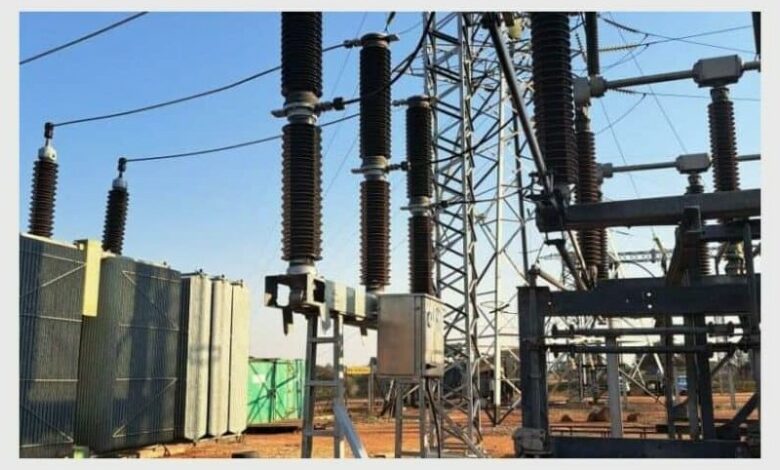
According to metro spokesperson Lindela Mashigo ageing infrastructure remains a major concern, with much of the city’s electricity equipment operating beyond its intended lifespan.
“It must be noted that equipment operating beyond its design life fails more often and takes longer to restore, especially where replacement parts or full substation refurbishment are required,” said Mashigo.
The problem is further compounded when infrastructure is deliberately damaged or stolen.
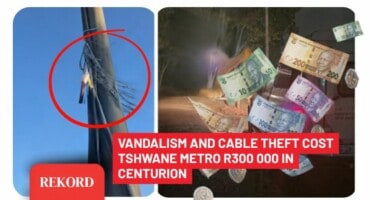
Mashigo described cable theft as a ‘significant and persistent’ problem, adding that the city has identified theft at vulnerable substations as a direct cause of prolonged outages in some areas.
The impact extends beyond households without electricity.
Schools, hospitals, businesses and other essential services can also be affected when electricity infrastructure is damaged or requires repeated repairs.
In Ward 45, where residents have experienced prolonged outages, Councillor Elizabeth Basson said several infrastructure-related problems have contributed to what she described as ‘abnormals’.
These include cable faults, cable theft, faults at mini-substations and damaged cables.
Basson said a vandalised secondary substation at Garsfontein has also contributed to wider disruptions because of inadequate protection on its panels.
“A vandalised secondary substation without the necessary protection on the panels causes a whole substation to trip, instead of just a mini-sub or one panel,” said Basson.
For residents and businesses, the consequences can extend well beyond simply sitting in the dark.
Basson said people working from home can lose income or even their jobs while businesses can suffer financial losses. Schools, hospitals, care facilities and retirement centres may also have to spend heavily on fuel for generators.
Residents who rely on medical equipment can be placed in particularly difficult situations during prolonged interruptions.
Business owner and resident Gregory Price said outages also affect the safety of people travelling through affected areas at night.
“Power outages mean we can’t see the traffic lights. We can’t see potholes at night, and there are many in Pretoria,” said Price.
He also raised concerns about the loss of streetlighting, adding that this has been accompanied by an increase in crime in some areas.
For businesses, the disruption can be immediate, particularly for those dependent on electricity for transactions and communication.
Price said businesses rely on power for services such as Wi-Fi and card machines, meaning interruptions can interfere with their ability to operate.
However, the metro said not every outage should be attributed to criminal activity.
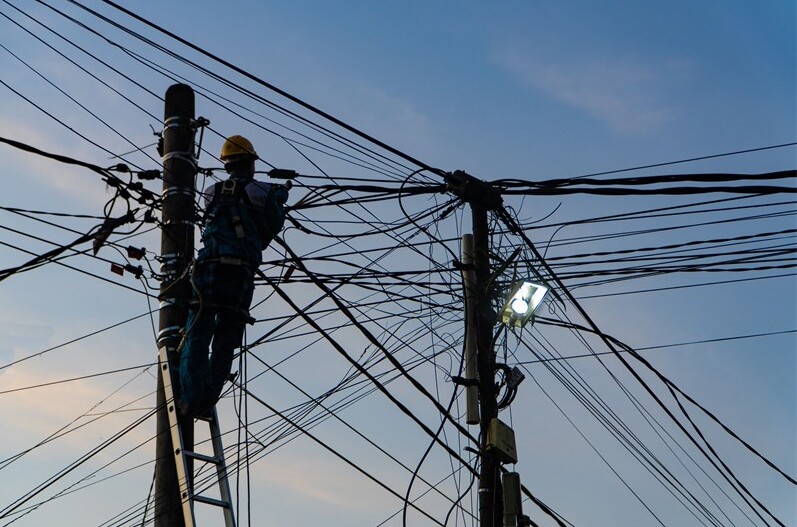
Other contributing factors include illegal or informal connections that overload feeders, construction activity that damages buried cables, equipment failures and peak-demand overloads, particularly during cold weather.
Pretoria SAPS spokesperson, Captain Johan van Dyk also cautioned against viewing cable theft as the explanation for every electricity interruption.
“It is important to point out that not all power outages are the result of criminal activity,” said Van Dyk.
Van Dyk said technical faults, equipment failure, maintenance and other network problems can also cause outages, cautioning against linking every interruption to criminality activity.
He said the widespread nature of electricity infrastructure makes it difficult for police to monitor every site, while criminals target cables and equipment for their resale value.
“It is not possible for police to be physically present at every site at all times,” said Van Dyk.
He called for co-operation between the SAPS, metro, businesses, security companies and communities to help prevent infrastructure-related crime.
Another resident, Candice Clark, called for regular maintenance, armed maintenance and armed-response monitoring at high-risk sites, as well as more technical teams to improve the city’s response to outages.
“The city also needs to work on its communication during outages and not just repeat the same statement every four hours,” said Clark.
The metro said it is using planned maintenance, joint operations with SAPS and proposals to secure vulnerable infrastructure. Some substations have also been earmarked for refurbishment.
Basson called for vulnerable cables and substations to be secured, while urging the city to increase technical personnel and qualified artisans in Region 6.
Do you have more information about the story?
Please send us an email to bennittb@rekord.co.za or phone us on 083 625 4114.
For free breaking and community news, visit Rekord’s websites: Rekord East
For more news and interesting articles, like Rekord on Facebook, follow us on Twitter or Instagram or TikTok or WhatsApp Channel