Nearly 100 settlements formalised this year, says metro
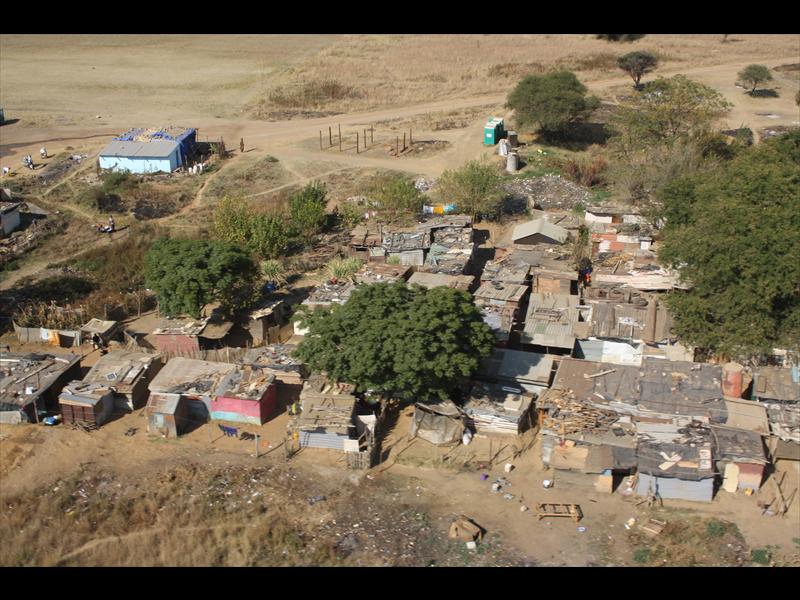
Eighty informal settlements have been formalised by the Tshwane metro since the beginning of 2015.
Andrew Ngozo
The Tshwane metro has refuted DA claims it was reluctant to rapidly formalise the informal settlements dotted around the city.
Tshwane metro spokesperson Lindela Mashigo said contrary to the assertions that only 16 informal settlements had been formalised since 2011, the truth was 80 had been formalised this year.
Mashigo could not confirm the metro had nearly 1 000 informal settlements.
“The metro does not have 947 informal settlements as claimed. This figure is unsubstantiated.
“Since the beginning of 2015 we have formalised 80 informal settlements,” he said.
During a recent council meeting, DA Councillor Elmarie Linde, shadow MMC for housing and human settlements said the performance report for the first quarter of the 2015/2016 financial year, the metro had only formalised 16 informal settlements since 2011.
Another DA Councillor Yolanda Duvenage claimed the metro was not “consciously making efforts to alleviate the housing backlog in Tshwane”.
Duvenage said the group financial services grants and subsidies progress report for the period ended 31 August, showed “the human settlement capacity grant was being reviewed and transfer [of funds] had been stopped until further notice”.
However, Mashigo said the grant had been received in full from the national department of human settlements on 26 October.
“We are not aware of the reason why they decided to review the human settlements capacity grant because that is the sole mandate and discretion of the national department of human settlements,” he said.
The department had not responded to an enquiry made on Thursday.
Duvenage said the same report indicated the metro had underperformed by 63% on the urban settlement development grant for the period under review.
“From this report, we can draw a simple conclusion that the municipal manager does not comply with the Annual Division of Revenue Act.”
Mashigo said this was a fallacy devoid of evidence. “We do not have records that show the municipality underperformed by 63%,” he said.
Contrary to allegations that the city manager was not complying with the Annual Division of Revenue Act, Mashigo said the financial performance management team reported monthly to the national transferring authorities on the grant allocations.
“They also report to the mayoral committee regarding all grants received, spent and unspent balances including ‘outstanding’ grant allocations.
Treasury is also informed where any national transferring department is in breach of the payment schedule in terms of the Division of Revenue Act.”
Do you have more information about the story? Please send us an email to editorial@rekord.co.za or phone us on 072 435 7717.
For free breaking and community news, visit Rekord’s websites:
For more news and interesting articles, like Rekord on Facebook, follow us on Twitter or Instagram.
- We have exciting news! We’re offering a free alert to help you always be in the loop. Send an email with the word ‘Subscribe’ to breakingnews@rekord.co.za to receive your free daily breaking news update