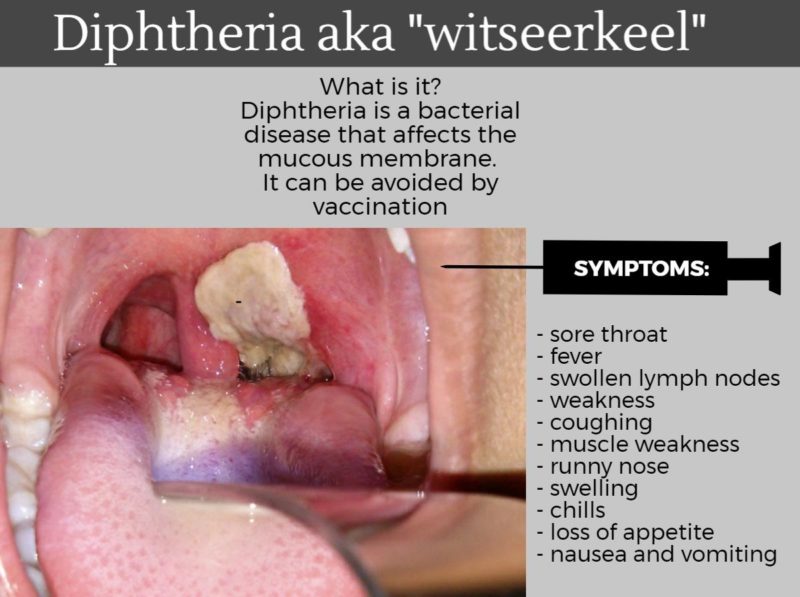
INFOGRAPHIC: All you need to know about diphtheria and how to prevent it
An outbreak occurred in KwaZulu-Natal with 15 confirmed cases between March and June 2015, and two more the following year.

Following three confirmed cases of diphtheria in Western Cape and the death of a 10-year old child to the disease, Rekord looks at disease and how to prevent it.
Diphtheria is a contagious and potentially life-threatening bacterial infection caused by infection by the toxic Corynebacterium diphtheriae or, less common, Corynebacterium ulcers or Corynebacterium pseudotuberculosis.
ALSO READ: Prevent disease, vaccinate
The two forms of the diphtheria are: respiratory, occurring in the lungs and cutaneous which occurs on the skin.
Only sporadic cases of the disease have been reported in South Africa since immunisation against it started in the 1950s.
According to the National Institute for Communicable Diseases, only three confirmed cases of respiratory diphtheria were reported between January 2008 and March 2015, two in Western Cape Province and the other in Eastern Cape.
An outbreak occurred in KwaZulu-Natal where with 15 confirmed cases between March and June 2015, and two more the following year.
Who can get diphtheria?
– Children who are not immunised or did not receive or complete the expanded programme of immunisation schedule
– Adults living in a community where the organism is present
– People with an immune system disorder
– People living in unclean or crowded conditions
How does one get diphtheria?
– C. diphthriae spreads through person to person contact with respiratory droplets
– Hand-to-hand contact with secretions from an infected person’s mouth, nose, throat or skin
– Close contact with skin lesions in a person with the cutaneous form of the illness (uncommon)
An infected person can transmit the bacteria for up to six weeks after infection.
ALSO READ: Healthy Friday: 8 High fat foods that are incredibly good for you
What are the signs and symptoms of diphtheria?
Symptoms of respiratory diphtheria usually present themselves two to five days after exposure and include:
– sore throat
– fever
– swollen lymph nodes
– weakness
– coughing
– muscle weakness
– runny nose
– swelling
– chills
– loss of appetite
– nausea and vomiting
ALSO READ: Ten baby diseases to look out for
” Within days, a whitish/greyish pseudomembrane may form over the throat and tonsils making it hard to swallow and breathe.”
Complications of diphtheria include respiratory obstruction, myocarditis with cardiac arrest or cardiac failure, paralysis and kidney failure.
” A suspected case of diphtheria is any person who presents with an upper respiratory tract illness characterised by a sore throat, low-grade fever and an adherent membrane of the nasopharynx, tonsils or larynx.”
How is diphtheria treated?
– antibiotics, including penicillin
– antitoxin that neutralises the diphtheria toxin
– vaccine
Do you have more information about the story? Please send us an email to editorial@rekord.co.za or phone us on 083 625 4114.
For free breaking and community news, visit Rekord’s websites:
For more news and interesting articles, like Rekord on Facebook, follow us on Twitter or Instagram