June 16 1976 – the history
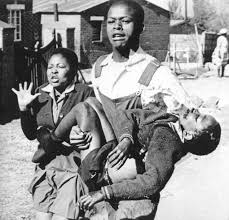
The picture of the dying 13-year-old Hector Pieterson became an iconic image when it was published around the world.
As the country commemorates 41 years of the 16 June 1976 uprising this month, here are some interesting facts about the day that changed the socio-political landscape of the country.
According to History SA website, events that triggered the uprising can be traced back to the policies of the apartheid government that resulted in the introduction of the Bantu Education Act in 1953.
The rise of the Black Consciousness Movement (BCM) and the formation of SA Students Organisation raised the political consciousness of many students.
When Afrikaans was made a compulsory medium of instruction in schools in 1974, black students began mobilising themselves.
On 16 June between 3 000 and 10 000 students organised by the SA Students Movement’s action committee supported by the BCM, marched peacefully to demonstrate and protest against the government’s directive. The march was meant to culminate in a rally at Orlando Stadium, Soweto.
History SA writes that on their way, the students were met by heavily armed police officers who fired teargas and later live ammunition on them. This resulted in a widespread revolt that turned into an uprising against the government.
ALSO READ: Local golf star looks to make history in Swaziland
While the uprising began in Soweto, it spread across the country and carried on until the following year.
The aftermath of 16 June 1976 had dire consequences for the apartheid government, History SA said.
Images of the police firing on peacefully demonstrating students led to international revulsion against South Africa.
Bantu Education Policy
According to History SA, “bantu” in the term Bantu Education is politically highly charged and has derogatory connotations.
The Bantu Educational system was designed to “train and fit” Africans for their role in the evolving apartheid society. Education was viewed as part of the overall apartheid system including “homelands”, urban restrictions, pass laws and job reservation.
“In 1949 the government appointed the Eiselen commission to consider African education provision. The commission recommended “resorting to radical measures for the effective reform of the Bantu school system”.
As the country commemorates 41 years of the 16 June 1976 uprising this month, here are some interesting facts about the day that changed the socio-political landscape of the country.
According to History SA website, events that triggered the uprising can be traced back to the policies of the apartheid government that resulted in the introduction of the Bantu Education Act in 1953.
The rise of the Black Consciousness Movement (BCM) and the formation of SA Students Organisation raised the political consciousness of many students.
When Afrikaans was made a compulsory medium of instruction in schools in 1974, black students began mobilising themselves.
On 16 June between 3 000 and 10 000 students organised by the SA Students Movement’s action committee supported by the BCM, marched peacefully to demonstrate and protest against the government’s directive. The march was meant to culminate in a rally at Orlando Stadium, Soweto.
History SA writes that on their way, the students were met by heavily armed police officers who fired teargas and later live ammunition on them. This resulted in a widespread revolt that turned into an uprising against the government.
ALSO READ: Local golf star looks to make history in Swaziland
While the uprising began in Soweto, it spread across the country and carried on until the following year.
The aftermath of 16 June 1976 had dire consequences for the apartheid government, History SA said.
Images of the police firing on peacefully demonstrating students led to international revulsion against South Africa.
Bantu Education Policy
According to History SA, “bantu” in the term Bantu Education is politically highly charged and has derogatory connotations.
The Bantu Educational system was designed to “train and fit” Africans for their role in the evolving apartheid society. Education was viewed as part of the overall apartheid system including “homelands”, urban restrictions, pass laws and job reservation.
In 1949 the government appointed the Eiselen commission to consider African education provision. The commission recommended “resorting to radical measures for the effective reform of the Bantu school system”.
In 1953, prior to the apartheid government’s Bantu Education Act, 90% of black South African schools were state-aided mission schools.
The act demanded that all such schools register with the state, and removed control of African education from the churches and provincial authorities. This control was centralised in the Bantu education department, a body dedicated to keeping it separate and inferior. Almost all the mission schools closed down.
The website quoted then minister of native affairs Hendrik Verwoerd as saying in 1954: “…there is no place for [the African] in the European community above the level of certain forms of labour. It is of no avail for him to receive a training which has as its aim, absorption in the European community.”
Though Bantu education was designed to deprive Africans and isolate them from “subversive” ideas, indignation at being given such “gutter” education became a major focus for resistance, most notably in the 1976 Soweto uprising.
ALSO READ: Wöstmann can make running history at Comrades
In the wake of this effective and clear protest, some reform attempts were made, but it was a case of too little, too late. Major disparities in racially separate education provision continued into the 1990s, the website wrote.
June 1976 is commemorated today by a national holiday, Youth day, which honours all the young people who lost their lives in the struggle against apartheid and Bantu education.
According to the SA History, Hastings Ndlovu is believed to have been the first child to be shot by the police that fateful day. But Hector Pieterson became the iconic image of the uprising when a photograph by Sam Nzima of the dying 13-year-old being carried by a fellow student after being shot – was published around the world.
Do you have more information about the story? Please send us an email to editorial@rekord.co.za or phone us on 083 625 4114.
For free breaking and community news, visit Rekord’s websites:
For more news and interesting articles, like Rekord on Facebook, follow us on Twitter or Instagram