Moot family under strain after toddler diagnosed with rare syndrome
Only three children in South Africa, of which the family is aware, have been diagnosed with Dravet Syndrome.
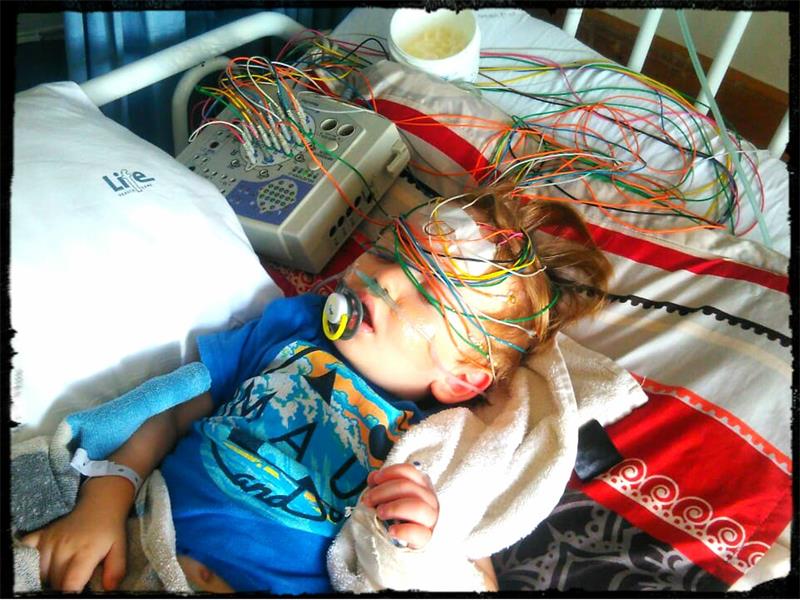
A Moot family is despondent after their two-year-old toddler was diagnosed with a rare syndrome.
Only three children in South Africa, of which the family is aware, have been diagnosed with Dravet syndrome.
Worldwide, one in 40 000 babies was born with the syndrome.
Barry du Plessis from Rietfontein is one of the handful diagnosed with the syndrome.
“Barry was born healthy and normal, but at 21 months, he started making jerking movements,” said his grandmother Eloma du Plessis.
Eloma said after many tests and expert medical input, “one of the best paediatric neurologists in the country” diagnosed Barry with Dravet syndrome, an extreme and rare form of epilepsy.

“The syndrome begins to manifest itself in an otherwise healthy baby at the age of one-and-a-half,” she said.
“These multiple epileptic seizures cause behavioural and developmental problems, cognitive problems, movement and mobility issues, speech problems, sleep disorders and chronic airway infection, to name but a few,” Eloma said.
She said there were no facilities in the country to do necessary tests.
On September 29, blood had to be sent to England for tests.
“These tests cost about R40 000 and there are other outstanding accounts and the medical aid does not cover.

“Since incredible financial strain has already been placed on the family, it is necessary to ask for help,” she said.
A special account was opened for any contributions to Barry’s medical care, and to cover outstanding accounts.
“This means that in a few months, we will have to send his younger sister for tests,” she said.
The Du Plessis family was devastated by the diagnosis, Barry’s mother, Laverne, said.
She said Barry had since been removed from school and lived with Eloma.
“He needs to be monitored permanently and we should try to keep him away from other people,” Laverne said.

“Some children with the condition only reach the age of eight. However, there are others who have become older. It remains difficult for the family to accept such a thing.”
Laverne told Rekord that there were several negative effects if the right treatment was not obtained.
“His brain can be damaged so much that he won’t be able to do anything for himself in the end,” she said, adding that the syndrome was genetic.
“Each epileptic attack causes damage to part of his body.”
She said the specific cell mutation that caused this condition needed to be identified so that appropriate treatment could be formulated strategically.
“With the right treatment, little Barry’s quality of life can improve,” she said.
Anyone able to help may contact Rekord for more information.
Do you have more information about the story? Please send us an email to editorial@rekord.co.za or phone us on 083 625 4114.
For free breaking and community news, visit Rekord’s websites:
Rekord East
Rekord North
Rekord Centurion
Rekord Moot
For more news and interesting articles, like Rekord on Facebook, follow us on Twitter or Instagram