Health releases more information about the Covid-19 vaccine
Health minister Dr Zweli Mkhize says the first batch of vaccine from the Serum Institute of India was expected to arrive on Monday.
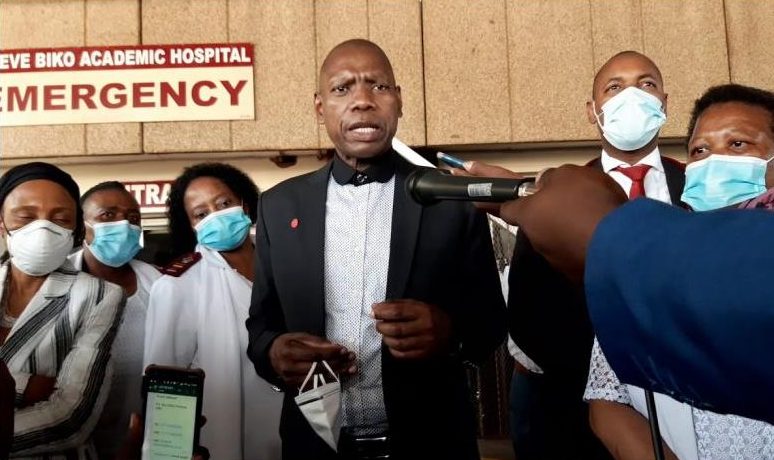
The first batch of one million vaccine doses will arrive in South Africa from India on 1 February, health minister Dr Zweli Mkhize announced during a briefing on Wednesday.
“The flight carrying them will leave India on 31 January, fly via Dubai and land at OR Tambo International airport the following day,” he said.
After the arrival of the vaccines, they would undergo some technical quality assurance and reconciliation necessary for their safe distribution.
“These processes will take a minimum of 10 days and a maximum of 14 days to complete, upon which we will be ready to distribute the vaccines to all provinces.”
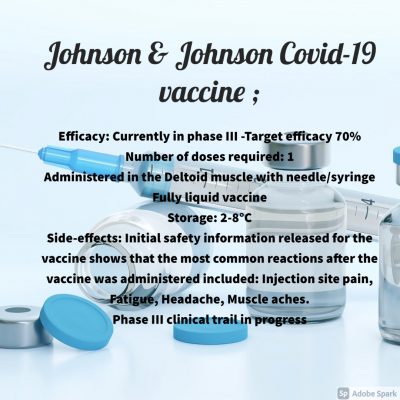
The AstraZeneca vaccine, set to be the first to be rolled out, has already been approved by the South African Health Products Regulatory Authority (Sahpra).
Here are some facts on this vaccine:
– It has an efficacy of between 62% to 90% (different trails found)
– Number of doses required: 2
– Dose interval: 4-12 weeks (12 weeks recommended by the ministerial advisory committee)
– Administered in the deltoid muscle with a needle/syringe
– Fully liquid vaccine
– Storage: 2-8°C
Side effects are said to be mild to moderate in severity. Side effects usually resolve within a few days of injection and involve injection site pain, headache; fatigue; myalgia; malaise; pyrexia; chills; arthralgia and nausea.
Pfizer was reported to have about 95% efficacy and the Moderna Covid-19 vaccine had about 94.5% efficacy with similar mild side effects to those of the AstraZeneca vaccine.
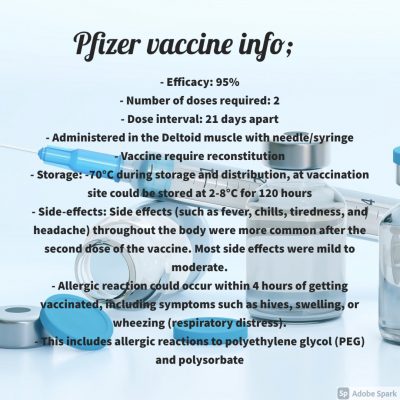
“Allergic reaction could occur within four hours of getting vaccinated,” said deputy director-general of health Dr Anban Pillay.
These included symptoms such as hives, swelling, or wheezing (respiratory distress).
This includes allergic reactions to polyethylene glycol (PEG) and polysorbate.
According to the department, 65% of the adult population must be vaccinated to achieve herd immunity against Covid-19.
This means about 40 million people.
About 1.2 million healthcare workers were expected to be the first to receive the vaccine.
Of them, 350 000 were insured (of which 170 000 belonged to the GEMS government employees medical aid scheme).
“The vaccine is designated as a public good,” said Pillay.
“Therefore, it is to be delivered free at the point of care based on principles of social solidarity.”

According to health funding for the vaccine would be predominantly from government fiscus, but would be augmented by private funding sources.
“The government will acquire the vaccine from various sources such as the Covax facility, bilateral arrangements with pharmaceutical manufacturers and other mechanisms such as the African Union.
“An identified entity will receive and act as the central distributor of the vaccines on behalf of the government and will recover costs from private providers or vaccinators back into the fiscus.”
Private providers (including pharmacies) would procure vaccines from the central distributor for the government through their wholesalers at the single exit price.
The Department of Health said an electronic vaccine data system will be used to plan, execute and monitor vaccinations.
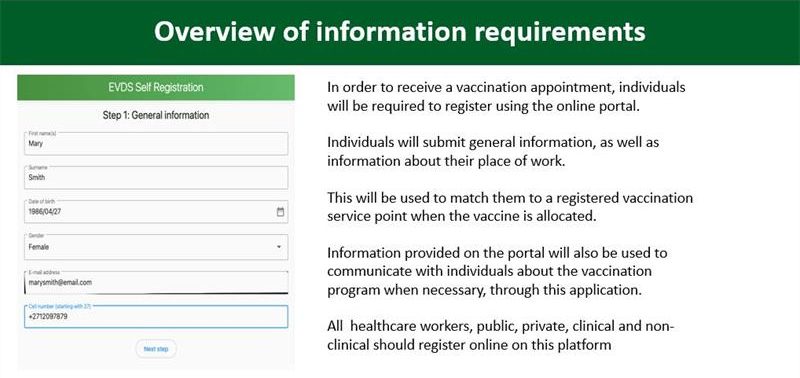
This system will coordinate facility accreditation, the supply of vaccines, pre-booking for vaccination and recording the vaccination and other relevant information.
National health laboratory service professor Koleka Mlisana believed that since the country was not among the first to receive vaccines, it gave the health sector time to monitor any side effects.
Koleka also addressed some misinformation about the vaccine circulating on social media.
“There is no microchip or tracking device of any kind in any of the vaccines. All vaccine ingredients were declared to the regulating body.
“Vaccines will also not alter one’s DNA.”
Readers can read and listen to some of the health researchers speaking about the vaccines: https://sacoronavirus.co.za/category/listen-to-the-experts/
* Notice: Coronavirus reporting at Caxton Local Media aims to combat fake news
Dear reader,
As your local news provider, we have the duty of keeping you factually informed on Covid-19 developments. As you may have noticed, mis- and disinformation (also known as “fake news”) is circulating online. Caxton Local Media is determined to filter through the masses of information doing the rounds and to separate truth from untruth in order to keep you adequately informed. Local newsrooms follow a strict pre-publication fact-checking protocol. A national task team has been established to assist in bringing you credible news reports on Covid-19.
Readers with any comments or queries may contact National Group Editor Irma Green (irma@caxton.co.za) or Legal Adviser Helene Eloff (helene@caxton.co.za).
Do you have more information about the story?
Please send us an email to editorial@rekord.co.za or phone us on 083 625 4114.
For free breaking and community news, visit Rekord’s websites: Rekord East
For more news and interesting articles, like Rekord on Facebook, follow us on Twitter or Instagram