Metro commemorates Earth Hour
The GRIP project aims to facilitate a transformation of the social and urban landscape of the city.
The Tshwane metro’s department of environment and agriculture management commemorated Earth Hour on Saturday. MMC for the department Dana Wannenburg said Saturday marked the 15th anniversary of this global movement which was first held on 31 March 2007. “The metro showed its support to commemorate Earth Hour.
A video highlighting the issues people face was placed on all the official Earth Hour’s online platforms,” he said. “Across the globe, millions of people joined in the world’s largest grassroots movement for the environment. “The organisers of Earth Hour appealed to all role players to ‘become the change our planet so desperately needs by taking the momentum of Earth Hour into our homes with easy, manageable actions’.”
Wannenburg said the focus of this year’s event was the role of nature in protecting Earth and all its inhabitants from the impacts of climate change.
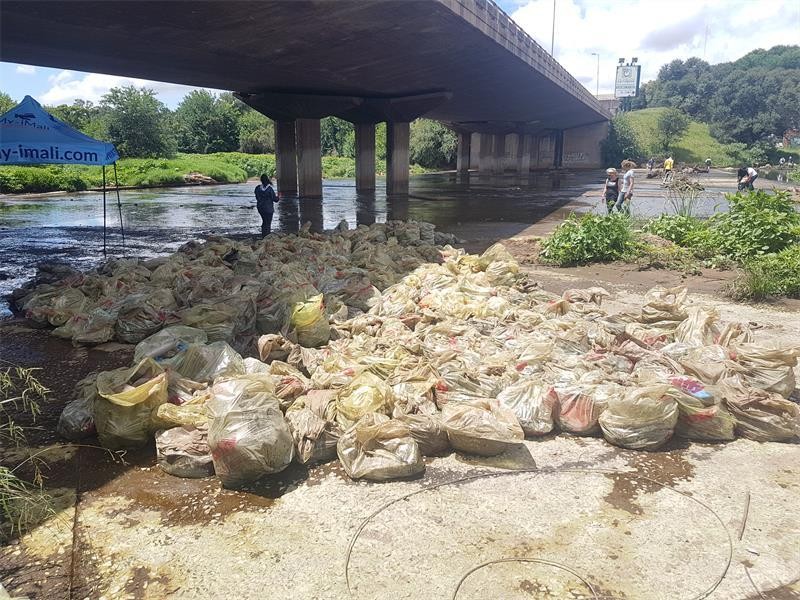
“The metro focused on the Hennops Revival rehabilitation of the Hennops River, the Apies river rehabilitation programme, restoring biodiversity, landscape design to enhance biodiversity and a partnership between the city and the city of Aarhus in Denmark, to promote green infrastructure. Wannenburg said Hennops Revival “is an NGO that does extensive river clean-ups and is beset with challenges. The river has poor health and riverbank erosion occurs”.
“The Apies river rehabilitation programme demonstrates the possibility of restoring rivers as part of a development process. And in this case, it is that of the Rainbow Junction development, in partnership with the company of the same name. “The first phase is completed. Alien vegetation was removed and illegal dumping sites cleared. We established plant propagation, constructed bank protecting measures and planted indigenous plants.”
Wannenburg said WESSA Friends Groups are volunteer groups affiliated to the Wildlife and Environment Society of SA and is among 15 friends groups whose volunteers restore biodiversity in Tshwane’s key ecological nodes. Wannenburg said the University of Pretoria’s Biodiversity and Ecosystem Services for Tshwane (BEST) focuses on the development of local guidelines for landscape design that are socio-culturally and ecologically relevant.
“The Integrative Green Infrastructure Planning (GRIP) projects entails landscape guidelines inspired by the city of Aarhus to improve green infrastructures such as public parks, community gardens, greenways and conservation areas.” Wannenburg said the project aims to facilitate a transformation of the social and urban landscape of the city. “In contrast to grey infrastructure (human-constructed), green infrastructure promotes multifunctionality.”
The same area of land, Wannenburg said, can thus have many functions that benefit the community through its infrastructure and ecosystem services. “In a few months’ time, representatives from all over the globe will be attending the 15th meeting of the United Nations Conference of the Parties (COP 15) to the Convention on Biological Diversity (CBD) in Kunming, China.”
Do you have more information about the story?
Please send us an email to editorial@rekord.co.za or phone us on 083 625 4114.
For free breaking and community news, visit Rekord’s websites: Rekord East
For more news and interesting articles, like Rekord on Facebook, follow us on Twitter or Instagram