Hard to breathe during load-shedding
Pretoria residents claim that loadshedding is detrimental to their health.
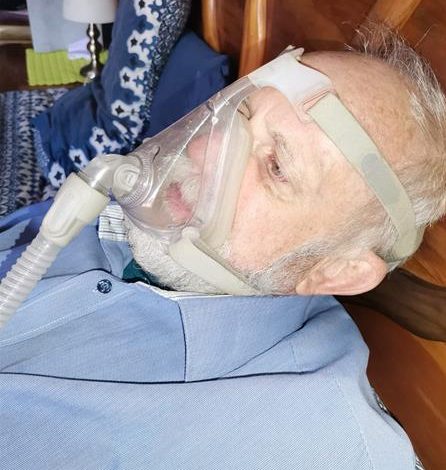
While load-shedding might be an annoyance for some, other Pretoria residents claim it might even be detrimental to their health.
Charmaine van Zyl said she suffers from sleep apnea and is dependent on electricity to get her through the night.
“I have asthma and heart problems, so I cannot sleep at night without my CPAP machine,” Van Zyl told Rekord.
Continuous Positive Airflow Pressure (CPAP) machines are used to treat moderate to severe obstructive sleep apnea.
Sleep apnea is a common disorder in which breathing repeatedly stops and starts as you sleep.
“It is actually very dangerous for people who have severe sleep apnea, as we can literally stop breathing and not wake up,” said Van Zyl.
She said the machine required electricity to work.
“A battery for the machine would cost me R9 000 and the medical aid will not cover that, as the device was already very expensive.”
Another sleep apnea sufferer, Aaldert Kruger, said he was also using a CPAP machine for several years.
Kruger, who lives in Doornpoort north of Pretoria, said regular power interruptions throughout the night had a negative impact on his health.
“Before I was diagnosed with sleep apnea, I had stopped breathing in my sleep. My wife, luckily a light sleeper, actually heard that I wasn’t breathing and would wake me up.”
He said sleeping without the machine that provides him continuous airflow, could be fatal.
“It’s almost a relief to rather have load-shedding during the day.”
Kruger said: “What makes power interruptions during the use of the CPAP machine more dangerous is that, with no air coming through the mask, it sucks to your face. The first time this happened, it felt like I was dying. It can literally smother you in your sleep.”
Rekord previously spoke to a health care worker in Pretoria who said that in-home patients with respiratory illnesses, such as Covid-19, were also dependent on oxygen machines that run on electricity.
“Most of the patients that I take care of are pensioners and cannot afford back-up batteries for their oxygen machines.”
Johann Kruger, owner of EDNA Medical Distributors which imports and sells oxygen-related products, said load-shedding was indeed a problem for patients using “concentrated” oxygen machines.
“When there’s no electricity these machines require expensive back-up batteries or oxygen cylinders, which they could rent.”
Kruger said the demand for backup oxygen cylinders far outweighed the supply.
He told Rekord that his company was waiting on more cylinders, which had to be imported from international suppliers.
“At the moment the situation looks quite dire.”
Van Zyl said: “I know how bad it is not being able to sleep without a machine that helps regulate my breathing at night. I cannot imagine what panic this could cause for someone who is permanently on oxygen supply. I mean, what about respiratory sufferers, like Covid patients?
The National Institute for Communicable Diseases (NICD) was asked for comment on whether they believe load-shedding could have an impact on Covid patients depending on oxygen machines at home.
NICD referred Rekord to the health department, but by the time of publishing no response had been received from the department.
Do you have more information about the story?
Please send us an email to editorial@rekord.co.za or phone us on 083 625 4114.
For free breaking and community news, visit Rekord’s websites: Rekord East
For more news and interesting articles, like Rekord on Facebook, follow us on Twitter or Instagram