The Hennops litter catchment system is complete and functioning
"The litter catchment system was designed around our physical presence in the river and real life experience in the floods, a project designed from the ground up instead of from the top down.”
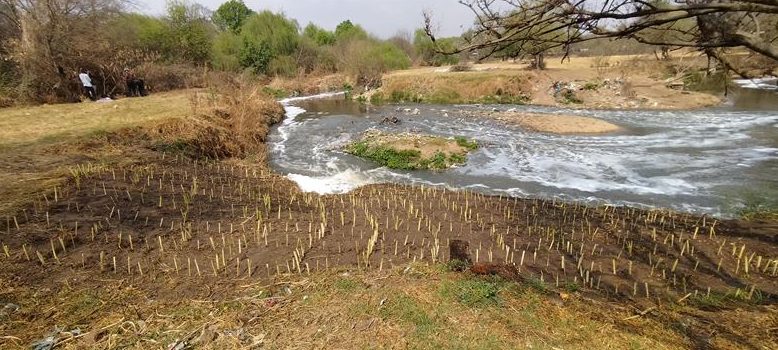
The litter catchment system in the Hennops River, Centurion, was completed on time for the rainy season and was “working just fine”.
Tarryn Johnston, founder of the Hennops Revival, a local non-profit organisation and public benefit organisation (PBO) said the system was planned in three stages.
“During the first stage the trap catches larger items, the second catches smaller items, and the third, those really small items.
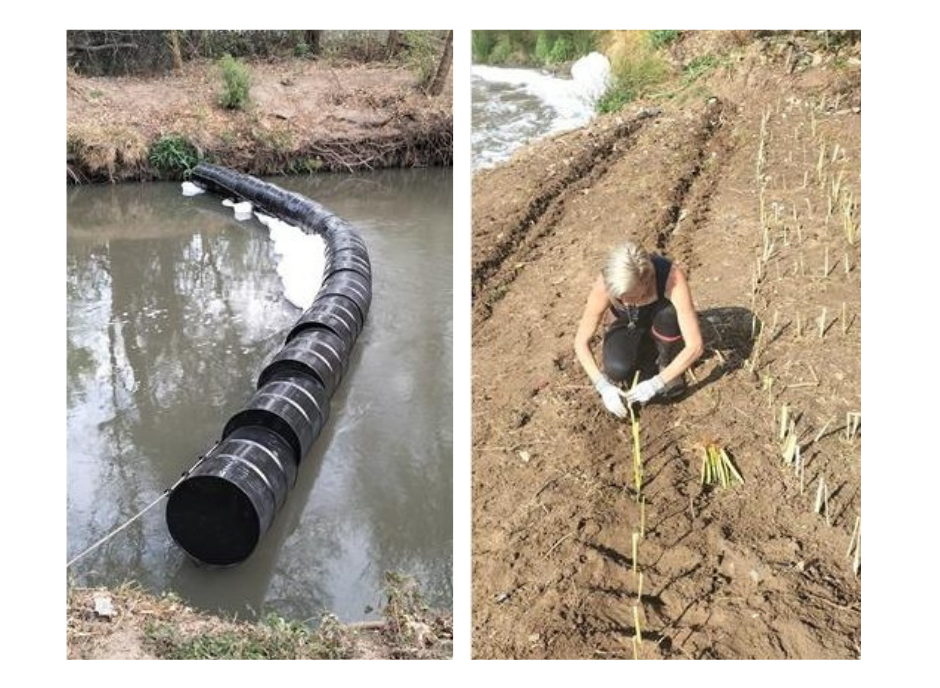
The litter catchment sytem in the Hennops River is complete. Photo: supplied.
“I am thrilled to announce phase one and two will work optimally once the water level starts to rise during the rainy season. But we caught plenty of litter in phase three on the bottom grids, sediment on the drums, indicative of raw sewage in the water.”
She said the litter catchment system “was designed around our physical presence in the river and real-life experience in the floods, a project designed from the ground up instead of from the top down.”
“There is nothing like this anywhere else in the world, but we need more traps implemented up and downstream due to the large amount of rubbish that enters the river through stormwater drains and other human activity.”
Johnston said, “it extends up to 63 metres across the river and floodplain and is designed in such a way that the final stage automatically releases in the event of high flooding because we understand that we cannot hold back a flood and do not want to create damming or bursting of banks”.
ALSO READ: Eskom employees held hostage by Morula View residents demanding electricity
Hennops Revival also planted Vetiver “grown on the contours, it reduces wind and water erosion but does not encroach laterally”.
She said it was first used in South Africa by the Voortrekkers to scent kists, and grown in Ventersdorp in 1892.
“This Vetiver grass is sterile. As they propagate by small offsets instead of underground stolons, they are non-invasive.
“Able to withstand both drought and flooding, and tolerant of high levels of pesticides, herbicides and a wide range of toxic and heavy metals.”
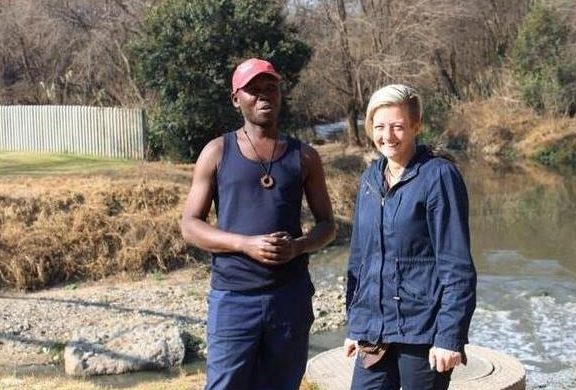
She said when plants are established close together, it forms a dense hedge that acts as an effective sediment filter and water flow diffuser.
“Vetiver will continue to grow up with the deposited silt, eventually forming terraces if the trapped sediment is not removed.”
Johnston was also invited as a keynote speaker at the Land Rehabilitation Society of Southern Africa (LaRRSA) conference tomorrow and on Thursday, and will also be present as a speaker at The Water Research Commission’s fifth symposium next week.
Johnston also made it to the top three finalists in two categories of the Enviropaedia Eco Logic Awards. The categories were Water Conservation and Eco-Angel and results were expected in November.
Do you have more information about the story?
Please send us an email to editorial@rekord.co.za or phone us on 083 625 4114.
For free breaking and community news, visit Rekord’s websites: Rekord East
For more news and interesting articles, like Rekord on Facebook, follow us on Twitter or Instagram