Afrikaans to be reinstated at Unisa, leaving social media in arms
The Constitutional Court on Wednesday ruled in favour of AfriForum, and handed down judgment for the retention of Afrikaans as a primary language of instruction at the Unisa.
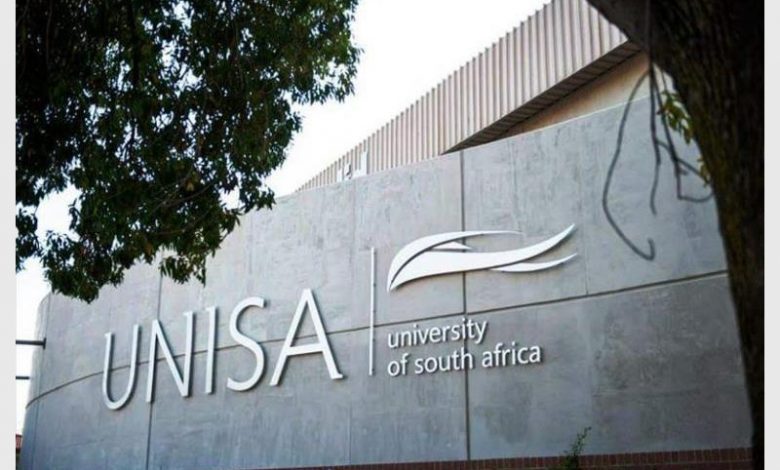
The University of South Africa (Unisa) has been ordered by the Constitutional Court to retain Afrikaans as a primary language of instruction at the institute.
It will thus have to stop phasing out its dual-medium language policy in favour of an English-only one.
Unisa had set an objective via a policy, to institute measures to enhance the status of indigenous African languages, while also phasing out courses that were offered in both Afrikaans and English.
The Constitutional Court on Wednesday ruled in favour of AfriForum, and handed down judgment for the retention of Afrikaans as a primary language of instruction at the Unisa.
This also follows a judgment by the Supreme Court of Appeal in 2020, ruling in favour of AfriForum on the issue of Unisa’s language policy not being adopted “in a constitutionally compliant manner”.
The Constitutional Court in making the judgment, first dealt with the improper portrayal of Afrikaans and its true roots.
ALSO READ: Battle over Afrikaans at Unisa
The court emphasised that it was a misconception that Afrikaans was “the language of whites” and “the language of the oppressor”, as “today, Afrikaans was spoken predominantly by black people”.
The court clarified this matter concerned a fundamental right of the constitution, which was a right to receive education in the official language of one’s choice at a public institution, subject only to the qualification that such education “is reasonably practicable”.
This left Unisa constrained to justify the decision it took by demonstrating that it applied its mind to the considerations listed in the constitution.
The court however held that it was open to Unisa to put up this evidence to justify the phasing out of Afrikaans in the future.
It further held that Unisa, as an organ of state, had to be afforded the deference to do the necessary feasibility investigations to implement the required changes.
The order of invalidity was therefore suspended until the start of the 2023 academic year.
The ruling, led AfriForum hailing it a “huge victory” for Afrikaans-speaking students and Afrikaans language rights in South Africa after Unisa’s senate and council took the decision to adopt a revised language policy on March 30, 2016 and April 28, 2016.
AfriForum said the Constitutional Court had upheld the Supreme Court of Appeal’s findings, that Unisa’s current language policy, which provides only for English as the primary medium of instruction was unconstitutional.
It said the full ruling was not yet available and Unisa was allowed more time for the implementation of the ruling.
AfriForum’s Head of Cultural Affairs, Alana Bailey said “this judgment which followed after legal processes spanning more than five years, is of great importance to all Afrikaans-speaking students in the country, but also for the future of Afrikaans as a high-function language”.
“AfriForum has the greatest appreciation for the Constitutional Court’s position on students’ right to mother language education.”
Baily said the courts decision marked the beginning of a new chapter in the empowerment of all citizens, who were not first language speakers of English in tertiary education.
“It is fair to say that private educational institutions have freedom to offer education in any language of their choice, but to be used as the language of instruction at a tertiary institution is of great importance for the survival and continuous development of a language.
“Therefore, when any language is phased out at an institution, the decision has huge ramifications and the decision cannot be readily accepted.”
She said the court confirmed the point with the ruling and confirmed the right to access to Afrikaans mother-language education at both public and private institutions for students of all income groups.
However social media users have been up in arms, saying the ConCourt’s decision had to be inclusive to all South African languages.
The ConCourt in its ruling should be inclusive of all South African languages, not just Afrikaans. Does @unisa offer leaning & teaching in other indigenous languages? Many public schools offer English & Afrikaans “By Default”, indigenous languages are optional, is that fair? 🤔
— SIR ⚜️ (@PressPlaySA) September 23, 2021
I say this because one may ask, is it impossible for Unisa to also elevate other languages to the standard of Afrikaans so that a balance can be maintained as opposed to “shooting down” Afrikaans?
— @Monnakgomo012 (@monnakgomothei1) September 23, 2021
Naka, it is the transformation agenda that needs rescuing…otherwise, I'll campaign for Sepedi to be a language of instruction (in pedagogy & learning materials) at Unisa. Haikhona! Aowa!
— Katishi Masemola (@rragomoditi) September 23, 2021
@unisa shouldn't complain when we demand that it introduces our home languages as well.
Don't tell me about the cost of printing and the time to translate the study materials to our indigenous languages (it's possible, the Bible is proof of that).
— MoAfrikaBorwa🇿🇦 (@Cyza) September 23, 2021
Do you have more information about the story?
Please send us an email to editorial@rekord.co.za or phone us on 083 625 4114.
For free breaking and community news, visit Rekord’s websites: Rekord East
For more news and interesting articles, like Rekord on Facebook, follow us on Twitter or Instagram