Mixed views as govt ponders coronavirus mandatory vaccine
Gauteng is likely to experience a coronavirus resurgence peak before Christmas, according to the modelling projections by the province’s command council.
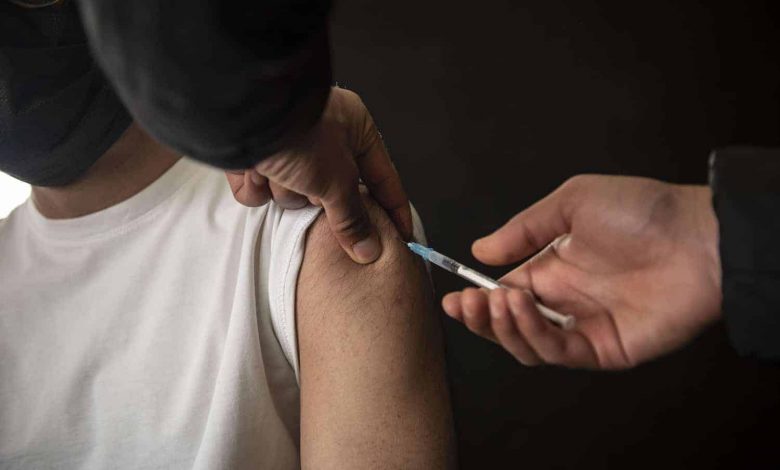
The government’s intention to implement mandatory coronavirus vaccines can be constitutionally justifiable if the state ensures wide access to the jabs to everyone.
This was according to UCT law Professor Pierre de Vos.
“If the government implements some sort of mandatory vaccines for specific activities or places it would likely be constitutionally justifiable. Especially, if it allows for exemptions for medical reasons or sincere health religious beliefs,” he said.
“The purpose of the mandate would be extremely important to try and save lives and reduce the impact on the economy. The constitutional question would be whether the infringements on people’s rights would be moderate.”
De Vos said the state’s decision would hold water – if the decision was implemented correctly. He said before the government implements mandatory vaccinations, it should ensure the public has easy access to vaccines, including people who live in remote rural areas.
ALSO READ: Mental healthcare sites to start sedating violent patients
“There are people who do not have access to smartphones and the internet, which are the things that make it easier for one to register and vaccinate. The government has to think of ways of making it much easier for people to vaccinate; people without any resources should be considered.”
He said enforcing mandatory vaccinations for employees would be easier to implement.
“It will also be easier to implement mandatory vaccines for things such as sports games. It will be much trickier to implement in sectors that are not well regulated such as travelling via a taxi and so forth.
“Thus far, they have used the Occupational Health Act that says that the employer has a legal duty to ensure that the working environment is safe; they linked that to the Disaster Management Act.”
ALSO READ: SuperSpar presents Christmas Carnival a fun day of entertainment.
De Vos said implementation of mandatory vaccination would be better if done through parliament. However, issues of time would likely see the government enforcing it through regulations amendments.
Independent legal consultant and former attorney at Legal Resource Centre Edwin Makwati had a different view.
Makwati said the government needed to first look into less intrusive means before enforcement of vaccinations.
“There are other less drastic measures that can be taken to achieve the same purpose. There is no right that is absolute and can be limited.”
Makwati said should the matter reach the courts, the government would have to prove that they tried all other avenues.
“There are fundamental rights protected by the Constitution, such as the right to body integrity; mandatory vaccines would be going against that right,” he said.
“If you are to limit any rights in the Constitution, the limitation must meet requirements of section 36. This states that a right in the Constitution can only be limited by the law of general application, provided that the limitation is reasonable and justifiable.”
As the government continued to ponder mandatory vaccinations, the Gauteng province experienced high infections. The province recorded 31 089 infections over the weekend.
The province was likely to experience a coronavirus resurgence peak before Christmas, according to the modelling projections by the province’s command council.
The Gauteng coronavirus command council (GCCC) held a media briefing on Thursday to give an update on Covid-19 infections in the province.
GCCC co-chairperson Dr Mary Kawonga said Tshwane in the week that ended on November 27 recorded the highest test positivity rates in the province above 30%.
She said the region also remained at a high risk of Covid-19 transmissions due to high infections reported weekly. The region has over the past week recorded almost half the Gauteng infections.
“The Omicron variant has displaced Delta as the dominant strain of SARS-CoV-2 in Gauteng,” she said.
She said the transmission of the Omicron remained the same as the other variants.
“The same measures that were used for SARS-CoV-2 remain important; these include adherence to non-pharmaceutical interventions and vaccinations. There is currently no evidence that the Covid-19 vaccines used in SA will not protect against severe disease with the Omicron variant.”
Based on an analysis of early data, Kawonga said vaccines were able to protect vaccinated people against hospitalisation and death.
In Tshwane, a recent report by the National Institute for Communicable Diseases (NICD) showed a significant number of children aged under four being admitted.
Do you have more information about the story?
Please send us an email to editorial@rekord.co.za or phone us on 083 625 4114.
For free breaking and community news, visit Rekord’s websites: Rekord East
For more news and interesting articles, like Rekord on Facebook, follow us on Twitter or Instagram