Contractors soon to start repairing N1 southbound sinkhole
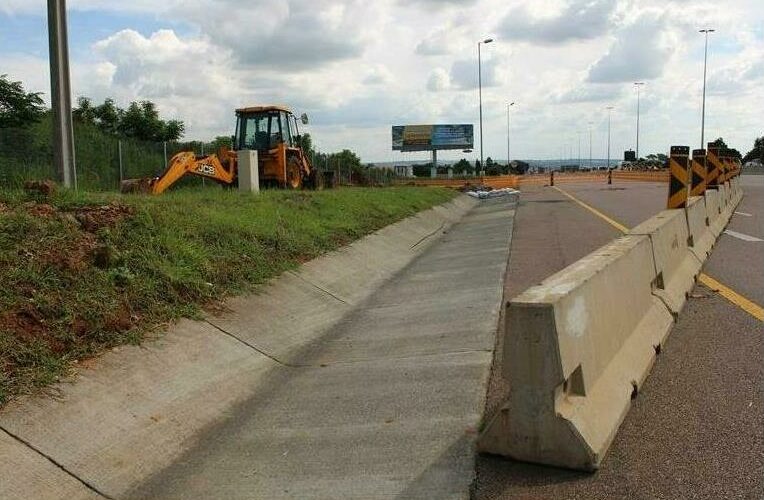
“Work in the lanes of the northbound carriageway formed part of the geotechnical investigations required for the remediation works on the sinkhole.”
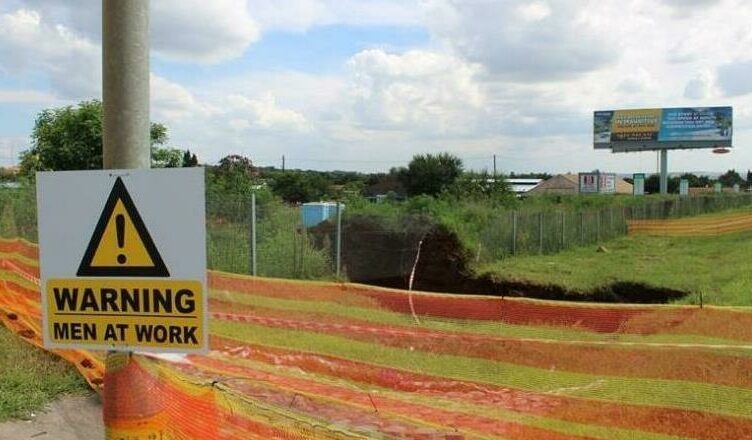
Plans for repairing the sinkhole that formed at the beginning of January on the N1 southbound near the R21 off-ramp were being finalised.
According to Sanral northern region manager Progress Hlahla, these plans will go out to tender for a contractor “soon”.
Road closures on the N1 northbound between Botha Avenue and N1/R21 Flying Saucer interchange in Centurion occurred last weekend to allow for gravity survey testing.
“Work in the lanes of the northbound carriageway formed part of the geotechnical investigations required for the remediation works on the sinkhole.”
Hlala said two more sinkholes formed along the R21 near Olifantsfontein.
“One sinkhole developed just outside our road reserve fence boundary, and the second one immediately adjacent to the edge of the R21.
“The one at the edge penetrates about two metres underneath the road up to the slow lane, and is five to six meters deep currently,” said Louw Kannemeyer, Sanral’s engineering executive.
Cracks that formed on the road surface in the outer two slow lanes of the R21, resulted in the immediate closure of these lanes, he said.
Sanral appointed geotechnical engineering specialists two weeks ago, “who can assist with the required investigations”.
“Additional geotechnical investigations in the fast lanes of the highway were done approximately three weeks ago to aid with our designs on further work to be done.”
Rekord reported earlier that Sanral addressed the diversion of stormwater recently and created a new drainage system to move the water away from the sinkhole for it not to expand.
A geological assessment report was compiled by engineering specialists who were on the scene and conducted ground-penetrating radar was used. The report was received by Sanral, but it remains an internal document for now.
It was established that an area of 150m was affected. The initial assessment indicated that the sinkhole formed due to the heavy rains the area has had as sinkholes often occur in that specific dolomitic area.
Sanral also created a drainage system to prevent the expansion of the sinkhole on the N1 and conducted a drone survey where the land is subsident.
Hlahla urged motorists to drive in accordance with the yellow regulatory signs indicating speed limits that Sanral placed in the area. There are areas where the speed limit is 60km per hour, and in other areas, 80km per hour. This will minimise the risk of accidents in the vicinity of the sinkhole.
“Don’t stop in the area to have a look at the hole, or to take photos of it,” he said.
Sinkholes are prevalent in Centurion due to dolomite deposits in the area. Especially heavy rainfall, water leaks, ponding, borehole drilling and building activities contribute to the formation of sinkholes, which are porous, act like a sponge when it gets wet and starts to crumble.
Read more: R22,5m spent to repair sinkhole in Lyttelton Manor
Do you have more information about the story?
Please send us an email to editorial@rekord.co.za or phone us on 083 625 4114.
For free breaking and community news, visit Rekord’s websites: Rekord East
For more news and interesting articles, like Rekord on Facebook, follow us on Twitter or Instagram