Former 10-year drug addict pleads for better community and healthcare support
A former drug abuser wants society and health officials to confront the stigmas and discrimination against drug abusers to defeat the scourge.
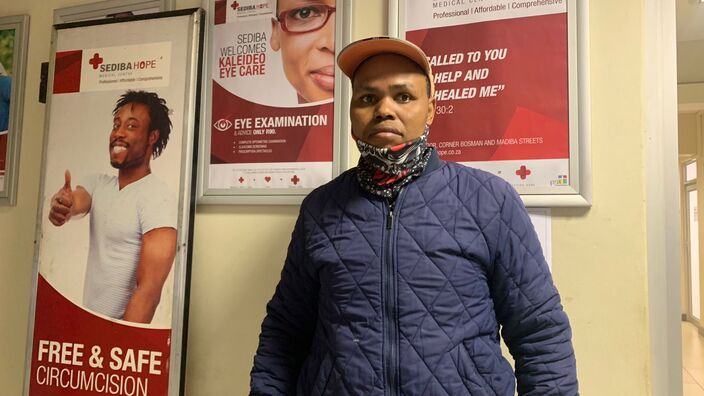
A former drug abuser wants society and health officials to confront the stigmas and discrimination against drug abusers to defeat the scourge.
Koketso Mokubane is now Community Linkage Officer for the South African Network of People Who Use Drugs (SANPUD) in Gauteng and gainfully employed at the Sediba Hope Medical Centre in the Pretoria CBD.
Mokubane said he abused cocaine and heroin (nyaope) for 10 years before kicking the habit following a stint in rehab.
He said confronting and defeating the stigmas and discrimination against drug abuse would bring more sufferers to rehab and therefore break they back of the scourge of drug dependence.
“I was in the street but after rehab, I was reintegrated into society.”
Mokubane said since 2017 he has been working on his recovery to a normal life.
“My life has been better since I was employed as a peer educator at Cosup (Community Oriented Substance Use Programme).”
His work includes walking the streets of Gauteng to find people who are using drugs, who may be engaging in risky behaviour, like sharing of needles.
His focus is talking to substance abusers about the anti-dependency services available at the centre.
He claimed that healthcare officials and society are not helping enough in the fight against substance abuse.
He said he interacted with more than100 abusers a week during his networking sessions in the CBD and that substance abuse was rife in there and also in informal settlements.
He said most abuser and the priority group for assistance were young people between the ages of 18 and 35 years.
“We have some 60-year-olds who are still substance abusers, still seeking help.”
He claimed that governments approach was slow and did not show much success, as drug usage was increasing.
“Healthcare officials are treating us as if we are secondary citizens, which is deterring substance abusers from seeking help.”
He said he had experienced first-hand how professionals, social workers and clinical associates did not always respect the contribution of abusers to the fight against abuse.
In a 2020 research paper published by International Development Policy authors Dr Scheibe, Shaun Shelly, and Dr Anna Versfeld, found that “healthcare providers in South Africa tend to come from the communities they serve and are often representative of dominant moral positions around drug use”.
“They are neither sensitised nor equipped to manage the realities and needs of people who use drugs.”
Mokubane said the research showed that stigma and discrimination against drug users were the norm in healthcare facilities.
He said this discrimination showed itself in conditional access to care, shaming, lack of confidentiality and privacy and disproportionately long waiting periods for services.
Mokubane said organisations like SANPUD were working to dismantle hypocrisy and myths that led to the misunderstanding of drugs and people who used them.
He said the Community Committee of the International Conference on Health and Hepatitis Care in Substance Users (INHSU) was planning a conference in Glasgow, Scotland to find ways to provide education for healthcare workers in anti-drugs and alcohol field.
Mokubane said the conference also aimed to bring the voice of the communities affected by drug abuse to influence policy.
Mokubane said it was also vital for substance abusers’ voices to be heard by society.
“Society has planted this seed in our minds that we are dirty, unclean. That seed stays in the mind, and the abuser ends manifesting that in their conduct.”
He said it was vital for healthcare workers and communities to begin building substance abusers’ self-esteem up, and recognising their worth and small milestones in their fight against drug dependency.
Do you have more information about the story?
Please send us an email to editorial@rekord.co.za or phone us on 083 625 4114.
For free breaking and community news, visit Rekord’s websites: Rekord East
For more news and interesting articles, like Rekord on Facebook, follow us on Twitter or Instagram