Unions prepare for salary fight to bitter end
Tshwane has been called on by Imatu to implement the salary increase instead of wasting millions in ratepayer money on legal fees to take the matter on review.
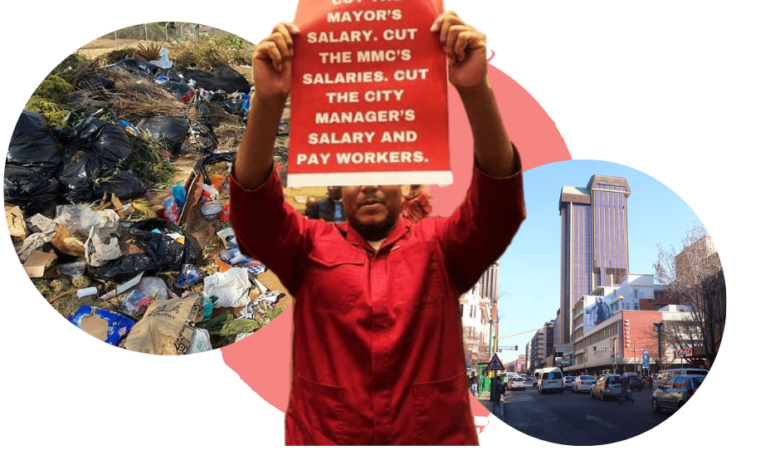
Worker unions Imatu and Samwu will not stand down in their fight with the Tshwane metro over annual salary increases.
The metro has claimed the adjustment would cost it R602-million and it planned to go to court soon as the conflict escalates.
The metro recently applied for an exemption from the South African Local Government Bargaining Council (SALGBC) so it would not give its 29 000 employees an increase this year.
It blamed this inability on fiscal difficulties.
The failure to increase salaries violates an agreement local government – metros and municipalities – represented by Salga hatched with worker unions in 2021 when the parties agreed to a 5.4% increase year on year for three years.
On August 10, Tshwane applied for exemption after failing to make the increase with effect from July 1.
Tshwane had complied with the salary agreement in the second year of its operation 2022/2023 in the amount of R489- million but applied for the exemption for the financial year 2023/2024.
On September 10, SALGBC dismissed this application and instead ordered the metro to comply with the 2021 salary increase agreement with immediate effect.
The metro said it would take the SALGBC ruling on review to the Labour Court, a right afforded to the metro intends to exercise.
Samwu secretary Dumisani Magagula said instead of implementing the collective agreement as directed by the SALGBC, Tshwane had decided to take the ruling on review.
He said since 2021, the matter had never been ventilated in court.
“We need to stress the fact that the decision to take this ruling on review will without doubt anger many workers who are already frustrated by the way they are being treated.
“Municipal workers are simply failing to make ends meet as a result of being shortchanged by their employer, whom they serve with pride and dedication daily.”
Magagula claimed that by withholding the increments, Tshwane wanted its workers to subsidise municipal operations.
“We however will not allow our members to be used as sacrificial lambs and scapegoats for the financial mismanagement and corruption that is happening in Tshwane.
“We want to assure our members that union leadership will continue fighting until the collective agreement is implemented in its entirety by Tshwane, and Samwu calls on the Gauteng government to intervene.”
Magagula said Samwu’s legal team was on standby to act, should Tshwane proceed to review.
Imatu Tshwane manager Lynette Burns-Coetzee said the SALGBC ruling was binding and Tshwane was looking to squander millions in ratepayer money on legal fees on the review.
“Imatu calls on the municipality to implement the salary increase instead of wasting millions in ratepayer money on legal fees.
“We have, in the past weeks, seen what the impasse between the employer and employees has caused not only to the employees but also to the employer and general public with no provision of basic services,” said Burns-Coetzee.
She said Tshwane was at fault for this tension as the collective agreement entitled all municipal workers in the country to a 3.5% salary increase in 2021, 4.9% in 2022 and 5.4% in July this year yet Tshwane wanted to be exempted.
According to Imatu Tshwane chairperson Melita Baloyi, despite Tshwane being reminded of the 5.4% increase on March 3, it did not apply for exemption until August 10.
“The municipality simply ignored the agreement on July 1 and did not pay the salary increase when it became due, effectively exempting itself.
“This led to a compliance order being issued by the SALGBC on July 27 compelling it to pay the increase.”
The SALGBC arbitrator, Eleanor Hambidge, together with financial expert Krish Kumar, heard the exemption application. She dismissed it, saying granting it would potentially undermine centralised collective bargaining in the sector.
She compared the municipality’s budgeted expenditure of R12 640 889 388 with its actual expenditure of R11 494 593 387 and found that this effectively left a surplus of R1 146 296 001, which was sufficient to cover the wage increase of R602-million.
She however also said it was abundantly clear that Tshwane was in financial distress with major liquidity problems, as National Treasury mid-term recommendations, the Auditor-General report on the 2021/2022 annual financial statements and the Moody’s report all indicated there were solvency issues with creditors not being paid.
No trace of listeriosis in Pretoria – metro
Do you have more information about the story?
Please send us an email to editorial@rekord.co.za or phone us on 083 625 4114.
For free breaking and community news, visit Rekord’s websites: Rekord East
For more news and interesting articles, like Rekord on Facebook, follow us on Twitter or Instagram