Community efforts digitally capture Mamelodi’s history
Reverend Chris Nkomo and residents founded the Historical Society of Mamelodi to help preserve the area’s rich heritage.
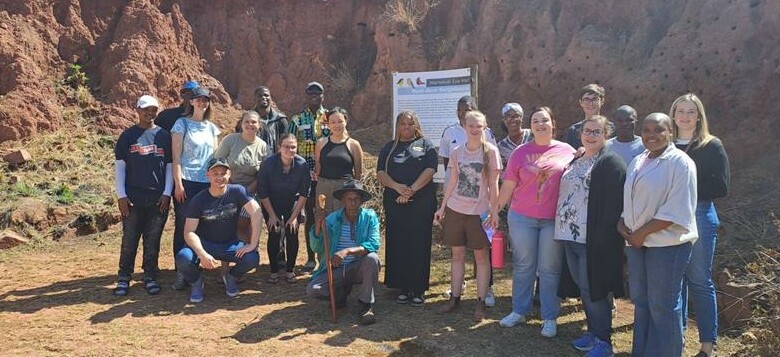
A community effort to digitally capture Mamelodi’s history has received a shot in the arm from the University of Pretoria’s Mamelodi Campus and its Department of Historical and Heritage Studies.
The Historical Society of Mamelodi was founded by Reverend Chris Nkomo and residents to help preserve the area’s heritage.
“Each story has its own weight, and our children must know how we came to be here,” said Nkomo.
Mamelodi (“mother of melodies”) was established as a blacks-only area about 27km northeast of Pretoria in the early 1950s through South Africa’s Group Areas Act.
In 1960, black citizens were removed from the suburbs of Pretoria and relocated to Mamelodi.
UP’s involvement in the project to capture the township’s history began after Nkomo completed the Starting and Sustaining Community Projects course in 2018.
“The initial plan was to compile a book containing stories, photographs, and other information from Mamelodi’s past,” he said.
The idea to create a digital, easily accessible online archive was born when he met D. Martina Jordaan, head of Community Engagement and Postgraduate Studies at UP’s Mamelodi Campus in 2022.
At the time she was starting to work with ArcGIS StoryMaps software, which allows users to create interactive maps using visuals and text.
Jordaan hosted a series of workshops during 2022 and 2023 at the Mamelodi Campus’ computer labs to boost society members’ digital literacy skills.
The society’s website, YouTube channel, and LinkedIn profile were launched in June 2023, spearheaded by Jordaan, Nkomo, Mfana Mathibela, Obed Mahlangu, and Moses Mokele.
Members are also working towards compiling stories for an e-book.
Nkomo and society members were on hand during the July school holidays this year when Jordaan provided training to another small group of residents at the Mamelodi Campus computer centre.
Workshops for high school learners were also planned for the September and December holidays.
Similar workshops have already led to the uploading of contributions on topics such as Bacardi music, the Pretoria house music genre, food, the history of Mamelodi’s historic Rondavels and local issues such as dumping, substandard toilets, and water problems.
The workshops have been funded through a Talloires Network Engaged Research Grant.
“Community members said the training was valuable, as it enabled them to share their stories, while learners found the experience enriching,” said Jordaan.
“It is very satisfying to see how the use of university infrastructure and skills has played a valuable role in helping to create an easily accessible digital record of Mamelodi’s past.”
The digital archive project has helped UP to provide a valuable practical training ground in community-based heritage tourism for students completing their Honours in Heritage and Cultural Tourism.
Since 2022, the Story Map project has formed part of a second-semester Honours module that involves research on how to market and manage heritage sites with tourism potential.
Members of the Historical Society of Mamelodi mentor and guide the students and are involved in assessing the Story Maps the 15 enrolled students complete.
“UP is one of two South African universities offering this multi-, inter-, and cross-disciplinary degree programme,” said Hannes Engelbrecht, a lecturer in Heritage and Cultural Tourism in UP’s Department of Historical and Heritage Studies.
“It is about the business of tourism and instils various employable skills in students.”
He said being involved in the Mamelodi project teaches them to understand the natural and historic context of a tourism venture while being cognisant of community empowerment, consent, and dissonant heritage.
The Mamelodi digital storytelling project is part of the newly published academic book, Museum Studies for a Post-Pandemic World, in the chapter titled “Mapping Memories and Making Meaning: Community-Engaged Heritage Studies and Research”.
Nkomo’s journey to archiving Mamelodi’s history began before his UP studies: in 2015, he helped with an exhibition commemorating the November 21, 1985 Mamelodi massacre, in which police killed 13 residents.
He remembers the impact of his interviews with victims’ family members: “The process did not only provide healing to those being interviewed but also to the interviewer. It was welcomed by the families involved because many did not know the details of what had happened.
“We learned many beautiful things in the process, but also very horrible ones. It was emotional yet therapeutic to talk about the often bottled-up memories of the past.”
His own history of service to the people of Mamelodi was captured in a StoryMAP produced by Jordaan.
Nkomo says the process triggered very strong emotions and memories, but it was a valuable experience.
“Mamelodi’s history must be preserved, to the benefit of future generations.”
Do you have more information about the story?
Please send us an email to bennittb@rekord.co.za or phone us on 083 625 4114.
For free breaking and community news, visit Rekord’s websites: Rekord East
For more news and interesting articles, like Rekord on Facebook, follow us on Twitter or Instagram