Hammanskraal water project phase 1 complete
However, further testing is needed to make sure water is not contaminated through dirty pipes.
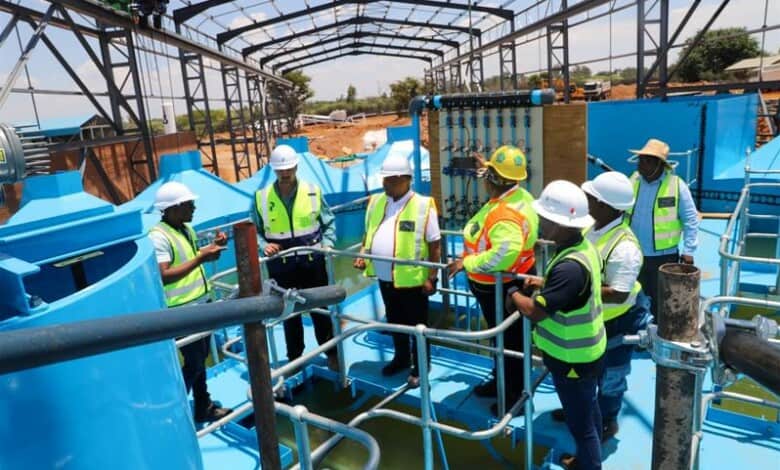
The first phase of the Hammanskraal water project was completed on November 16 and contractors are busy with the next three.
However, the minister of water and sanitation has raised concerns regarding the contamination detected in the water supply due to pipeline integrity.
The first phase of the Klipdrift Potable Water Package Plant aims to improve the availability of drinking water for the residents of Hammanskraal.
The plant will pump an additional 12.5 million litres of potable water daily to address the critical water supply problems in the area.
The over R700-million construction at the existing Klipdrift Water Treatment Works (WTW) in Marokolong, will ensure that the plant produces 50 megalitres per day.
Minister Pemmy Majodina expressed her appreciation to Magalies Water, the implementing agent of the project, during an inspection of the facility on November 16.
Minister Majodina emphasised that DWS, alongside the @CityTshwane and Magalies, is committed to ensuring that the people of Hammanskraal get clean water. However, the Minister indicated while phase 1 is complete and 12.5 million treated water is available, further testing was… pic.twitter.com/oDdnijWUI2
— Water&SanitationRSA (@DWS_RSA) November 18, 2024
She was accompanied by her deputies David Mahlolo and Sello Seitlholo, Gauteng MEC for Co-operative Governance and Traditional Affairs Jacob Mamabolo as well as Tshwane acting mayor Eugene Modise.
The project to which the Department of Water and Sanitation (DWS) has allocated a budget of R758-million aims to upgrade the existing Klipdrift Water Treatment Works to improve water quality in Hammanskraal.
The facility, located in Marokolong, is expected to service various areas, including Ramotse, Kekana Gardens, and parts of Mandela Village and Bridgeview informal settlement.
Majodina highlighted the importance of water quality assurance, stating that while the first module is operational, further testing is necessary to ensure that the water meets safety standards.
She emphasised that the DWS alongside Tshwane and Magalies were committed to ensuring that the people of Hammanskraal were provided with clean portable water.
The minister indicated that while phase 1 was complete, and 12.5 million litres of treated water available, Tshwane was doing further testing to ascertain that water that passed the reticulation system was of good quality and met the standard as required by law.
“This included flushing and backflushing the pipes to remove all unnecessary dirt on the reticulation pipeline.
As the department, we confirm that Module 1 is complete and that our water is ready to be pumped.
However, when dealing with water, you must do due diligence so that by the time the water comes out in people’s homes, it is clean and drinkable,” she said.
Mojadina raised concerns about reticulation pipeline contamination and illegal connections.
She said the contamination necessitated additional testing and implementation of other precautions before the water was distributed to the public.
The department has also urged municipalities to collaborate with communities and law enforcement to protect vital water infrastructure.
In conclusion, Minister Majodina assured communities that work was still being done and the commitment to delivering safe and steady water delivery remains the departments’ goal.
“We have not reneged, we have done what we were supposed to do, and we will continue to do what is… pic.twitter.com/9qVTkl7O4e
— Water&SanitationRSA (@DWS_RSA) November 18, 2024
Modise welcomed the completion of Phase 1 and said the metro would need about two weeks to clear the reticulation pipeline.
“We are committed to giving the community of Hammanskraal quality drinkable water.
We don’t want to regret anything by rushing out and giving water; we want to ensure that there is no doubt in its quality.”
ALSO READ:Tshwane working to resolve brown water in Hammanskraal
Do you have more information about the story?
Please send us an email to bennittb@rekord.co.za or phone us on 083 625 4114.
For free breaking and community news, visit Rekord’s websites: Rekord East
For more news and interesting articles, like Rekord on Facebook, follow us on Twitter or Instagram