Duma, former circus and zoo elephant, is adapting to the wild
For relocated former Pretoria Zoo elephant Charley, now renamed Duma, life at a Vaalwater reserve is good. He is communicating with the other elephants over long distances and they are slowly getting to know each other.
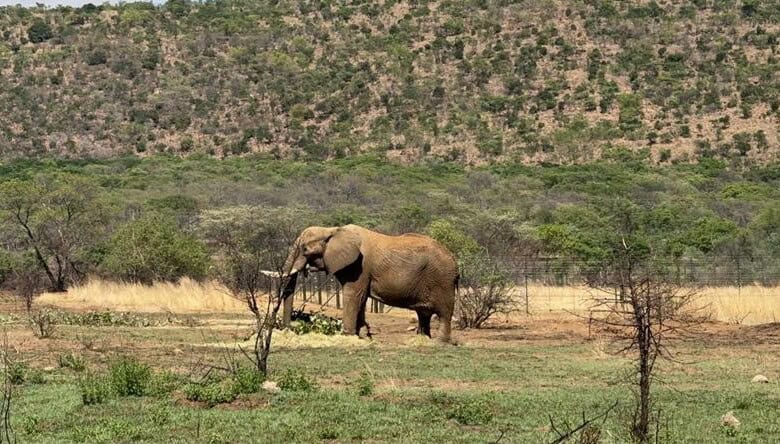
Charley, the former Pretoria zoo elephant that was relocated to the Shambala reserve near Vaalwater in Limpopo is doing well.
The elephant was closely monitored by a team of experts from Shambala Private Reserve and representatives from the EMS Foundation.
He was given access to the reserve’s 26-hectare-protected area adjacent to his rehabilitation boma late in October.
Charley now goes by the name of Duma as the elephant experts at the reserve believe that his former name is a circus name and that when he was released into the first natural area, he should be carrying a more African and respectful name.
Duma means thunder.
“Duma comes from Zimbabwe originally and the elephant handlers at the reserve are also Zimbabwean. The trustees of Shambala and the EMS Foundation agreed that he was deserving of a new name to signify a new beginning,” said Megan Carr, spokesperson of the foundation.
People have been fighting for years to release the almost 45-year-old elephant from captivity. When he was released into the new larger area late in October, Duma cautiously investigated the new larger area. He still however had full access to his acclimatisation and rehabilitation boma.
“As with every new stage of Duma’s Towards Freedom programme that we have presented him with, he treated the decision to step over the threshold into his 26 protected hectare area with caution. Once we realised that he was going to treat this new adventure so decidedly, we reduced the size of the team observing him, to provide him with the privacy and peace he so deserves,” Carr explained.
There were only a handful of the team witnessing his first steps into this big new space.
“Imagine being given the freedom of choice to do what he wants to do when he wants to do it, after 40 years of having to fit into the routine of captivity. We were all very emotional of course as we watched him take those first steps we were all silently, gently encouraging him from afar. This will undoubtedly be a very long process, we are in no rush. Duma is still constantly monitored by the experts at Shambala. Duma is still receiving the food he requires as he slowly learns how to browse for himself,” said Carr.
His veterinarian, Dr Peter Rogers, is extremely satisfied with Duma’s condition stating that he has gained weight, his eyes are bright and his skin looks better than ever.
He is closely monitoring Duma’s progress and said his health is stable. He is responding well to the open space and natural environment at Shambala.
Initially, Duma was underweight and required a carefully monitored nutrition plan to help him reach a healthy weight.
This included special supplements to ensure he was getting all the essential vitamins and minerals he needed for strength and growth.
“Duma is far more relaxed than he was at the zoo. He has the freedom to decide when to eat and where to go, while the team continues to monitor him to make sure he’s adapting well to the new larger protected area,” said Fiona Miles, director of animal welfare organisation Four Paws.
Miles, along with other role players, was instrumental in Duma’s relocation.
She explained he has indeed gained the weight needed to explore the larger one-hectare area.
“Reaching this milestone weight is a crucial step, as it ensures he has the strength and health required to roam safely in a bigger, more natural space. This expansion will provide him with more room to explore, exercise and engage with his environment, fostering his growth and well-being further,” explained Miles.
Duma will remain in the 26-hectare area with access to the rehabilitation boma until he is completely comfortable and self-sufficient enough to be introduced to the larger Shambala Private Game Reserve.
As this process could take years, the EMS Foundation and Shambala Private Game Reserve are fully committed to supporting this process for as long as it takes.
Miles said Duma is rumbling, communicating with the elephants at both Shambala and Welgevonden over long distances.
The other elephants have not been in direct contact with Duma.
“They are communicating over long distances and are slowly getting to know each other. They are aware that there is a new member at Shambala.”
Duma must learn how to become used to the warthogs, waterbuck and baboons who share his space with him. He continues to enjoy a diet of high-quality teff, boskos mulch, organic vegetables and fruit as well as a large amount of browse. There are numerous freshwater sources available to him.
“He is fast learning how to browse for himself and he really enjoys breaking the branches from the trees, a natural activity for elephants that was not available to him in captivity.”
He was also not familiar with mud baths or a natural watering hole. These elements are essentials for elephants.
An elephant’s skin relies on mud baths, water and dust to stay protected and to regulate their temperature.
Spraying mud or water behind their ears helps cool them down; mud and dust protect them from the sun and mosquitos; as well as helping with the shedding of dead skin cells and providing a protective layer against the elements.
According to Miles, Duma loves taking mud baths.
“He is visibly enjoying the stillness of the bush, there are no sounds of taxi ranks, weed eaters, leaf blowers or loud music from events. Duma often dozes fully immersed in the natural sounds around him. There are numerous freshwater sources available to him. He also enjoys putting his tusks in the mud,” said Miles.
Miles sees Duma as a success story in wildlife rehabilitation.
“We are committed to supporting his ongoing health and development through regular monitoring. There’s also a focus on educating the public about the importance of sanctuary-based rehabilitation, using Duma’s journey as a model of what can be achieved when animals are given the chance to heal and thrive in a safe, caring environment.”
WATCH:
Do you have more information about the story?
Please send us an email to bennittb@rekord.co.za or phone us on 083 625 4114.
For free breaking and community news, visit Rekord’s websites: Rekord East
For more news and interesting articles, like Rekord on Facebook, follow us on Twitter or Instagram