Confirmed E.coli cases especially among children in Pretoria spark concern
Several children in Pretoria have tested positive for E. coli in recent months, raising concerns over potential contamination sources.
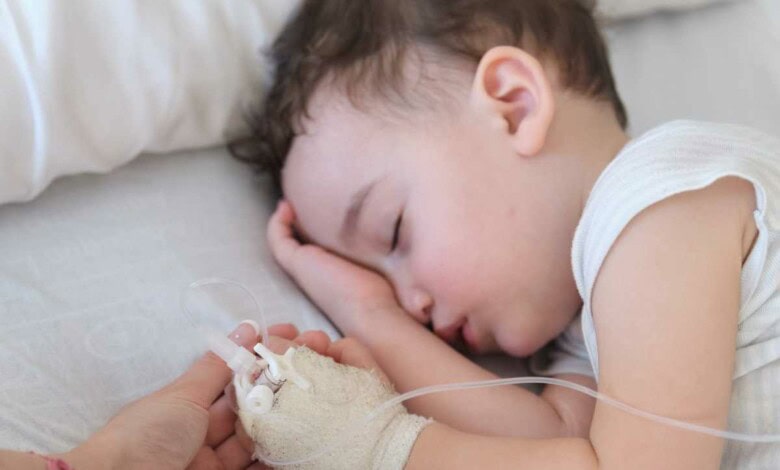
Several Pretoria children have tested positive for E.coli in recent months, sparking growing concerns about possible sources of contamination and prompting health officials to investigate the outbreak.
Sheree Gildenhuys, took to social media to warn others about the dangers of E.coli after her six-month-old daughter was recently diagnosed and hospitalised with two strains of E.coli.
“Our little girl was admitted to the hospital with two different strains of E.coli. She had no symptoms other than vomiting once a day.”
Sheree said she initially thought it was teething because it was very slimy.
“On Tuesday, she vomited three times, so we took her to the emergency room. They did a stool test and found two strains of E.coli and another viral bacterium.
“Be careful with tap water; we boil her water every time before giving it to her. We suspect she picked it up from bathwater because everything in the bath goes into her mouth.”
She added that there were many kids being treated for E.coli in the pediatric ward.
“We haven’t been to Durban; we’ve only been between home and school over the past two weeks.”
The family lives in Equestria, in the East of Pretoria.
Another family in the Moot area in Pretoria spoke about their recent experience.
Elzan Hatting, the mother of a toddler boy, said her son also tested positive for E.coli. and was hospitalised.
“We initially treated him for a cold because he had a runny nose, but it just didn’t get any better. His nose kept running for about three days, and at night, he cried terribly and curled up as if he had stomach pain.
“On the fourth day, he started having frequent bowel movements and didn’t want to eat. We assumed he was teething. That evening, he suddenly developed a fever of 38.7°C. I gave him medication immediately, but he threw it up right away.”
The couple then decided to go to the emergency room.
“When we arrived, they put him on an IV drip immediately. His fever had already risen to 38.9°C and later went up to 39.4°C. He was severely dehydrated and continued to refuse food and drink.
“They took blood and did a stool test. We received the results the following afternoon, and he tested positive for E.coli.”
Elzan said they hadn’t left Pretoria before or during this time.
“I tend to be paranoid about going away, especially to the sea, because my son has unusual kidneys.
“They started treatment right away, though I can’t remember all the medication names. He was in the hospital for four days, during which we couldn’t get his fever to break.”
She said after three IV drips, he finally started eating a bit, and the fever broke properly on the last night.
“He also had chills with the fever and a red rash on his body. His buttocks were also very sore from the frequent bowel movements.
“We live in Wonderboom South, and he stays with my parents in Villieria during the day.”
Here is a list of his symptoms:
- High fever with chills
- Runny nose
- Stomach cramps and diarrhea
- No/low appetite
- Red rash on the body
- Severe burning on the buttocks
She said it took a few weeks for his bowel movements to return to normal, his appetite to return, and for him to be himself again.
The spokesperson of the Gauteng Health Department, Motalatale Modiba explained that it is of great importance to note that Escherichia Coli (E.coli) comprises a large group of bacteria sub-divided into six namely:
- Shiga toxin-producing E.coli (STEC),
- Enterotoxigenic E.coli (ETEC),
- Enteropathogenic E.coli (EPEC),
- Enteroinvasive E.coli (EIEC),
- EAEC: Enteroaggregative E.coli (EAEC),
- Diffusely adherent E.coli (DAEC).
“From January to date, Tshwane district reported eleven cases of Shiga toxin-producing E.coli (STEC) at different settings, including a school and a retirement home.”
He said there is currently no link between these cases and the local water supply.
Modiba said in addition to water contamination, other potential sources of the E.coli outbreaks include foodborne transmission, poor sanitation, and hygiene practices.
He said when an outbreak occurs, an investigation team is activated to assess both clinical and environmental samples, which are tested to identify the specific pathogen.
“It is also important to note that the municipal department conducts daily and monthly water sampling, analyzing E.coli colony-forming units (CFU) to monitor water safety.”
Here are the key symptoms of E.coli gastroenteritis:
• Diarrhea that is often watery and sometimes bloody.
• Vomiting
• Stomach pains and cramps.
• Loss of appetite.
• Fever
Modiba advised those who exhibit two or more of the above symptoms, especially diarrhea and vomiting, to seek medical attention right away and be given fluids to avoid dehydration.
Here are some preventatives to protect yourself and your family from potential contamination:
• Washing hands with soap and water for 30 seconds before touching or preparing the food.
• Rinse all raw fruits and vegetables under running water before eating them.
• Use different surfaces for prepping different types of food. Surfaces like cutting boards can spread bacteria. If you don’t have different cutting boards, wash surfaces thoroughly with soap and hot water after you’ve worked with raw meat and before putting another type of food (such as raw vegetables) on it.
• Cook all meat to a safe temperature before eating. Don’t put cooked meat on a plate with raw meat.
• Refrigerate leftovers right away.
Modiba stated that, in response to the ongoing foodborne illnesses in the province, health education on hygiene practices has been significantly intensified.
Community members and individuals involved in school feeding schemes are being educated about the importance of food safety.
He said that to raise awareness further, several food safety campaigns are being conducted in the affected areas, including at malls and schools.
Also read: Two brothers, aged 4 and 6, die from food poisoning in Pretoria
These initiatives aim to inform the public about the risks and prevention methods associated with foodborne illnesses.
“In institutions where cases have been reported, health education is also being provided to food handlers, focusing on proper hygiene practices, food handling, and preparation techniques.”
Also read: Tshwane activates disaster operations centre to address foodborne illness crisis at spaza shops
Do you have more information about the story?
Please send us an email to bennittb@rekord.co.za or phone us on 083 625 4114.
For free breaking and community news, visit Rekord’s websites: Rekord East
For more news and interesting articles, like Rekord on Facebook, follow us on Twitter or Instagram