Heatwave warning for Pretoria, experts offer cool-off advice
Hot weather conditions will persist throughout the week, with maximum temperatures expected to reach as high as 38°C.

Residents of Pretoria should brace for an intense heatwave that is set to hover over the broad city this week.
The South African Weather Service (SAWS) has issued an alert indicating that heatwave conditions will persist throughout the week, with maximum temperatures expected to reach a high of 38°C.
According to SAWS, the peak temperature forecast for the week is as follows:
– Monday, December 2: 34°C
– Tuesday, December 3: 38°C
– Wednesday, December 4: 38°C
– Thursday, December 5: 34°C
– Friday, December 6: 36°C
SAWS emphasised that no precipitation is expected throughout the week, apart from possible showers on December 8.
The United Nations Children’s Fund (Unicef) says it is essential to know how hot and humid it is going to get on the day to effectively plan outdoor activities.
It recommends maintaining an emergency kit at home that contains essential items such as oral rehydration salt (ORS) packets, a thermometer, water bottles, towels for cooling, and a checklist for identifying and treating symptoms of heat stress.
Unicef advises residents to keep their homes cool by closing curtains during the hottest time of the day and opening windows at night to allow cooler air in while also using fans and coolers if available.
“Do not go outside during the hottest time of the day if you can avoid it,” Unicef advised.
“Locals should try to arrange activities for cooler parts of the day and wear sunscreen when outdoors.”
To stay safe and hydrated, Unicef recommends drinking water at regular intervals before going thirsty and opting for light, loose clothing made of breathable materials like cotton.
It also suggested that locals carry a water bottle and a small towel to cool down by placing a wet towel behind the neck.
“Children and pregnant women are particularly vulnerable to heat-related illness.”
Unicef advised parents and caregivers to monitor their children’s health closely, checking for signs of thirst, sweating, feeling hot, vomiting or headaches.
It stated that infants under six months should be breastfed exclusively while children aged six months and older should drink water regularly throughout the day.
“Pregnant women should schedule medical visits and tasks during cooler parts of the day and avoid excessive activity when temperatures exceed 40°C,” stated Unicef.
“Severe symptoms of heat stress require urgent medical attention.”
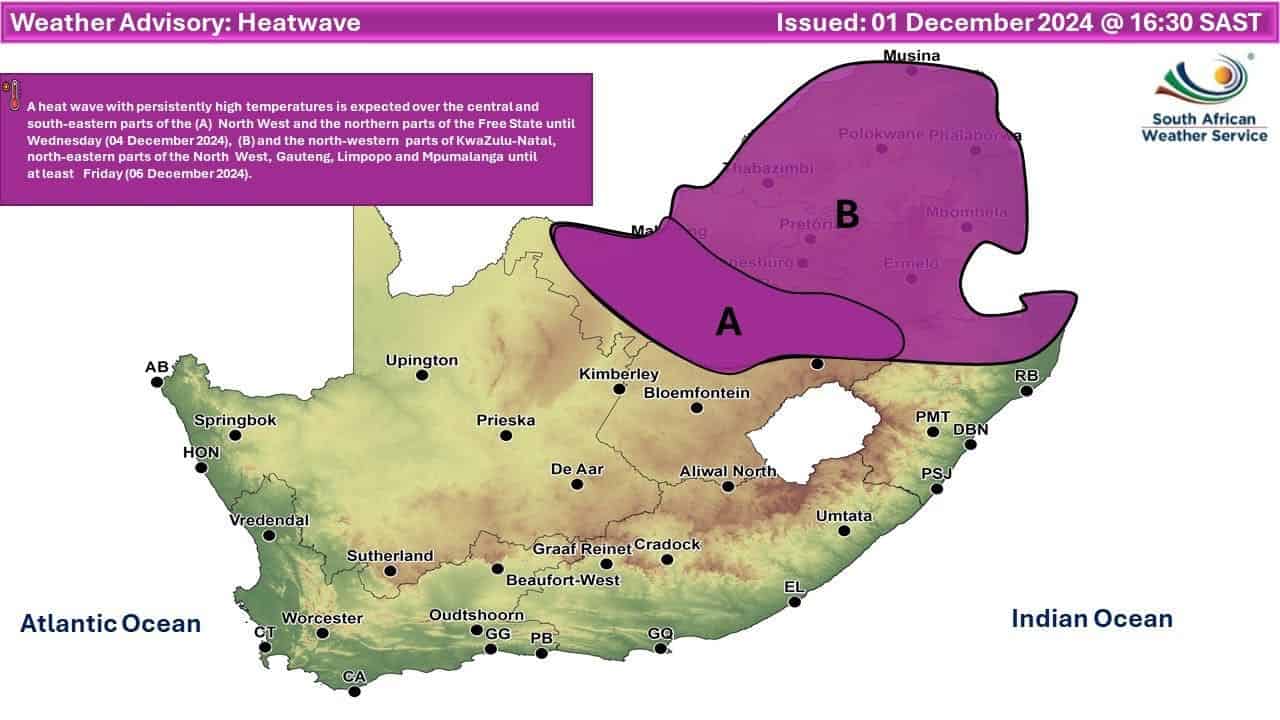
Image: weathersa.co.za
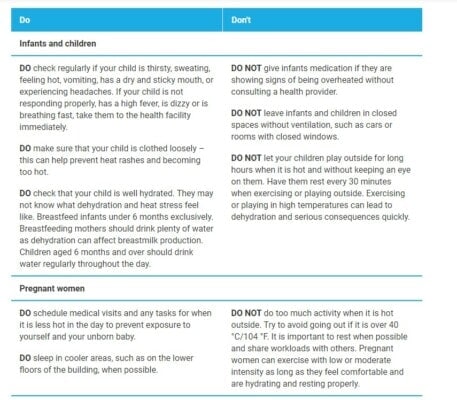
Heatwave safety tips by Unicef:
What is a heatwave?
A heatwave is when the temperature is higher than normal for several days in a row. Humidity can cause it to feel much hotter.
What causes a heatwave?
Heatwaves result from warm air being trapped in the atmosphere and are a natural weather phenomenon.
Heatwaves are increasing in intensity and frequency due to climate change, resulting from greenhouse gas emissions that trap heat for longer.
Who’s most at risk during a heatwave?
– Too much heat is dangerous for everyone, but infants, children, pregnant women, and the elderly are most vulnerable to heat stress.
– Too much heat can be more dangerous for babies and children than for adults, and dehydration in children can be dangerous or even deadly.
– Children’s bodies have more trouble regulating temperature than those of adults, and they rely on adults to help protect them from heat.
– Pregnant women are at greater risk as well. Too much heat and dehydration can put the baby at higher risk of low birth weight, early birth and even stillbirth. Pregnant women themselves can be negatively affected and go into early labour, as well as develop gestational diabetes and hypertension.
How to treat heatstroke and heat-related illnesses:
– Cool off and rush to a health facility if severe.
– Reduce temperature.
– Rehydrate.
Do you have more information about the story?
Please send us an email to bennittb@rekord.co.za or phone us on 083 625 4114.
For free breaking and community news, visit Rekord’s websites: Rekord East
For more news and interesting articles, like Rekord on Facebook, follow us on Twitter or Instagram