Pretoria water mostly safe
Residents of Pretoria cannot be too comfortable about the results of a civic organisation's water tests as they show concerning signs of pollution already from 2020 to 2024.
The AfriForum blue and green drop audit reports indicate that 87% of the city’s potable water is safe for human consumption.
The reports, blue for water and green for sewage treatment are done by an independent entity and tested 210 cities for water and 150 wastewater treatment plants.
The report is of results from water quality samples tests that the AfriForum network of 160 branches nationwide completed in August for municipal potable water and outflow of processed sewage water from wastewater treatment plants.
In the report, the following areas in Pretoria are mentioned and passed the clean water test: Bronkhorstspruit, Centurion, Pretoria Central and east, Pretoria North and Pretoria West.
Researcher and compiler of the report, Marais de Vaal told Rekord that the research team is however worried about the availability of clean water in Pretoria in the future.
“There is a real risk in the metro that the quality of already polluted treated water from sewage plants discharged into water resources might deteriorate with the increase in maintenance problems at Pretoria sewage plants,” said De Vaal.
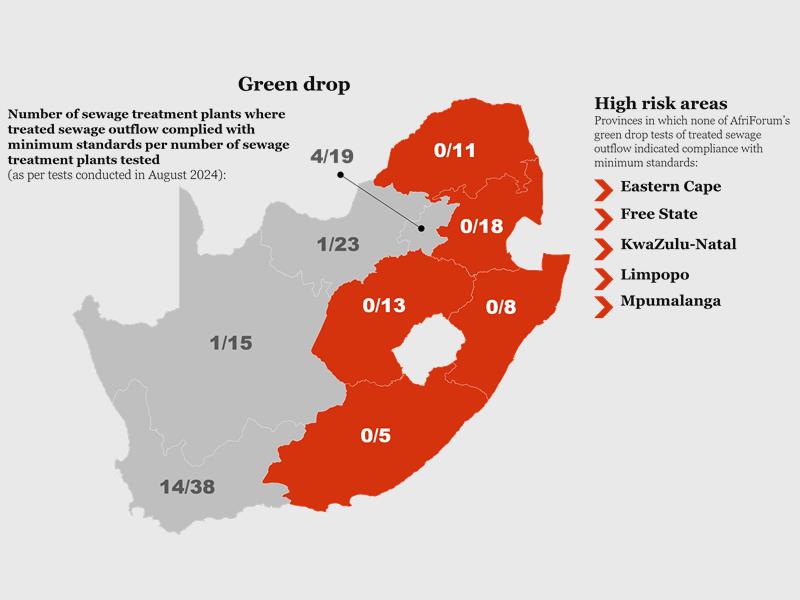
He pointed out that residents of Pretoria should therefore not be too relieved about the water report as this year’s sewage treatment results countrywide indicate that only 13% of processed sewage meets the minimum standards for discharge into a water resource.
In Pretoria the green drop report showed that water is polluted at the following wastewater plants: Kameeldrift (Baviaanspoort), Apies River (Rooiwal), Bronkhorstspruit (Godrich) and Centurion West (Sunderland).
The Pretoria West plant (Daspoort) of which the status in the green drop report has been given as polluted in the past, now has a clean bill.
De Vaal added that the complete mismanagement of the entire water supply chain represented by these shocking figures predicts that residents of Pretoria and South Africans cannot only expect higher costs for the treatment of drinking water in future. They can also expect the existence of an increasing risk that consumers will be exposed to unsafe drinking water.
The blue and green drop report for 2024 of AfriForum was launched on December 4 against the background of the Percy Stewart Wastewater Treatment Works outside Krugersdorp which is currently at the heart of a large-scale water pollution crisis in the Mogale City Municipality.
This year is already the 12th year that the civic organisation has compiled this report to make reliable information about the quality of South Africa’s drinking and wastewater known to the public.
This year’s tests examined the presence or absence of various chemical and bacteriological components.
The tests determine, among other things, the presence of the bacteria E. Coli, which can cause diarrhoea, nausea, vomiting and even kidney failure. Faecal coliform bacteria can cause diseases such as enteric fever (also known as typhoid fever), liver inflammation and dysentery.
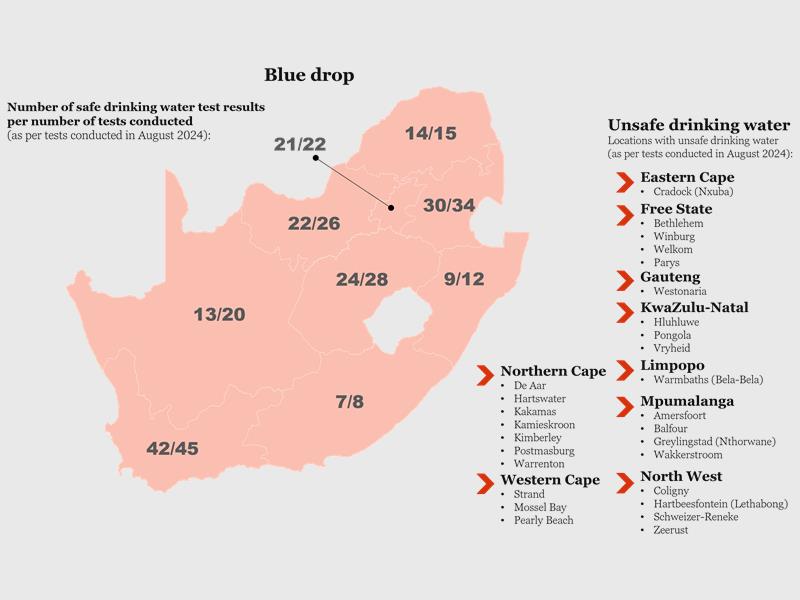
De Vaal said countrywide there is a decrease of nine percentage points from the 96% of blue drop tests compared to 2023.
Where only eight cases in 2023 indicated unsafe drinking water and these results were limited to Mpumalanga, the Free State and KwaZulu-Natal, this year unsafe municipal drinking water occurred in 28 towns, spread over each of the nine provinces.
Only 13% of the outflow of 150 wastewater treatment works tested this year met the minimum standards for discharge into a water resource.
According to Lambert de Klerk, AfriForum’s manager for Environmental Affairs, water supply and sewage treatment systems do not function properly because the vast majority of municipalities, which are mainly responsible for water and sanitation services, continuously underperform.
Their underperformance arises due to poor management, a lack of financing, maintenance and protection of existing infrastructure.
“Municipalities also fail to develop and implement new infrastructure to keep up with population growth,” explained De Klerk.
He also warned that the government alone cannot be trusted to solve the water crisis.
According to De Klerk, the metro will be supplied with a copy of the report. However, discussions on the Memorandum of Understanding between the organisation and metro co-operation in the future need to be concluded before the results on water and sewage plants can be taken up with the metro.
Do you have more information about the story?
Please send us an email to bennittb@rekord.co.za or phone us on 083 625 4114.
For free breaking and community news, visit Rekord’s websites: Rekord East
For more news and interesting articles, like Rekord on Facebook, follow us on Twitter or Instagram or TikTok.