Map: Spiking hotspots in and around Pretoria
Pretoria motorists are urged to stay vigilant as a new map highlights road spiking hotspots and safety tips this festive season.
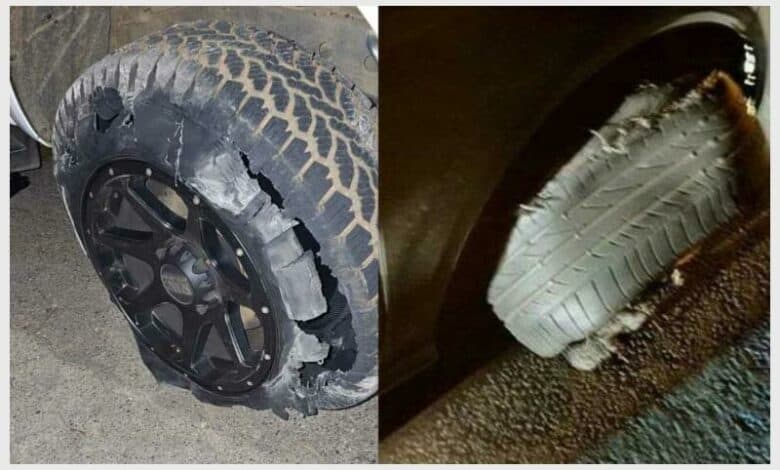
Motorists in Pretoria are urged to stay alert this festive season as spiking incidents on roads increase, with a newly released map highlighting hotspots and safety tips to help prevent robberies.
According to AfriForum’s chief spokesperson on Community Safety Jacques Broodryk, the organisation has been monitoring incidents where spikes or stones are used on roads to target motorists for some time now.
“The AfriForum neighbourhood watches also focused on combating the incidents and assisting victims.
“This year there have been several cases where spikes and other methods have been used to force motorists to stop their vehicles on public roads, after which they have been robbed.”
He said the organisation had compiled a map with hotspots for this type of incident, especially in the vicinity of Pretoria.
“The criminals who commit these acts are doing it every day of the week from Monday to Sunday. Although criminals can attack motorists at any time of the day, information indicates that incidents are more likely to take place in the evening and continue late into the night.
“The perpetrators work in groups ranging from two to ten individuals, and criminals are armed with anything from sharp objects to handguns,” says Broodryk.
Broodryk said several incidents took place on national roads such as the N1, N12, N14, N4, R566 and R80 in the vicinity of Pretoria.
“This map shows hotspots in and around Pretoria where harmful obstructions have been placed on roads, or cases of spiking have occurred on the road.
“However, this type of crime is not only limited to this area and road users must be prepared in general in order not to become victims.”
He said criminals use various techniques to force vehicles to stop, from spikes placed on the road to stones blocking the road.
For example, offenders committing crimes along the R80/R566 Rosslyn exit have used objects (not necessarily spikes) to block the highway, forcing vehicles to stop to remove the obstruction. Another method involves them throwing stones at vehicles, hoping that motorists lose control of their vehicles and cause an accident.
“AfriForum encourages motorists who drive on these routes to be vigilant. AfriForum also appeals to the public that if they are aware of cases like this, they will report it to the police and their nearest AfriForum neighbourhood watch,” concludes Broodryk.
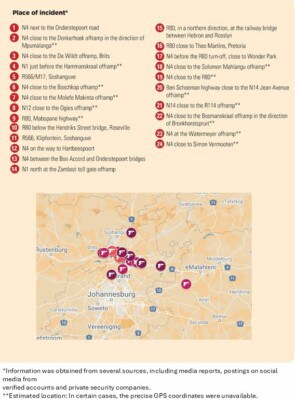
Click here for a pdf version of the map: Spiking hotspots in and around Pretoria
Also read: Spiking on R80 despite recent successes
Here are some more safety tips to keep in mind:
- Under no circumstances must the car be stopped after an incident in which the vehicle’s tires, windscreen, or other parts have been damaged. Continue driving as far as possible to a safe destination.
- Contact your local neighbourhood watch, security company or emergency services as soon as possible and inform them of the incident. Give full details of the object used in the trap and provide its address or location. This will prevent attacks on motorists who may be targeted after you in the same way.
- Make sure your mobile phone is charged before you hit the road.
- Share your location with loved ones, especially when traveling alone.
- Be prepared and get into the habit of looking ahead in the road in order to spot any threats, foreign objects or people on or along the road in time.
- Save the contact numbers of the emergency services, neighborhood watch, or security company on your phone.
Do you have more information about the story?
Please send us an email to bennittb@rekord.co.za or phone us on 083 625 4114.
For free breaking and community news, visit Rekord’s websites: Rekord East
For more news and interesting articles, like Rekord on Facebook, follow us on Twitter or Instagram