Bring dog licences back, councillor asks
A Pretoria North councillor has promised to campaign for the reinstatement of dog licences. Rina Marx of the Freedom Front Plus believes the return of licences can solve some control and other community problems regarding these animals. “I will make it my mission this year to submit a proposal to the council wherein dog licences …

A Pretoria North councillor has promised to campaign for the reinstatement of dog licences.
Rina Marx of the Freedom Front Plus believes the return of licences can solve some control and other community problems regarding these animals.
“I will make it my mission this year to submit a proposal to the council wherein dog licences must be reinstated to better control problems regarding owning dogs. I have had enough of people abusing animals, letting them starve to death because there are too many dogs on the premises. Shelters are overwhelmed because of overbreeding, outstanding sterilisations and health problems that arise because vaccinations are not done.”
Marx is proposing that R50 per dog licence should be doled out on a sliding scale. Owners of dogs that have been spayed and neutered should be able to get a discount.
The funds, she believes, must go towards animal welfare organisations to help fight abuse, prevent overbreeding through sterilisations, vaccination programmes for contagious diseases and enable law enforcement on licences.
She is well aware of the pushback she could receive.
“I know people will argue that dog owners will get rid of more dogs by abandoning them on the streets. It doesn’t have to be this way. Just like the city council makes provision for a budget amount for the less fortunate with water or power, these licences can be subsidised by the metro or exemptions may be given.
The issue is to take control of the massive dog population and the problems caused because of it. What you can count, you can manage,” she said.
Marx, a former trauma counsellor, recently visited an animal shelter that had flooded and this motivated her to streamline her proposal.
“I believe that if people do not care about animals, they also do not care about people. If you cannot or will not help an animal, you will most probably not help your neighbour.”
Marx also expects people to bring up the excuse about not enough law enforcement to police the dog licences.
“I know people do not pay attention to the by-laws and that law enforcement around it is difficult because Pretoria is so big, but we have to start somewhere.”
She recommends a test trial and approaching the state veterinarian.
“We also will have to research to see how we can use the funds to sterilise dogs and vaccinate against diseases such as rabies. If there are by-laws to be implemented, then we will have to do the research,” said Marx.
The Hessequa municipality in Western Cape recently instated R250 and R349 licence requirement for an unsterilised male and female dog respectively while R54 will be levied for a sterilised one.
Law enforcement officers visit houses. Dog owners without licences are given the chance to get one. If a licence has not been obtained yet by the time of the second visit, a written notice is issued to obtain a licence within a certain period. If the requirement is still not met, a fine is incurred.
Werna Venter in the Moot supports idea.
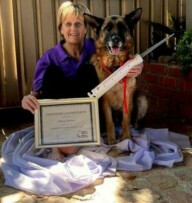
Venter is a well-known pet health activist, whose programme to combat rabies has been nominated for an international award.
She established Carlie-Rooivlag Hondsdolheid Bewusmaking (Red Flag Rabies Awareness) organisation to spread awareness about this deadly disease in 2016, after she lost a family member who had contracted rabies.
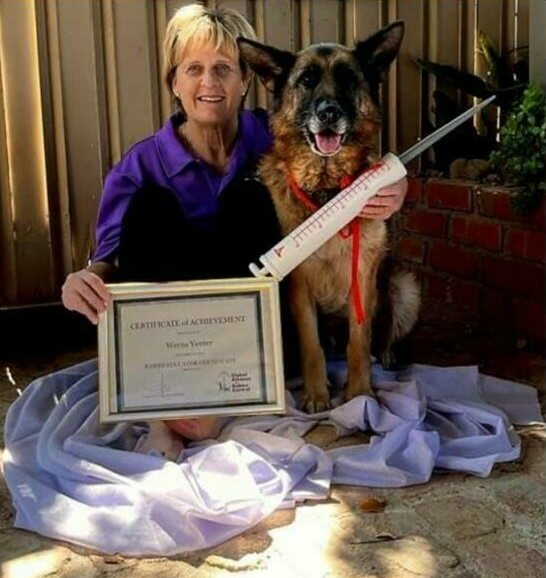
“This way we can get more control on the vaccination of dogs against rabies by that the owner can obtain a licence if all the right vaccinations have been done. Vaccinating house pets is very important,” she said.
“Thinking that your pets will not contract rabies because you live in the city is not guaranteed. Meerkats and rodents run around freely from the hills into the city. They carry this deadly virus and can bite dogs. According to law, your pets must be vaccinated against rabies every three years.”
She believes the implementation of the current by-laws surrounding dogs will also be made easier through compulsory dog licences.
Currently, a maximum of three dogs and three cats are allowed per house within the metro.
“Stricter law enforcement surrounding this can lead to fewer stray dogs, dogs being sterilised and not so much pressure on animal shelters because of no uncontrolled breeding. An end can also be put to dog breeders who prioritise profit over the health and welfare of the dogs,” said Venter.
For Venter, there is an additional benefit.
“The metro doesn’t have to use their own law enforcement officers – they can use the money from dog licences to pay inspectors of animal protection societies to police the licensing.
The duty of an animal owner to ensure his/her animal is legal and fully vaccinated is a good stepping stone to learning about responsible animal ownership.”
Typically, five to 10 incidents of human rabies are confirmed at the National Institute of Contagious Diseases every year.
Also read: North residents urged to adopt a pet at Wollies
Please send us an email to bennittb@rekord.co.za or phone us on 083 625 4114.
For free breaking and community news, visit Rekord’s websites: Rekord East
For more news and interesting articles, like Rekord on Facebook, follow us on Twitter or Instagram