Tshwane App in the works to improve service delivery
The app is behind the Tshwane mayor’s reference to promising better infrastructure within 100 days in office.
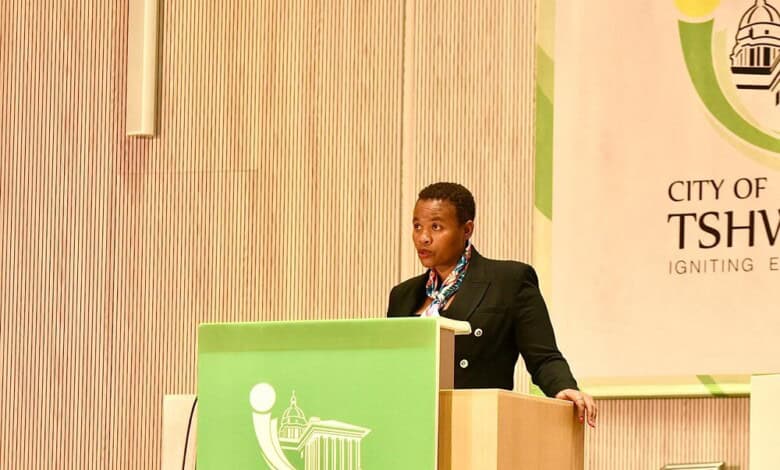
Residents will benefit from a new municipal app that is in the final stage of development, according to the Tshwane mayor.
Tshwane Mayor Dr Nasiphi Moya made the remarks during a press conference on February 11 in her report back on the successes of the multiparty coalition government over the first 100 days in office.
Moya was joined by the multiparty mayoral committee.
She said that once launched, this app would enable residents to log service requests, track their progress and access billing information, bringing essential services to residents’ fingertips.
She said despite the app, in her 100 days in office she was able to tackle several water challenges within the metro.
She pointed out that one of the most significant achievements has been the progress made in addressing the Hammanskraal water crisis in partnership with Magalies Water and the National Department of Water and Sanitation.
In January 2025, Phase 1 of the Magalies Klipdrift Water Treatment Plant upgrade was completed, which now delivers 12.5 megalitres of treated water per day to four wards in Hammanskraal.
Moya also announced that the metro would move away from estimated billing to actual meter readings.
She pointed that although the metro set a target of 95% actual readings within their first 100 days, they have reached 90%.
She said supply to Mamelodi Reservoir has been significantly boosted and the metro is taking strong action to address illegal connections at Mabopane Main Reservoir.
There are still many challenges left after these 100 days of action, said Moya.
“One of the most significant challenges we face is criminal syndicates targeting electricity infrastructure.”
Referring to the promise of a clean city, she reported the metro’s repairing of 21 285 streetlights, and restoration of 291 high-mast lights against a target of 200. From an inherited backlog of 692 potholes, the metro successfully repaired 687.
According to Moya, the metro is also making significant strides in improving water and electricity service delivery. A total of 2 100m of water pipelines have been replaced and on the electricity front, 3 207 smart prepaid meters have been installed.
When it comes to a safer city, Moya said significant arrests and enforcement actions were carried out by the metro police, including 46 496 Aarto notices for various traffic violations.
Additionally, the metro police intensified its crackdown on unroadworthy and illegally operated vehicles, impounding 1 350 non-compliant vehicles, including unlicenced public transport vehicles, unregistered delivery bikes and illegally operating Tuk Tuk taxis.
One of the achievements she was very proud of was that over the 100 days, the metro actively prioritised direct interaction with residents, holding 13 imbizos across all seven regions, covering urban and rural areas, townships and suburbs.
– Click here to view Dr Nasiphi Moya on how the metro and City of Johannesburg plan to shape global urban agenda at 2025 U20 summit.
Do you have more information about the story?
Please send us an email to bennittb@rekord.co.za or phone us on 083 625 4114.
For free breaking and community news, visit Rekord’s websites: Rekord East
For more news and interesting articles, like Rekord on Facebook, follow us on Twitter or Instagram or TikTok.